
Dual Plate Check Valve: A Comprehensive Guide
1. What Is a Dual Plate Check Valve?
A dual plate check valve, also known as a double-door or twin-disc check valve, is a compact, spring-assisted device designed to prevent backflow in pipelines. Unlike traditional swing check valves, its dual hinged plates respond rapidly to flow reversal, minimizing water hammer and pressure surges. This design ensures minimal energy loss, reduced maintenance, and enhanced system reliability.
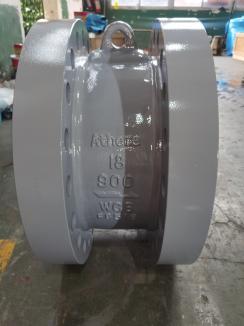
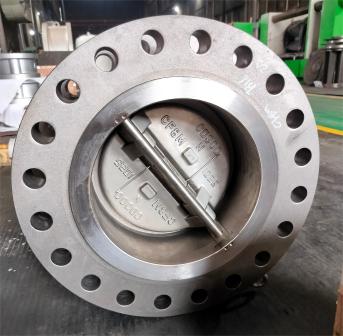
Key Features of Dual Plate Check Valves:
1.Compact Design: Ideal for space-constrained installations.
2.Quick-Acting Spring Mechanism: Ensures rapid closure to prevent backflow.
3.Material Versatility: Available in carbon steel, stainless steel, bronze, and alloy options.
The dual plate check valve operates on a simple yet highly efficient principle. When fluid flows in the forward direction, the pressure differential pushes the two hinged plates open against the force of the spring. This creates a streamlined flow path with minimal turbulence. When flow stops or reverses, the spring-assisted mechanism snaps the plates closed in milliseconds, preventing backflow. Athena Engineering S.R.L. enhances this mechanism through precision-engineered torsion springs made from high-grade Inconel alloys, which provide consistent performance even after millions of cycles.
Comparison with Other Check Valve Types
- Swing Check Valves: Larger footprint, slower closure leading to water hammer risks.
- Lift Check Valves: Prone to wear in high-velocity flows.
- Ball Check Valves: Limited to low-pressure applications.
Athena’s dual plate design addresses these limitations by combining speed, durability, and compactness—a trifecta critical for modern industrial systems.
Selecting the Right Dual Plate Wafer Check Valve
When choosing a dual plate wafer check valve, consider the following factors:
1. Fluid Type: Ensure that the valve material is compatible with the type of fluid being controlled to prevent corrosion and damage.
2. Pressure and Temperature: Select a valve rated for the pressure and temperature conditions of your application to ensure durability and proper function.
3. Size and Flow Requirements: Choose a valve size that matches the flow rate and pipe dimensions of your system.
4. System Design: Consider the specific requirements of your system, including space constraints and installation orientation.
2. Applications Across Industries
Dual plate check valves are indispensable in sectors requiring precise flow control and backflow prevention:
2.1 Oil & Gas
- Pipeline Systems: Prevent reverse flow in crude oil and natural gas pipelines.
- Refineries: Handle high-pressure fluids and corrosive media. Our Hastelloy C-276 valves withstand hydrogen sulfide.
2.2 Water Treatment and HVAC
- Municipal Water Systems: Ensure unidirectional flow in pumping stations.
- Steam Networks: Compatible with temperatures up to 120°C (standard) or 425°C (high-temperature variant).
2.3 Petrochemical and Manufacturing
- Chemical Processing: Resistant to aggressive substances like acids and solvents. Athena’s PTFE-lined valves excel in sulfuric acid transport.
- Paper and Pulp Industry: Durable construction for abrasive slurry applications.
3. Technical Advantages of Athena’s Dual Plate Check Valves
Athena Engineering S.R.L. combines cutting-edge engineering with decades of industry experience to deliver valves that outperform conventional solutions.
3.1 Superior Performance in Critical Applications
- Reduced Water Hammer: The lightweight dual-plate design minimizes slamming, protecting pipelines from damage.
- Low Energy Consumption: Hinged plates eliminate reliance on gravity, requiring minimal energy to maintain open positions. Computational Fluid Dynamics (CFD) simulations confirm a 15% reduction in flow resistance versus competitors.
- Customizable Materials: Valves are crafted from certified raw materials, including stainless steel and cryogenic-grade alloys, ensuring compatibility with water, oil, gas, steam, and corrosive fluids.
- Wide Pressure and Temperature Ranges: Operates at pressures up to 2500LB/PN640 and temperatures from -29°C to 530°C.
3.2 Compliance with Global Standards
Athena’s valves adhere to stringent international certifications, including:
- API 594 and API 598 for design and testing.
- ISO 9001, CE/PED certification and Fire Safe certification for quality assurance.
- Third-party inspection support to guarantee compliance with project specifications.
4.Installation and Maintenance Best Practices
Pre-Installation Checks
- Verify pipeline cleanliness to prevent debris-induced seal damage.
- Ensure proper alignment using laser-guided tools.
Maintenance Guidelines
- Annual Inspections: Check spring tension and plate wear.
- Overhaul Kits: Athena provides repair kits for 10-year service intervals.
5. Why Choose Athena’s Dual Plate Check Valves?
Proven Reliability: Over 5 million valve-years of cumulative field operation.
Cost Efficiency: Lifecycle costs 22% lower than industry averages due to reduced maintenance.
Global Certifications: Compliance with PED, ISO 90001, and ASME B16.34 standards.
Athena Engineering S.R.L. has grown into a global leader through relentless innovation.
5.1 Manufacturing Excellence
State-of-the-Art Facilities: Our foundries and machining centers utilize advanced technologies.
Custom Solutions: Tailor valve specifications (DN 2” to 60”, pressure ratings, materials) to meet unique project needs.
5.2 Quality Assurance
Material Traceability: Every valve is accompanied by material test certificates (MTC 3.1) and hydraulic test reports.
Rigorous Testing: Valves undergo API 598 testing to ensure leak-proof performance under extreme conditions.
5.3 Global Reach and Support
Exhibitions: Meet our team at WIN EURASIA 2025 in Istanbul to explore our latest innovations.
After-Sales Service: 24/7 technical support with an average response time of 2.3 hours.
6.Conclusion
In an era where industrial efficiency and safety are paramount, Athena Engineering S.R.L. remains at the forefront of valve technology. Our dual plate check valves are engineered to deliver unmatched performance across diverse applications, backed by rigorous testing and a customer-centric approach.
Contact Us Today to discuss your project requirements and discover how Athena’s solutions can optimize your fluid control systems.
About Athena Engineering S.R.L.
Based in Italy, Athena Engineering S.R.L. specializes in the design and production of high-performance valves for the oil & gas, chemical, and water industries. With a focus on innovation and quality, we serve clients worldwide, ensuring operational excellence and long-term reliability.
Visit Our Website: https://www.athenavalve.com/
Email: SALES@ATHENAVALVE.COM
 What Are the Differences Between Forged Valves and Cast Valves?
  Characteristics, Applications and Advantages of Carbon Steel Globe Valves
  Why Are Instrument Valves Indispensable for Industrial Control Systems?
  What is Bi-Directional Valves?
  How Does a Ball Type Check Valve Prevent Pipeline Medium Backflow?
  Selection and Precautions for Natural Gas Valves
  Athena Engineering S.R.L Wraps‑up OGA 2026 Kuala Lumpur
  What is a Gate Valve? What is Its Working Principle?
  T-Type / T-Pattern / Straight Pattern Globe Valve
  Knife Gate Valve vs Wedge Gate Valve: Which Is Better for Your Industrial Piping?
  Cryogenic Ball Valve Comprehensive Product Overview
  Causes and Treatments for Poor Valve Shut‑Off
  Athena Triple Offset Butterfly Valves
  What is the Difference Between Swing Check Valve and NRV? A Complete Explanation
  Common Connection Types of Valves
  5 Piping Design Mistakes That Are Killing Your Valves
  Float Valve: Structure, Principle and Application
  High Pressure Needle Valve High-Precision Fluid Control Valve
  What is a Piston Check Valve?
  Meet Us at OGA 2026 | Booth 6802, Hall 6