
Selection and Precautions for Natural Gas Valves
author: ATHENA GROUP
2026-09-10

Athena Engineering S.R.L is deeply engaged in the field of gas fluid control. As core safety‑control equipment for urban gas pipe networks, industrial‑commercial and civil gas systems, natural gas valves undertake critical functions including shut‑off, connection and condition regulation of natural gas. Characterized by flammability, explosiveness and trace corrosiveness, natural gas is transported through widely‑spanned gas pipe networks that mostly operate continuously for long periods. For this reason, natural gas valves differ significantly from ordinary industrial valves in material, sealing and actuation mode. Improper selection or equipment failure may easily trigger gas leakage, fire and even explosion accidents. Based on actual pipeline operating conditions, this paper introduces key points for natural gas valve selection and operational precautions, providing references for engineering type‑selection, procurement and operation & maintenance.
I. Core Material‑Selection Requirements for Natural Gas Valves
Material selection constitutes the most critical step in valve selection, directly determining service life and operational safety of valves. Raw natural gas transported through pipelines contains substantial hydrogen sulfide before desulfurization treatment. As a toxic and highly corrosive medium, hydrogen sulfide chemically reacts with ferrous equipment to generate flaky iron sulfide spallation layers. Long‑term scouring may cause valve body perforation and corrosive damage to equipment. Even for finished natural gas after desulfurization, trace hydrogen sulfide impurities remain inside pipelines.
Therefore, ordinary carbon steel and materials for common water valves are strictly prohibited for natural gas pipeline valves; special sulfur‑resistant and corrosion‑resistant materials must be adopted. High‑quality stainless steel may be used for civil low‑pressure pipelines. Sulfur‑resistant cast steel, alloy steel and other special materials shall be adopted for long‑distance high‑pressure pipelines, buried pipe networks and industrial main pipelines, so as to fundamentally prevent valve failure and leakage caused by medium corrosion.
II. Sealing and Leakage Rate Standards for Natural Gas Valves
As a high‑risk combustible medium, natural gas imposes extremely stringent requirements on valve leakage rate, which serves as a core criterion distinguishing gas valves from other valves. Valves of key sections on urban main pipelines, buried pipelines and long‑distance pipelines generally adopt an all‑welded valve‑body structure without assembly joints, minimizing external‑leakage risks.
To adapt to long‑term continuous‑operation conditions, sealing components of natural gas valves must deliver outstanding wear resistance, self‑lubricity, corrosion resistance and elastic stability. With advances in polymer‑material technology, mainstream sealing materials for current gas valves include Polytetrafluoroethylene (PTFE), Nitrile Butadiene Rubber (NBR), Nylon and Fluororubber (VITON). These materials satisfy sealing requirements under wide‑range temperature conditions, high‑pressure scouring and long‑term static service without cracking or ageing, achieving zero‑leakage operational standards for pipeline valves.
III. Scientific Valve‑Type Selection Based on Service Scenarios
Natural gas pipelines under different operating conditions are matched with corresponding valve categories. Proper type‑selection greatly enhances safety and service life of pipe networks:
Natural gas ball valves: Fast opening and closing, full‑bore flow path with low flow resistance and excellent sealing performance. Suitable for residential buildings, commercial gas pipelines and medium‑and‑small branch pipelines; capable of frequent opening‑closing operations. They represent the mainstream option for civil gas systems.
Natural gas gate valves: Minimal flow resistance and strong flow capacity. Applicable only for on‑off control of urban main long‑distance pipelines. Not for flow regulation; suited for stable operating conditions of permanent full‑open or full‑closed status.
Natural gas globe valves: High regulation accuracy and stable performance. Mainly deployed in industrial gas systems to precisely regulate gas pressure and flow in real time for refined gas‑supply scenarios.
Natural gas butterfly valves: Light‑weight and cost‑effective. Applied to large‑caliber low‑pressure gas pipelines, pipe‑network pressure relief and ventilation supporting systems.
IV. Specification for Actuator Selection
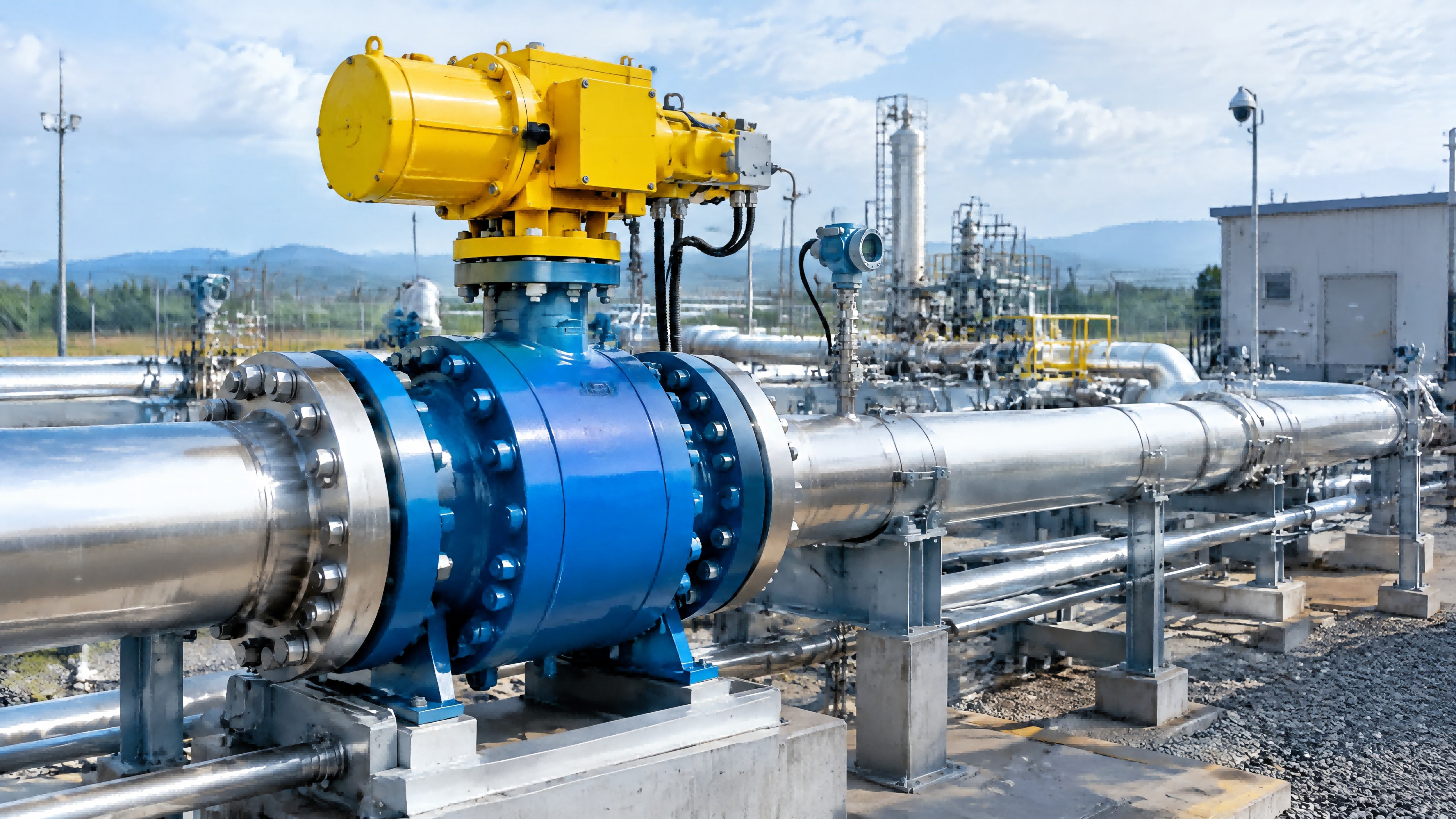
Long‑distance urban natural gas pipelines generally feature large calibers, high operating pressure, complex conditions and fast response requirements for opening‑closing. Ordinary manual valves cannot satisfy operational demands of main pipelines, and high‑torque special actuators must be equipped. Common actuation modes include pneumatic actuation, electric actuation, electro‑hydraulic linkage and pneumatic‑hydraulic linkage devices.
Furthermore, gas pipelines fall under high‑risk explosion‑proof operating conditions. All actuators for pipeline valves must comply with strict explosion‑proof and protection standards: explosion‑proof rating of EExd IIB T4 and protection rating no lower than IP68, enabling adaptability to harsh outdoor environments featuring open‑air exposure, high humidity, sand‑dust and wide‑range temperatures.
In addition, valves on main pipelines feature automatic emergency shut‑off and remote control by central control rooms. In case of emergencies such as pipeline rupture or abnormal pressure, valves can rapidly lock pipelines to cut off gas leakage. Valves shall operate with low actuation resistance, free from impacts of temperature variation and minor external disturbance, delivering precise and stable opening‑closing. Clear and accurate position indicators and controllable switching speed cater to automated operation and maintenance of pipe networks.
V. Type‑Selection Points for Special Operating Conditions of Natural Gas Pipe Networks
Operating conditions of urban natural gas pipe networks differ completely from those of factory equipment, constituting an important basis for valve selection. Factory equipment has scheduled overhaul cycles allowing shutdown for inspection and maintenance. By contrast, urban natural gas pipe networks supply residents, factories and enterprises across cities, operating non‑stop year‑round. Shutdown for maintenance may not be performed for years or even decades. Failure of valves on main pipelines would result in city‑wide gas‑supply interruption and even severe safety accidents with grave consequences.
Moreover, urban gas pipelines commonly extend for hundreds of kilometers, laid mostly in urban peripheries and complex field terrains. Manual routine inspection proves difficult with low visiting frequency, and only periodic patrol checks are feasible. Pipeline leakage at complex sections may easily trigger fire and explosion accidents. Hence zero external leakage, high stability and extra‑long service life serve as core indicators for valve selection.
According to explicit industrial standards, key wearing parts (valve seats, sealing assemblies, etc.) of valves for natural gas main pipelines must deliver extra‑long service life. The overall service life of valves on main pipelines shall exceed 30 years to meet requirements for long‑term maintenance‑free stable operation of pipe networks.
VI. Installation and Operational Precautions for Natural Gas Valves
6.1 Installation Specification Requirements
Natural gas valves must be installed by certified professional personnel. Prior to installation, verify valve material, model, explosion‑proof rating and pressure parameters to confirm conformity with pipe‑network operating conditions. Valves shall be installed with flow direction consistent with medium flow. Pipeline connections shall be flat and fastened without misalignment or stress deformation. Upon completion of installation, tightness test and pressure test must be strictly conducted to eliminate potential leakage hazards.
6.2 Daily Operation Prohibitions
Violent opening‑closing of valves is strictly prohibited. Sudden rapid opening or closing scours and damages sealing surfaces and valve cores, giving rise to sealing failure and gas leakage. Operate valves by gradual opening‑closing to smoothly buffer pipeline pressure. During operation, unauthorized disassembly or modification of valves is forbidden. In case of abnormalities such as jamming, pressure relief or gas leakage, discontinue service immediately and arrange repair.
6.3 Periodic Inspection and Maintenance
For civil valves, conduct monthly visual inspection for sealing performance and switching flexibility. For industrial and main‑pipeline valves, implement comprehensive overhaul every 3‑6 months. Clear foreign substances inside valve bodies in a timely manner. Perform regular opening‑closing tests for long‑term static valves to prevent rust‑induced jamming of valve cores, and replace aged sealing components as required to ensure long‑term stable equipment operation.
VII. Conclusion
Natural gas valve selection shall not depend merely on caliber and pressure. Comprehensive considerations must cover medium corrosiveness, continuous‑operation conditions, explosion‑proof automatic control and extra‑long‑service‑life requirements. Priority shall be given to sulfur‑resistant corrosion‑resistant materials, highly‑reliable sealing structures and compliant explosion‑proof actuators. Combined with standardized installation as well as operation and maintenance, risks of leakage and safety accidents can be avoided, ensuring stable pipe‑network operation for over 30 years. Relying on engineering practice, Athena Engineering S.R.L provides reliable valve products and technical services for various natural‑gas projects to safeguard gas‑system safety.
 How Does a Ball Type Check Valve Prevent Pipeline Medium Backflow?
  Athena Engineering S.R.L Wraps‑up OGA 2026 Kuala Lumpur
  What is a Gate Valve? What is Its Working Principle?
  T-Type / T-Pattern / Straight Pattern Globe Valve
  Knife Gate Valve vs Wedge Gate Valve: Which Is Better for Your Industrial Piping?
  Cryogenic Ball Valve Comprehensive Product Overview
  Causes and Treatments for Poor Valve Shut‑Off
  Athena Triple Offset Butterfly Valves
  What is the Difference Between Swing Check Valve and NRV? A Complete Explanation
  Common Connection Types of Valves
  5 Piping Design Mistakes That Are Killing Your Valves
  Float Valve: Structure, Principle and Application
  High Pressure Needle Valve High-Precision Fluid Control Valve
  What is a Piston Check Valve?
  Meet Us at OGA 2026 | Booth 6802, Hall 6
  What is a Level Gauge? Working Principles, Types and Industrial Applications
  Double Sealing Protection: A Complete Interpretation of Bellows Globe Valves
  End-Suction Pump vs Inline Pumps: Which One Is Right for You?
  Method of Selecting Valve Types Based on Throttling Degree
  Safety Valves–Core Protection for Pressure Equipment