
How to Fix a Leaking Ball Valve
author: ATHENA GROUP
2026-10-16

How to Fix a Leaking Ball Valve: Ball valve leakage is one of the most frequent problems encountered in oil & gas, chemical and pipeline systems. The troubleshooting solution depends on identifying the exact leak point before any maintenance work.
Safety Precaution First
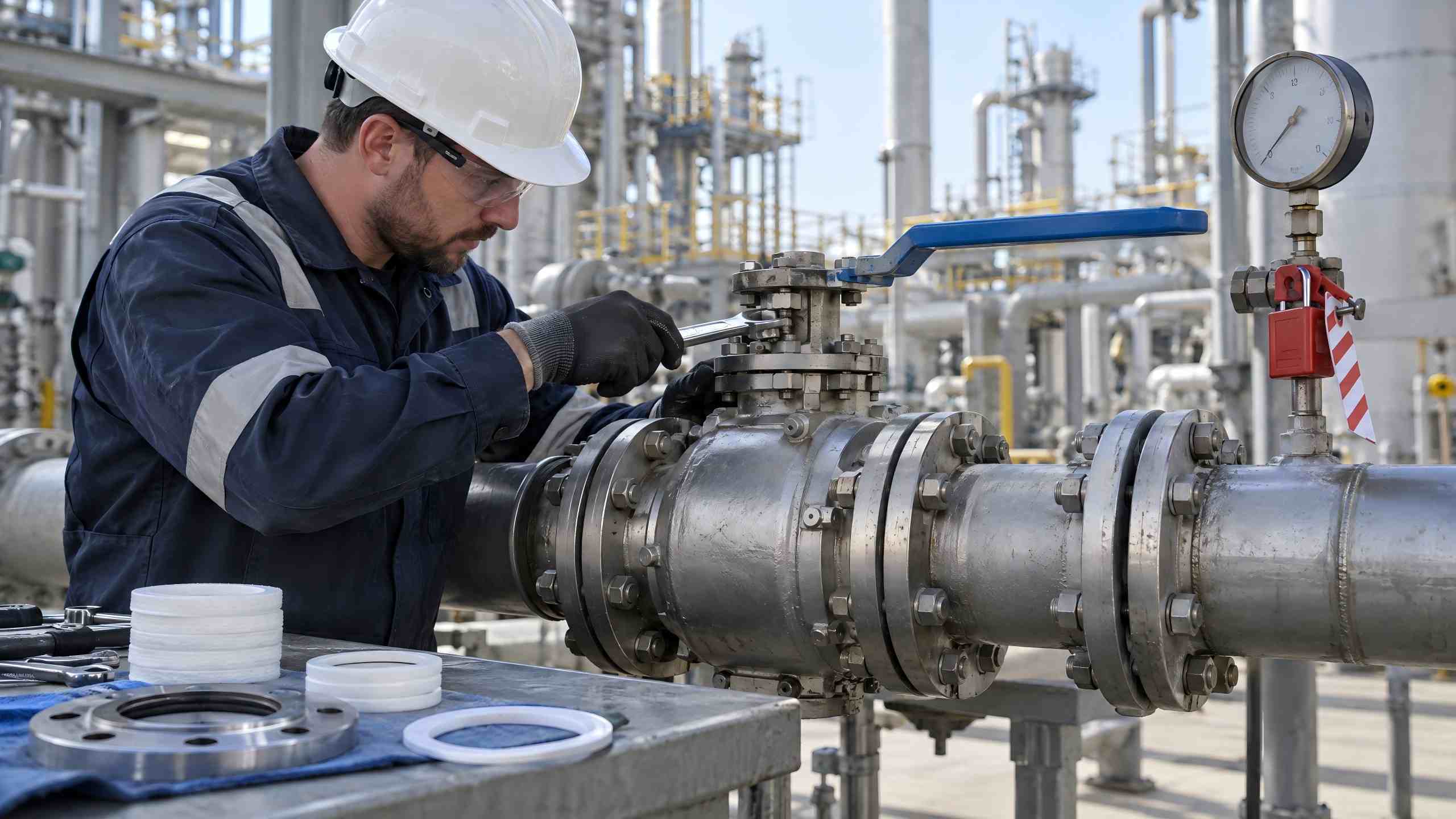
Always isolate the pipeline, shut off the media supply and fully depressurize the system before inspection or repair. For hazardous fluid, gas or high-temperature service, follow site safety specifications. Never perform maintenance on pressurized valves. When working through How to Fix a Leaking Ball Valve, always adhere to these safety rules.
1. Leakage at pipe / flange connections
Loose fittings or aged gaskets are the main causes.
- Threaded ends: Disconnect the joint, clean old sealant, wrap PTFE tape properly and reassemble with moderate torque.
- Flanged ends: Replace damaged gaskets and retighten flange bolts in cross sequence to avoid uneven compression.
2. Stem leakage (leaking around handle)
This usually comes from worn packing or O-rings.
1.Remove the handle assembly.
2.Tighten the packing gland nut incrementally (1/8 ~1/4 turn each time). Do not over-tighten, which may jam the stem.
3.If weeping continues, replace the PTFE packing or stem O-ring. Clean the stuffing box and reinstall new sealing components.
4.Reassemble the handle and test under pressure.
3. Internal seat leakage (media still passes through even when fully closed)
This happens when debris is trapped between ball and seats, or the ball surface / seat rings get scratched, corroded or deformed.
- Minor case: Flush pipeline to remove impurities.
- Severe damage: Replace valve seats or the whole ball valve. Deep scratches on ball surface cannot be fixed on site.
Key Reminder
For API 6D industrial ball valves used in critical process lines, only qualified technicians should carry out disassembly and seal replacement. Improper repair may cause fugitive emission and safety risks. Regular inspection and preventive maintenance can greatly extend valve service life. Following the guidance for How to Fix a Leaking Ball Valve will help avoid incorrect repairs.
For reliable industrial ball valves and professional valve technical support, please turn to Athena Valve. Visit our official website: www.athenavalve.com
 How to Repair a Gate Valve
  Pressure Seal Type Gate Valve for High-Pressure High-Temperature Industrial Isolation
  What Are the Differences Between Forged Valves and Cast Valves?
  Characteristics, Applications and Advantages of Carbon Steel Globe Valves
  Why Are Instrument Valves Indispensable for Industrial Control Systems?
  What is Bi-Directional Valves?
  How Does a Ball Type Check Valve Prevent Pipeline Medium Backflow?
  Selection and Precautions for Natural Gas Valves
  Athena Engineering S.R.L Wraps‑up OGA 2026 Kuala Lumpur
  What is a Gate Valve? What is Its Working Principle?
  T-Type / T-Pattern / Straight Pattern Globe Valve
  Knife Gate Valve vs Wedge Gate Valve: Which Is Better for Your Industrial Piping?
  Cryogenic Ball Valve Comprehensive Product Overview
  Causes and Treatments for Poor Valve Shut‑Off
  Athena Triple Offset Butterfly Valves
  What is the Difference Between Swing Check Valve and NRV? A Complete Explanation
  Common Connection Types of Valves
  5 Piping Design Mistakes That Are Killing Your Valves
  Float Valve: Structure, Principle and Application
  High Pressure Needle Valve High-Precision Fluid Control Valve