
Float Valve: Structure, Principle and Application
author: ATHENA GROUP
2026-08-10

1. Product Definition
A float valve is a mechanical automatic control valve that stabilizes liquid levels by buoyancy. It requires no power supply, pneumatic devices or manual supervision. Equipped with a lever linkage and floating ball, it automatically turns water supply on and off to maintain constant liquid levels in tanks and reservoirs, making it a standard component for water supply, HVAC and water treatment systems. Its core assembly includes valve body, sealing spool, adjustable lever, hollow float ball and sealing gaskets. Float balls are available in PP plastic, 304 or 316 stainless steel. The extendable lever can be adjusted to set the maximum stop water level flexibly.
2. Working Principle
The float valve operates based on buoyancy law. When the liquid level inside the container drops, the float ball sinks with the water surface, pulling the spool away from the valve seat via the lever to open the water inlet channel for continuous water filling. As the water level rises, buoyancy lifts the float ball upward, and the lever reversely pushes the spool tightly against the sealing surface of the valve seat. The water supply will be fully cut off once the preset liquid level is reached to prevent overflow. The valve restarts water replenishment automatically when the liquid level falls again, cycling to stabilize the water level continuously.
3. Two Main Classifications
Direct Acting Float Valve: The float lever is directly connected to the main spool without auxiliary hydraulic pipelines. It features simple structure, low cost and easy disassembly & maintenance. However, its sealing force completely relies on the buoyancy of the float ball, with a maximum working pressure of 0.4MPa. It applies to small pipelines from DN6 to DN50, widely used in toilet tanks, small water purifier buckets, domestic water storage tanks and small livestock drinking troughs for low-pressure civilian scenarios.

Pilot Operated Float Valve:It consists of a small pilot control valve and a diaphragm driving structure. The float ball only controls the pilot pipeline, and the medium water pressure itself closes the main valve for stronger sealing performance. Its pressure resistance reaches 1.6~2.5MPa, covering large calibers DN50 to DN600 for high-pressure and high-flow working conditions. It is commonly installed in fire water tanks, cooling towers, large industrial storage tanks and water plant reservoirs, and supports remote layout of float sensors.

4. Material & Applicable Conditions
Valve bodies are selected according to service medium: brass bodies meet drinking water sanitary standards for civil tap water; 304/316 stainless steel resists acid and alkali corrosion for food and chemical liquids; ductile iron is cost-effective for large industrial pilot float valves. EPDM and NBR rubber are adopted as sealing parts to resist limescale and aging for extended service life.
5. Advantages & Disadvantages
Advantages: Zero energy consumption, stable operation and low failure rate. Regular cleaning of limescale on float balls and replacement of aged gaskets are the only routine maintenance work, with low installation threshold. Disadvantages: Direct acting types cannot withstand high pressure and tend to leak when the pipeline pressure is excessive; pilot operated valves have complex structures with higher procurement and maintenance costs.
 How Does a Ball Type Check Valve Prevent Pipeline Medium Backflow?
  Selection and Precautions for Natural Gas Valves
  Athena Engineering S.R.L Wraps‑up OGA 2026 Kuala Lumpur
  What is a Gate Valve? What is Its Working Principle?
  T-Type / T-Pattern / Straight Pattern Globe Valve
  Knife Gate Valve vs Wedge Gate Valve: Which Is Better for Your Industrial Piping?
  Cryogenic Ball Valve Comprehensive Product Overview
  Causes and Treatments for Poor Valve Shut‑Off
  Athena Triple Offset Butterfly Valves
  What is the Difference Between Swing Check Valve and NRV? A Complete Explanation
  Common Connection Types of Valves
  5 Piping Design Mistakes That Are Killing Your Valves
  High Pressure Needle Valve High-Precision Fluid Control Valve
  What is a Piston Check Valve?
  Meet Us at OGA 2026 | Booth 6802, Hall 6
  What is a Level Gauge? Working Principles, Types and Industrial Applications
 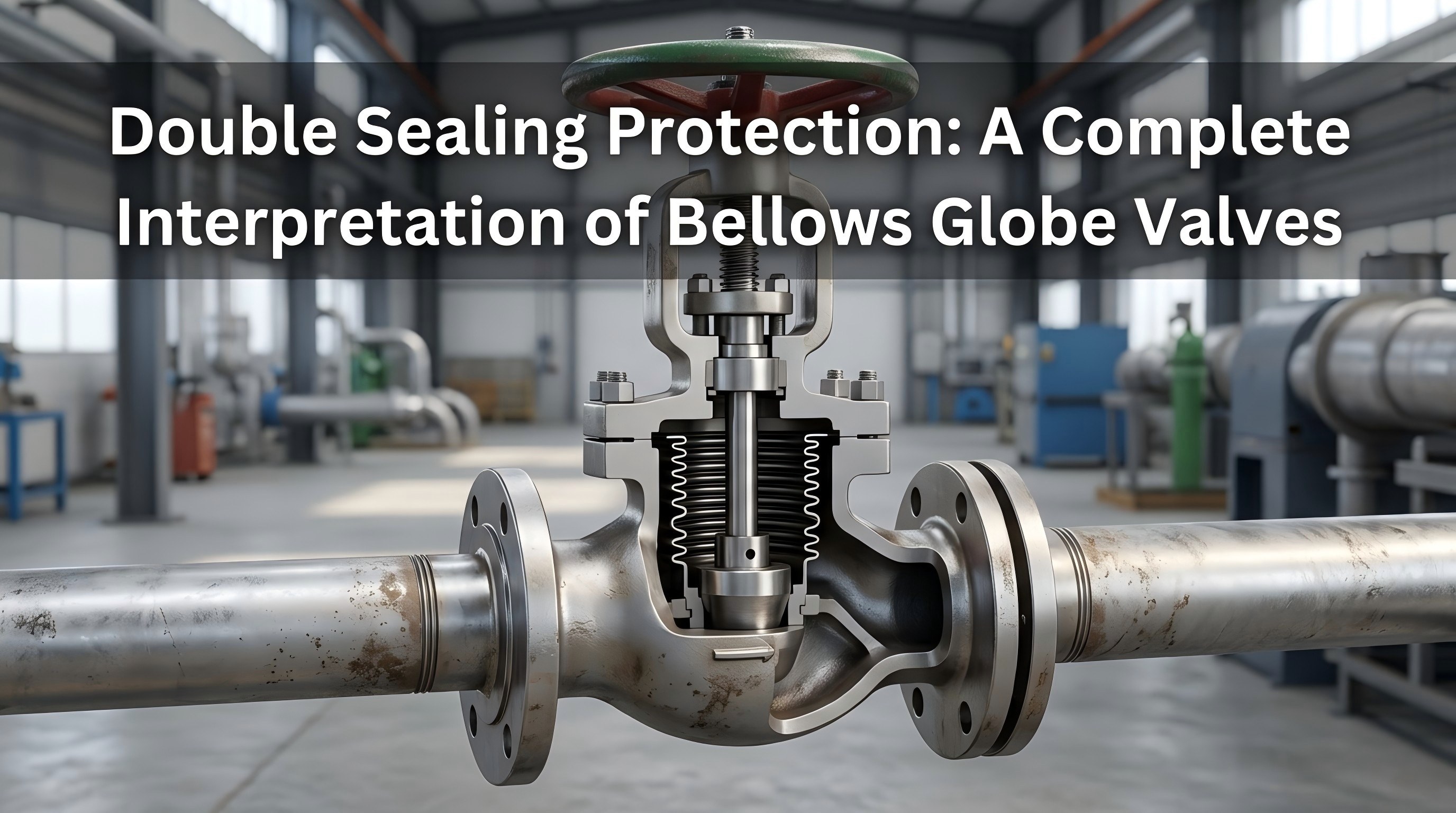 Double Sealing Protection: A Complete Interpretation of Bellows Globe Valves
  End-Suction Pump vs Inline Pumps: Which One Is Right for You?
  Method of Selecting Valve Types Based on Throttling Degree
  Safety Valves–Core Protection for Pressure Equipment