
Characteristics, Applications and Advantages of Carbon Steel Globe Valves
author: ATHENA GROUP
2026-09-29

In industrial production, safe and effective fluid control directly determines the stability of production systems, equipment safety and product quality. Athenavalve manufactures high‑quality industrial valves and offers reliable solutions for global fluid control systems. This article introduces carbon steel globe valves regarding working principle, features, applications and advantages for engineering procurement and technical staff.
I. What Is a Carbon Steel Globe Valve
There are two stem types: rising‑stem (stem moves, handwheel fixed) and rising‑rotating‑stem (handwheel and stem lift and rotate together). The valve reaches full flow when the disc lifts 25%‑30% of nominal diameter. Its fully‑open status shall be judged by disc travel instead of handwheel rotation counts.
Media flows directionally. Traditional versions follow “low‑in high‑out”; self‑sealing types adopt top‑down inflow to cut closing torque and boost sealing performance. Standard models cover ‑29℃~425℃, 2.5‑16.0 MPa, DN10‑DN500, supporting manual, pneumatic and electric actuation.
II. Main Characteristics
1. Reliable forced sealing: Stem pressure presses disc tightly against seat for low‑leakage closure. Sealing faces suffer minor friction and remain stable under high pressure.
2. Superior material performance: WCB carbon steel resists impact and deformation, outperforming cast‑iron valves in anti‑burst capacity. It has better toughness against low‑temperature brittleness than stainless steel for steam and oil service.
3. Controllable flow adjustment: Disc travel changes flow area for cut‑off and slight throttling. Avoid long‑term throttling; high‑speed media will wear sealing surfaces.
4. Direction‑dependent installation: Media flows one‑way. Mount strictly per body marking to reduce packing erosion and extend service life.
5. Flexible actuation: Manual, pneumatic or electric drives support local operation and remote automatic control for various pipelines.
6. Easy maintenance: Standardized parts allow quick disassembly and seal replacement without special tools.
2. Superior material performance: WCB carbon steel resists impact and deformation, outperforming cast‑iron valves in anti‑burst capacity. It has better toughness against low‑temperature brittleness than stainless steel for steam and oil service.
3. Controllable flow adjustment: Disc travel changes flow area for cut‑off and slight throttling. Avoid long‑term throttling; high‑speed media will wear sealing surfaces.
4. Direction‑dependent installation: Media flows one‑way. Mount strictly per body marking to reduce packing erosion and extend service life.
5. Flexible actuation: Manual, pneumatic or electric drives support local operation and remote automatic control for various pipelines.
6. Easy maintenance: Standardized parts allow quick disassembly and seal replacement without special tools.
III. Application Scenarios
- Petrochemical: Cut‑off and regulate crude oil, refined products and process fluids to prevent leakage.
- Power & heating: Serve high‑temperature steam pipelines of power plants and municipal heating networks.
- Shipbuilding & oil‑gas storage: Control flammable oil‑gas media onboard ships and at oil depots.
- Municipal works: Apply to water supply, heating and sewage pipelines for flow and on‑off control.
- Special industries: Fit compatible auxiliary pipelines for nuclear power and pharmaceutical processes.
IV. Core Advantages
1. Tight sealing lowers leakage risks and avoids safety incidents and material loss.
2. Good temperature‑pressure resistance fits gas, steam, oil and water under diverse conditions.
3. Multiple actuation options enable local handling or DCS‑connected remote automation.
4. Simple structure eases part replacement and reduces operational‑maintenance costs.
5. High cost‑efficiency: cheaper than alloy and stainless‑steel valves for non‑corrosive working conditions.
6. Complies with Chinese and American standards for good part interchangeability and convenient replacement.
2. Good temperature‑pressure resistance fits gas, steam, oil and water under diverse conditions.
3. Multiple actuation options enable local handling or DCS‑connected remote automation.
4. Simple structure eases part replacement and reduces operational‑maintenance costs.
5. High cost‑efficiency: cheaper than alloy and stainless‑steel valves for non‑corrosive working conditions.
6. Complies with Chinese and American standards for good part interchangeability and convenient replacement.
Conclusion
Carbon steel globe valves are well‑balanced shut‑off & regulating valves widely used in chemical, power‑heating, oil‑gas, municipal and shipbuilding industries. Athenavalve delivers quality carbon steel globe valves to provide safe, durable and cost‑effective valve solutions for industrial fluid control.
 Why Are Instrument Valves Indispensable for Industrial Control Systems?
  What is Bi-Directional Valves?
  How Does a Ball Type Check Valve Prevent Pipeline Medium Backflow?
  Selection and Precautions for Natural Gas Valves
  Athena Engineering S.R.L Wraps‑up OGA 2026 Kuala Lumpur
  What is a Gate Valve? What is Its Working Principle?
  T-Type / T-Pattern / Straight Pattern Globe Valve
  Knife Gate Valve vs Wedge Gate Valve: Which Is Better for Your Industrial Piping?
  Cryogenic Ball Valve Comprehensive Product Overview
  Causes and Treatments for Poor Valve Shut‑Off
  Athena Triple Offset Butterfly Valves
  What is the Difference Between Swing Check Valve and NRV? A Complete Explanation
  Common Connection Types of Valves
  5 Piping Design Mistakes That Are Killing Your Valves
  Float Valve: Structure, Principle and Application
  High Pressure Needle Valve High-Precision Fluid Control Valve
  What is a Piston Check Valve?
  Meet Us at OGA 2026 | Booth 6802, Hall 6
  What is a Level Gauge? Working Principles, Types and Industrial Applications
 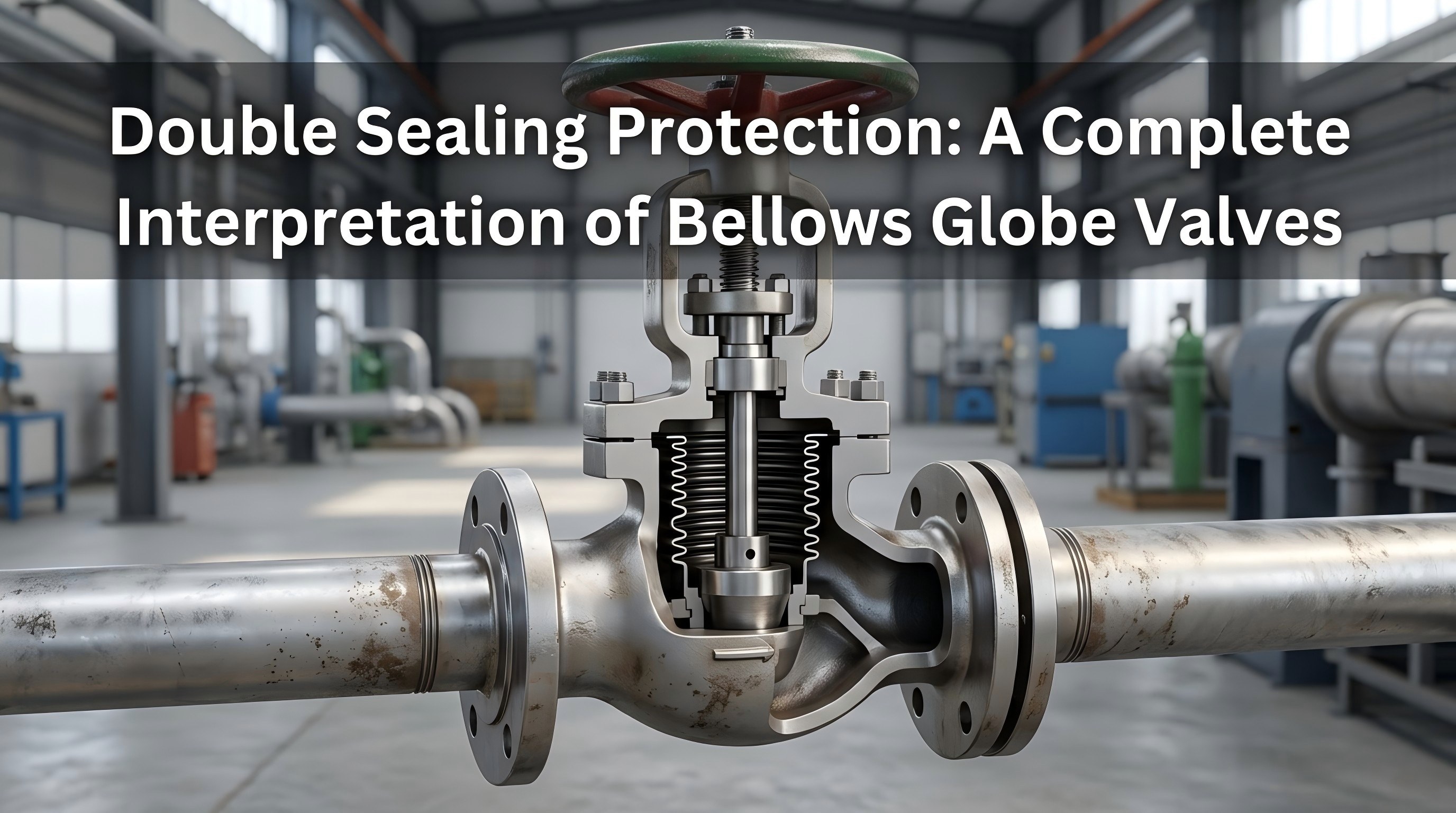 Double Sealing Protection: A Complete Interpretation of Bellows Globe Valves