
What is Bi-Directional Valves?
author: ATHENA GROUP
2026-09-17
High-performance bi-directional valves manufactured by Athena are critical industrial fluid control components designed to regulate and completely block fluid flow from both upstream and downstream directions. Unlike conventional unidirectional valves that only provide reliable sealing in one fixed flow direction and require strict installation orientation, these professional-grade Athena bi-directional valves deliver bubble-tight shutoff regardless of pressure direction. This core characteristic makes them indispensable in complex piping systems where reverse flow and fluctuating pressure commonly occur. Widely applied in petroleum, chemical, water treatment and hydraulic engineering, Athena bi-directional valves with mature industrial manufacturing processes optimize system stability and simplify pipeline layout in variable working conditions.
1. Main Types of Bi-Directional Valves
There are several mainstream types of bi-directional valves tailored to different industrial scenarios, each with unique structural designs and functional orientations to adapt to diverse fluid control demands.
1.1 Bi-Directional Butterfly Valve
As the most widely used bi-directional valve, equipped with metal or soft sealing pairs, it achieves zero-leakage bi-directional sealing performance. It is highly adaptable to extreme working environments, including high-temperature, high-pressure and corrosive medium conditions, serving as a core component for medium and large-diameter pipeline control.

1.2 Bi-Directional Knife Gate Valve
This type of valve features a streamlined body and professional self-cleaning sealing structure. It is specially optimized for complex media containing solid particles, sludge and viscous fluids. During operation, it can effectively avoid medium accumulation, scaling and valve jamming, while maintaining stable and reliable bi-directional cut-off performance, making it suitable for dirty fluid working conditions.
1.3 Full-Port Bi-Directional Ball Valve
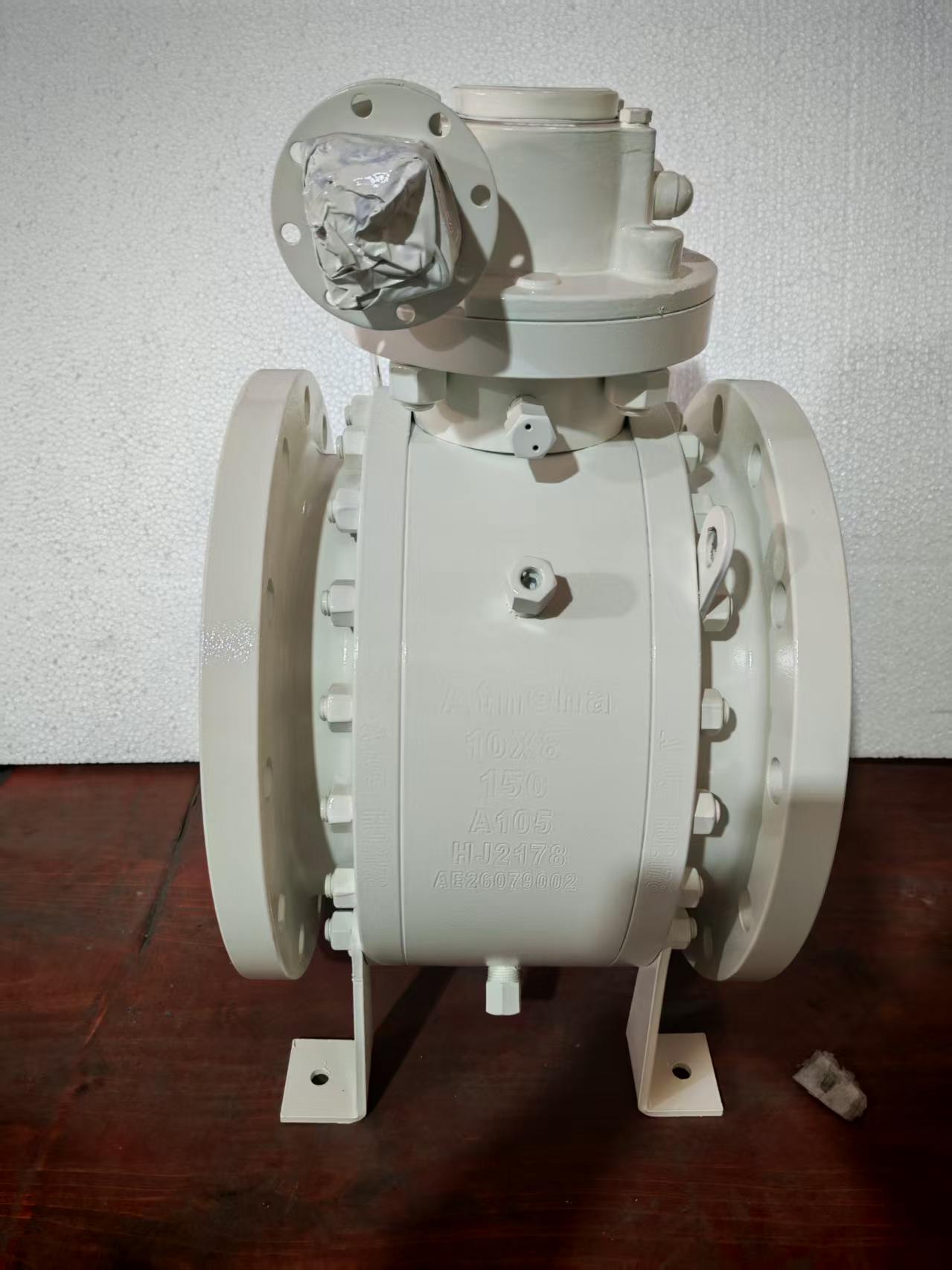
It is a universal general-purpose bi-directional valve with a symmetrical spherical core and integrated sealing structure. The structural symmetry enables free bi-directional fluid flow and tight shutoff, with ultra-low flow resistance. It possesses excellent throttling and pipeline isolation capabilities, covering most conventional clean medium control scenarios in industrial pipelines.
2. Core Structural and Functional Features
Bi-directional valves have unique design features that fundamentally distinguish them from traditional unidirectional valves, supporting their superior performance in complex systems.
2.1 Symmetrical Sealing Structure
The valve body is equipped with identical high-precision sealing surfaces on both sides, ensuring consistent and stable sealing performance under both forward and reverse fluid pressure. Qualified industrial bi-directional valves can meet Class V or Class VI international leakage standards, achieving zero or near-zero bubble-tight shutoff.
2.2 Direction-Free Installation
Without fixed flow orientation requirements, the valve can be installed arbitrarily without identifying pipeline flow direction. This completely avoids installation errors caused by misplaced flow arrows and greatly improves on-site construction efficiency and installation flexibility.
2.3 Strong Medium and Environment Adaptability
Through differentiated structural configurations, bi-directional valves can adapt to gas, liquid, and solid-liquid mixed media, covering clean water, chemical corrosive fluids, oil sludge, high-temperature flue gas and other diverse media. Meanwhile, the robust integral structure provides excellent resistance to pressure impact and temperature fluctuation.
3. Key Application Advantages
Based on the above structural features, bi-directional valves bring prominent practical advantages to industrial fluid control systems.
3.1 Improve Pipeline Operation Safety
In working conditions with frequent pressure reversal and instantaneous backflow, bi-directional valves can quickly and effectively block reverse fluid. They prevent pipeline vibration and impact caused by backflow, avoid medium cross-contamination in different pipeline sections, and protect downstream precision equipment from damage, greatly improving the overall safety and stability of the piping system.
3.2 Reduce Engineering and Maintenance Costs
Direction-free installation simplifies pipeline overall design, omits flow direction calibration and detection procedures during construction, and shortens project construction cycles. Most bi-directional valves adopt friction-free operation and self-cleaning structures, which effectively extend service life, reduce frequent replacement and daily maintenance workload, and lower long-term system operation costs.
3.3 Enhance System Operation Flexibility
The valve supports multiple working modes including flow throttling, full pipeline isolation and bypass regulation. It can flexibly adapt to the switching requirements of complex and changeable production processes. In addition, its standardized and compact structure can be seamlessly matched with most existing piping systems without large-scale system redesign and transformation.
4. Applicable Working Conditions
Bi-directional valves are highly targeted in practical applications, mainly suitable for complex scenarios with unstable flow directions and variable pressure.
4.1 Alternating Operation Pipeline Systems
They are ideal for reciprocating pumping stations, industrial circulating water systems and other equipment with frequent start and stop. The intermittent operation of such equipment easily causes regular fluid flow reversal, and bi-directional valves can stably adapt to this alternating flow state.
4.2 Bidirectional Conveying Process Pipelines
In chemical, petrochemical and pharmaceutical industries, many process pipelines require alternate forward feeding and reverse backwashing. Bi-directional valves can realize free switching of two-way flow and reliable isolation, meeting continuous production and pipeline cleaning requirements.
4.3 High-Risk Sealing Working Conditions
For pressure buffer pipelines, blind-end pipelines and explosion-proof fluid systems, zero-leakage and high-reliability bidirectional isolation is mandatory. Bi-directional valves can eliminate potential safety hazards caused by reverse pressure leakage, ensuring safe operation of high-risk systems.
In conclusion, Athena bi-directional valves stand out in fluid control systems due to their diverse types, reliable bidirectional sealing, flexible installation and strong working condition adaptability. They solve the pain points of unidirectional valves in complex and variable pipeline environments, providing stable, safe and cost-effective solutions for modern industrial fluid control. With the upgrading of industrial automation and the increasingly complex pipeline process requirements, Athena bi-directional valves will become more widely popularized in high-end equipment and precision process systems. For more information,just visit our website: //www.athenavalve.com
 How Does a Ball Type Check Valve Prevent Pipeline Medium Backflow?
  Selection and Precautions for Natural Gas Valves
  Athena Engineering S.R.L Wraps‑up OGA 2026 Kuala Lumpur
  What is a Gate Valve? What is Its Working Principle?
  T-Type / T-Pattern / Straight Pattern Globe Valve
  Knife Gate Valve vs Wedge Gate Valve: Which Is Better for Your Industrial Piping?
  Cryogenic Ball Valve Comprehensive Product Overview
  Causes and Treatments for Poor Valve Shut‑Off
  Athena Triple Offset Butterfly Valves
  What is the Difference Between Swing Check Valve and NRV? A Complete Explanation
  Common Connection Types of Valves
  5 Piping Design Mistakes That Are Killing Your Valves
  Float Valve: Structure, Principle and Application
  High Pressure Needle Valve High-Precision Fluid Control Valve
  What is a Piston Check Valve?
  Meet Us at OGA 2026 | Booth 6802, Hall 6
  What is a Level Gauge? Working Principles, Types and Industrial Applications
  Double Sealing Protection: A Complete Interpretation of Bellows Globe Valves
  End-Suction Pump vs Inline Pumps: Which One Is Right for You?
  Method of Selecting Valve Types Based on Throttling Degree