
How to Select Part‑Turn, Linear‑Stroke and Multi‑Turn Electric Actuators
author: ATHENA GROUP
2026-10-23
Selecting the right valve for a pipeline looks straightforward on paper, but it is one of the decisions that most directly shapes the reliability, safety, and operating cost of a fluid system. Choose well and the installation runs quietly for decades; choose poorly and you face premature leakage, unplanned downtime, pressure loss, or even a failure under full operating load. Among the many valve families in service today, three workhorses cover the overwhelming majority of isolation duties: the butterfly valve, the ball valve, and the gate valve. Each was engineered around a different set of priorities, and understanding why they differ — not just that they differ — is what turns a good specification into a dependable one.
This guide from Athena Valve examines the mechanics, strengths, limitations, and ideal applications of all three types, and offers a practical, engineering-driven path to the right choice. By the end, you will know which valve belongs on which line, and why.
This guide from Athena Valve examines the mechanics, strengths, limitations, and ideal applications of all three types, and offers a practical, engineering-driven path to the right choice. By the end, you will know which valve belongs on which line, and why.
Why Valve Selection Matters More Than It Seems
A valve is not merely a mechanical switch. It is the point at which a plant decides how fluid enters, stops, changes direction, or is throttled under pressure. Every duty imposes its own demands: the nature of the media, the operating pressure and temperature, the required flow capacity, the available space, the expected service life, and the maintenance resources on hand. Choosing a valve that is under-specified for pressure invites leakage and unsafe operation; choosing one that is oversized wastes money and floor space; choosing the wrong family entirely, such as throttling with a valve built only for isolation, accelerates internal wear and eventually leads to failure.
The three valves compared here solve isolation problems in different ways. A butterfly valve trades sealing and flow characteristics for compactness and economy. A ball valve prioritises a bubble-tight, fast shutoff under high pressure. A gate valve delivers full-bore, low-resistance flow for permanent isolation. Once you recognise what each design was optimised for, the correct application usually becomes obvious.
The three valves compared here solve isolation problems in different ways. A butterfly valve trades sealing and flow characteristics for compactness and economy. A ball valve prioritises a bubble-tight, fast shutoff under high pressure. A gate valve delivers full-bore, low-resistance flow for permanent isolation. Once you recognise what each design was optimised for, the correct application usually becomes obvious.
The Butterfly Valve: Compact, Economical, Built for Flow
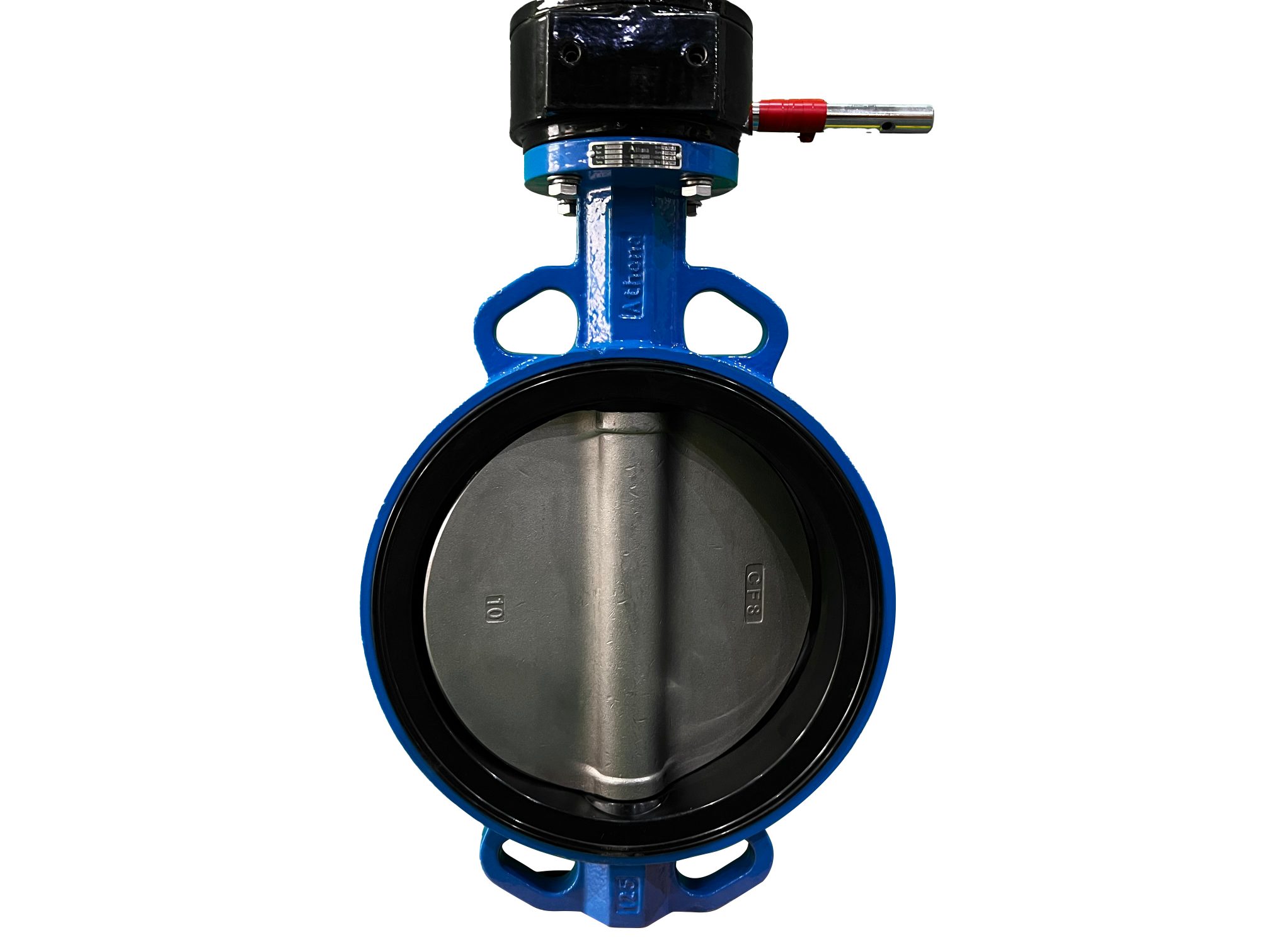
The butterfly valve takes its name from its closing element — a flat, circular disc that pivots around a central shaft and resembles a pair of wings. A quarter turn of a handle or actuator swings the disc from parallel with the flow (fully open) to perpendicular against it (fully closed). Because the disc rotates in the plane of the pipe, the whole valve remains short and light.
What makes it attractive
Its first advantage is compactness. A butterfly valve occupies far less face-to-face length and weighs considerably less than a ball or gate valve at the same nominal size, which makes it the natural choice for large-diameter lines and tight valve rooms. Its second advantage is speed: a single 90-degree lever stroke opens or closes the valve almost instantly. Its third is economy — with fewer moving parts and a simpler body, butterfly valves are generally the most cost-effective option both to buy and to maintain, particularly at larger bore sizes.
Where you must be careful
The trade-offs are equally real. Because the disc remains inside the flow path even when fully open, a butterfly valve introduces a modest but permanent pressure drop — a concern in low-pressure or long-run systems where head loss matters. It is intended for light throttling at best; sustained mid-stroke operation can cause disc flutter and cavitation in high-velocity service. Sealing performance is also pressure-dependent: soft-seated designs (EPDM, NBR, PTFE) deliver reliable shutoff at low to moderate pressures, while metal-seated versions suit higher temperatures but generally achieve a lower leakage class.
Typical territory: municipal water distribution, wastewater plants, HVAC and cooling-water circuits, fire-protection mains, and large-diameter gas or slurry lines where space and budget lead the decision.
Typical territory: municipal water distribution, wastewater plants, HVAC and cooling-water circuits, fire-protection mains, and large-diameter gas or slurry lines where space and budget lead the decision.
The Ball Valve: The Benchmark for Positive, Bubble-Tight Shutoff
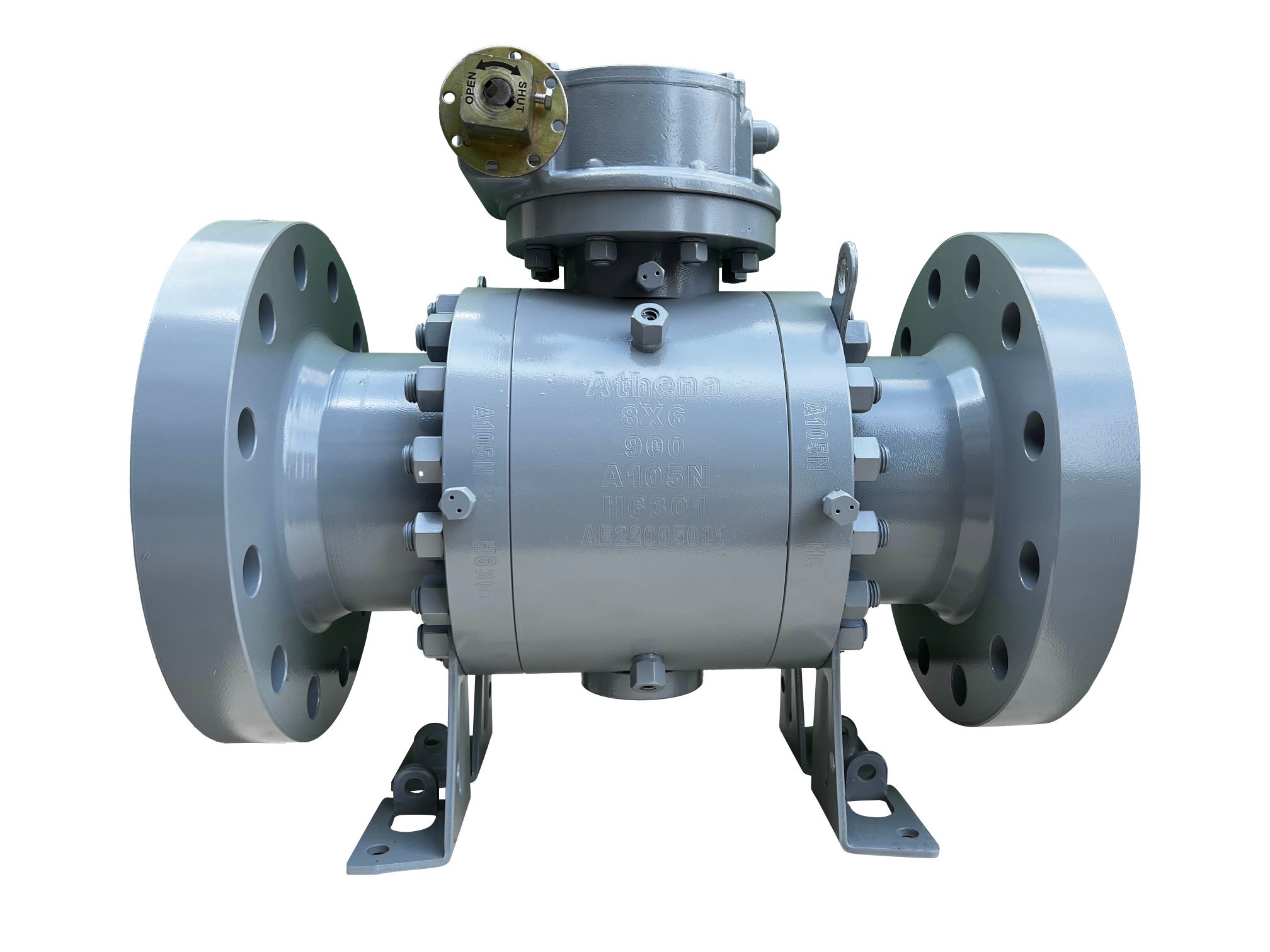
The ball valve is the modern standard for reliable isolation. Its core component is a machined ball with a central bore; rotating the ball 90 degrees aligns the bore with the pipeline for flow, or swings its solid wall across the flow path to seal the line shut. This simple yet robust geometry gives the ball valve its reputation for dependable, leak-free operation.
What makes it attractive
The decisive strength is sealing. A soft-seated ball valve can hold a bubble-tight shutoff across a very wide pressure range, which is why it dominates high-pressure isolation in oil and gas, chemical, and utility service. Operation is fast — the same quarter turn as a butterfly valve — but with a level of leak-tight integrity that many plants require at critical isolation points. Full-bore (full-port) ball valves offer essentially unrestricted, straight-through flow when open, resulting in near-zero pressure drop and making them excellent for high-flow and viscous-media applications. Ball valves also demand very little maintenance and retain their sealing performance even after long periods of inactivity.
Where you must be careful
The trade-offs: ball valves are heavier and bulkier than butterfly valves, and at large diameters they are substantially more expensive. They are not throttling valves — leaving the ball partially open exposes the seats to scouring flow and quickly destroys the sealing surfaces, so they should be reserved for on/off duty. Finally, in the closed position fluid can remain trapped inside the ball cavity; for process streams where stagnation, contamination, or thermal expansion is a concern, this requires careful design consideration, often addressed with a vented or self-draining ball.
Typical territory: high-pressure gas and liquid pipelines, oil and gas manifolds, chemical and petrochemical processing, fire-fighting isolation, and any point where a guaranteed leak-free shutoff is non-negotiable.
Typical territory: high-pressure gas and liquid pipelines, oil and gas manifolds, chemical and petrochemical processing, fire-fighting isolation, and any point where a guaranteed leak-free shutoff is non-negotiable.
The Gate Valve: Full-Bore Isolation That Stays Put
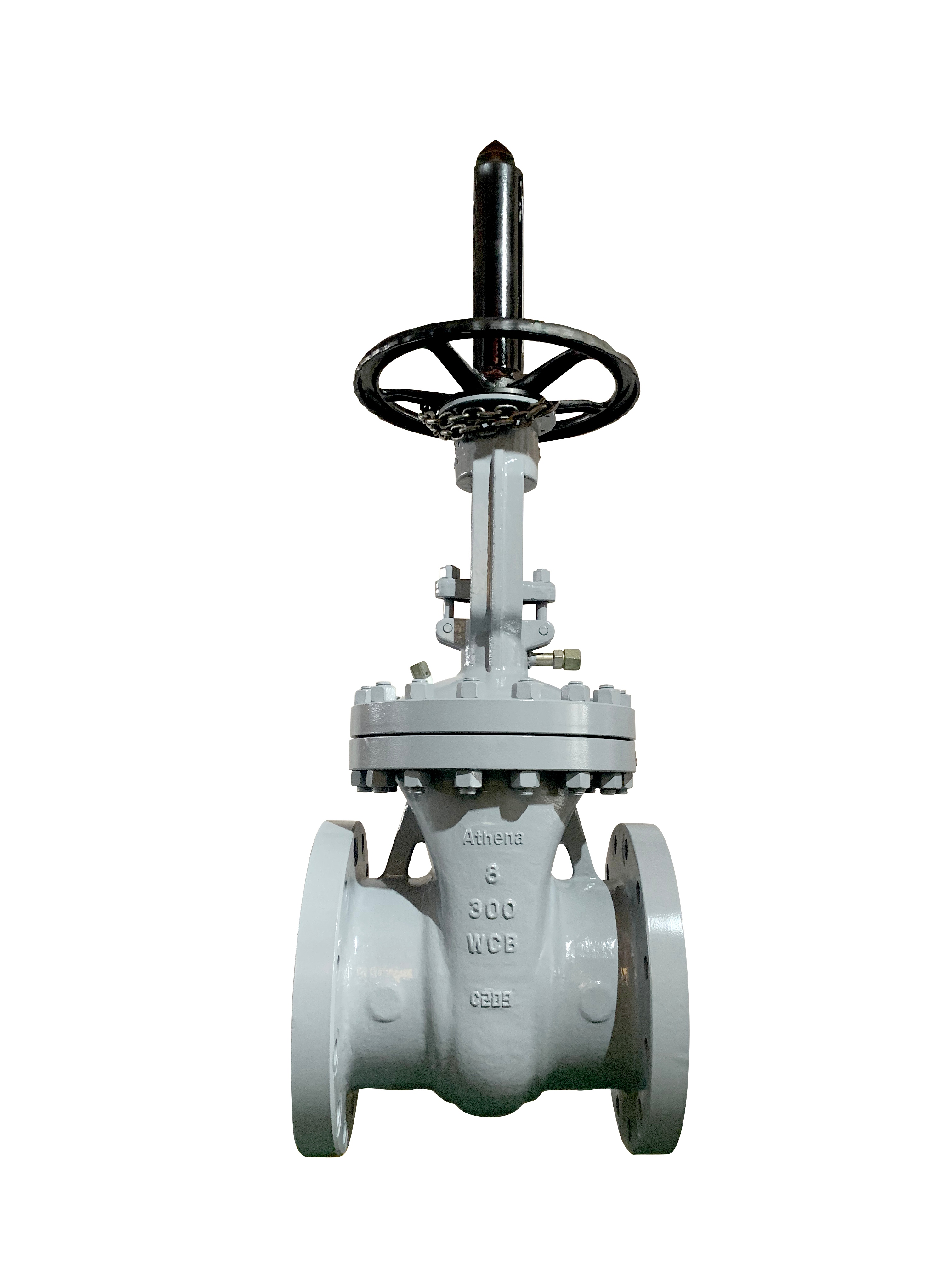
The gate valve is the classic multi-turn isolator. A flat or wedge-shaped gate slides vertically inside the body, driven by a stem and a handwheel, to either fully clear the flow path or fully block it. Its design philosophy is deliberate: maximum unobstructed flow when open, and a solid, dependable seal when closed.
What it does best
Its first strength is flow performance. When fully open, the gate retracts completely out of the bore, providing a straight, full-area passage with virtually zero pressure drop — ideal for mainlines where head loss must be kept to a minimum. Its second strength is durability for permanent isolation: gate valves are built to remain in one position, typically open, for years and still close reliably when finally operated. Its third is structural robustness — gate valves handle very high pressures and are a trusted choice for large-diameter, high-pressure mains.
Where it falls short
The limitations are equally clear. Gate valves are slow to operate — opening or closing requires many turns of the handwheel, which is a real drawback in emergency shutoff situations unless the valve is motorised. They are strictly on/off devices: partial opening leaves the gate edge exposed to erosive flow, causing vibration, seat damage, and reduced service life, so throttling is effectively forbidden. And they are heavier and more expensive to maintain, with the multi-turn mechanism, stuffing box, and stem assembly adding weight, cost, and maintenance complexity compared with a quarter-turn valve.
Typical territory: water distribution and transmission mains, power-plant cooling and utility lines, wastewater systems, and large-diameter pipelines that remain open for long periods.
Typical territory: water distribution and transmission mains, power-plant cooling and utility lines, wastewater systems, and large-diameter pipelines that remain open for long periods.
Head-to-Head: Butterfly vs Ball vs Gate
The table below condenses the key differences into a single view. It is a useful first screen when a new duty arrives on your desk.
| Criterion | Butterfly Valve | Ball Valve | Gate Valve |
| Operating principle | 90° rotating disc | 90° rotating ball with bore | Multi-turn sliding gate |
| Speed of operation | Fast (quarter-turn) | Fast (quarter-turn) | Slow (multi-turn) |
| Sealing when closed | Good at low/moderate pressure | Excellent, bubble-tight | Excellent, metal-seated |
| Throttling capability | Light modulation only | Not recommended | Never |
| Pressure drop when open | Moderate (disc in flow path) | Very low (full-bore) | Near zero (gate retracts) |
| Best niche | Space- and budget-constrained lines | High-pressure, leak-critical isolation | Long-term mainline isolation |
A Practical Decision Path for the Engineer
The right answer is rarely “one valve is best.” It is “this valve is best for this duty.” Work through the questions below and the field narrows itself quickly.
1. Define the function first. Is the job simply to stop and start flow, or to regulate it? For clean on/off duty, all three can qualify; for genuine throttling, you need a globe valve or a purpose-built control valve instead. This single question immediately eliminates the gate valve and forces the butterfly and ball valves to compete on the remaining criteria.
2. Know your media. Corrosive chemicals, abrasive slurries, clean gases, and potable water all demand different body and seat materials. Confirm that the valve internals — disc, ball, seats, and seals — are chemically compatible and will not corrode, swell, or degrade over the design life. A seat that fails from media incompatibility will end a line’s reliability faster than any sizing error.
3. Check the pressure and temperature envelope. Every valve has a rated limit. Compare it against the maximum the system can ever reach, including transients and surge conditions, and add a safety margin. If you are relying on an elastomeric soft seat for bubble-tight shutoff, confirm the seat’s temperature range as well.
4. Evaluate the flow and pressure-loss budget. If the line is large, long, or low-pressure, the permanent pressure drop of a butterfly disc may be unacceptable — pushing you toward a full-bore ball or a gate valve. Conversely, if pressure drop is acceptable and space is tight, the butterfly valve often wins.
5. Think about operation and actuation. Manual lever for fast local control, handwheel for infrequent operation, or pneumatic or electric actuation for automation? Quarter-turn valves mate naturally with actuators, while gate valves need more torque and a longer stroke, adding cost to the drive train.
6. Account for maintenance and lifecycle cost. Include not only the purchase price but also installation, spares availability, and the cost of unplanned downtime. Often the cheaper valve on the shelf is the more expensive one once maintenance and shutdowns are factored in over a decade of service.
A fast rule of thumb: choose a ball valve when you need leak-tight shutoff under high pressure with fast operation; a butterfly valve when space, weight, and budget dominate and pressure is moderate; and a gate valve when you need full-bore, low-pressure-drop isolation on a mainline that will stay open for years.
Sealing, Materials, and Standards: Points That Tip the Balance
Two further considerations frequently decide between otherwise similar candidates. The first is the sealing philosophy. Soft-seated valves (with elastomeric or PTFE seats) provide the tightest shutoff and are ideal for clean media at moderate temperatures; metal-seated valves tolerate higher temperatures, abrasives, and more demanding media, but typically achieve a lower leakage class and may require more sealing force. The second is compliance. Industrial valves are generally specified against internationally recognised design and testing standards covering pressure ratings, face-to-face dimensions, and end connections. When you procure from a manufacturer that builds to these standards and provides material certification and documented test results, you gain assurance that the valve will perform as rated — and that spare parts and dimensional compatibility are reproducible across the fleet.
At Athena Valve, we manufacture and supply butterfly, ball, and gate valves to meet these requirements, with the documentation and technical support that projects depend on. Whether you are specifying one isolation point or equipping an entire plant, our engineers help you translate pressure, media, flow, space, and actuation requirements into a valve that performs — and lasts.
Conclusion: Choose for the Duty, Not the Habit
Butterfly, ball, and gate valves each solve isolation problems in their own way, and none is universally superior. The butterfly valve earns its place wherever compactness, economy, and speed matter most; the ball valve is the go-to for high-pressure, leak-critical shutoff; the gate valve is the workhorse for full-bore, permanent mainline isolation. A clear-eyed assessment of the duty — function, media, pressure, temperature, flow, space, operation, and lifecycle cost — is the only reliable route to a good decision.
At Athena Valve, we are here to make that decision easier. From high-pressure ball valves for oil and gas to compact butterfly valves for water and HVAC, and rugged gate valves for utility mains, our range is built to internationally recognised standards and backed by real engineering support.
Need help shortlisting the right valve for your system? Contact our engineering team at sales@athenavalve.com, or explore the full product range at www.athenavalve.com. Whatever the line, Athena Valve helps you close the loop on flow control that performs — and lasts.
Frequently Asked Questions
Q1. What is the main difference between a butterfly, ball, and gate valve?
The difference lies in the closing element and how it operates. A butterfly valve uses a rotating disc that pivots on a central shaft; a ball valve uses a rotating ball with a bore; a gate valve uses a sliding gate that moves up and down. These different mechanisms lead to different sealing, flow, and speed characteristics.
Q2. Which is better — a butterfly valve or a ball valve?
It depends on the duty. A butterfly valve is better for large pipelines and tight spaces where compactness and budget lead; a ball valve is the better choice for high-pressure systems that demand a bubble-tight, leak-free shutoff.
Q3. When should I use a gate valve?
Use a gate valve for on/off isolation on a mainline that will remain fully open or fully closed for long periods, where full-bore flow with minimal pressure drop and robust sealing are the priorities.
Q4. Can a gate valve be used for flow control?
No. A gate valve must never be used for throttling. It is designed to operate either fully open or fully closed; partial opening exposes the gate to erosive flow, causing vibration, seat damage, and a shortened service life.
Q5. Can a butterfly valve be used for throttling?
Only for light, intermittent modulation. A butterfly valve is not a precision control valve; sustained mid-stroke operation can cause disc flutter and cavitation. For reliable flow regulation, use a globe or control valve.
Q6. Does Athena Valve help with valve selection?
Yes. When you contact the Athena Valve team, you get expert support for valve selection, a range of butterfly, ball, and gate valves built to recognized standards, and the engineering documentation your project requires. Reach us at sales@athenavalve.com.
 How to Fix a Leaking Ball Valve
 How to Repair a Gate Valve
 Pressure Seal Type Gate Valve for High-Pressure High-Temperature Industrial Isolation
 What Are the Differences Between Forged Valves and Cast Valves?
 Characteristics, Applications and Advantages of Carbon Steel Globe Valves
 Why Are Instrument Valves Indispensable for Industrial Control Systems?
 What is Bi-Directional Valves?
 How Does a Ball Type Check Valve Prevent Pipeline Medium Backflow?
 Selection and Precautions for Natural Gas Valves
 Athena Engineering S.R.L Wraps‑up OGA 2026 Kuala Lumpur
 What is a Gate Valve? What is Its Working Principle?
 T-Type / T-Pattern / Straight Pattern Globe Valve
 Knife Gate Valve vs Wedge Gate Valve: Which Is Better for Your Industrial Piping?
 Cryogenic Ball Valve Comprehensive Product Overview
 Causes and Treatments for Poor Valve Shut‑Off
 Athena Triple Offset Butterfly Valves
 What is the Difference Between Swing Check Valve and NRV? A Complete Explanation
 Common Connection Types of Valves
 5 Piping Design Mistakes That Are Killing Your Valves
 Float Valve: Structure, Principle and Application