
Cryogenic Ball Valve Comprehensive Product Overview
author: ATHENA GROUP
2026-08-31
1. Product Introduction
The cryogenic ball valve is a-special-purpose flow-control device engineered specifically for service under extremely-low-temperature working conditions. Widely adopted in cryogenic storage, transportation, pipeline transmission and process industries, it provides reliable on-off control for liquefied gases and cryogenic media. Conventional industrial ball valves cannot withstand severe temperature fluctuations, material brittleness and pressure-surge risks generated by cryogenic fluids, therefore professional cryogenic ball valves with optimized structural design, extended bonnet configuration and low-temperature resistant materials become an essential guarantee for safe, stable and long-term operation of cryogenic systems. This series of ball valves can operate steadily while handling various hazardous and ultra-cold-medium, delivering excellent sealing performance, anti-pressure-surge capacity and outstanding thermal-stress resistance.
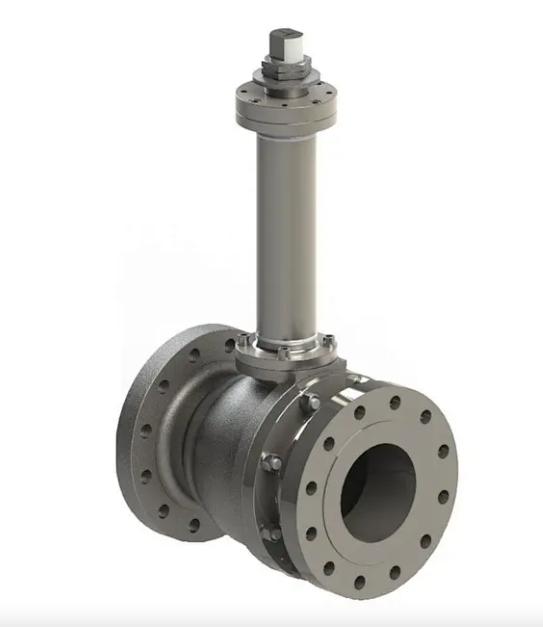
2. Main Structural Design
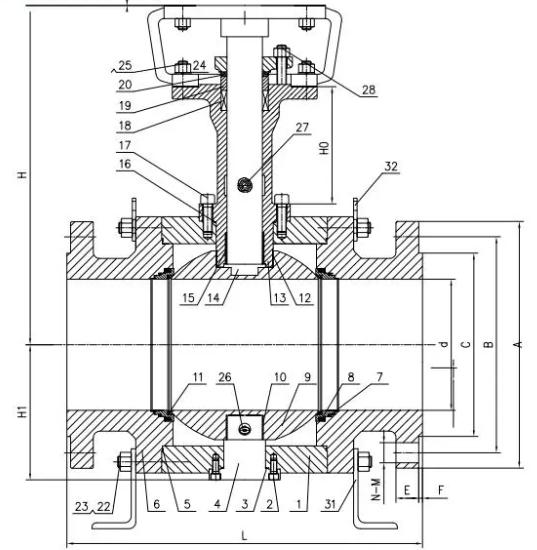
This product belongs to rising-stem ball valve with an integral bonnet extension, which is the most-critical structural feature for cryogenic working conditions. The lengthened bonnet creates a sufficient vaporizing zone between the cryogenic liquid medium and upper stem-packing area. When ultra-cold liquid flows into this section, it absorbs heat from ambient environment, boils gradually and converts into gas before contacting stem packing. This design effectively isolates low-temperature liquid from sealing components, avoids freezing, cracking and leakage of packing materials caused by ultra-low temperature, and greatly prolongs the service life of stem seals.
Equipped with live-loaded stem seal assembly, the stem sealing system maintains constant pre-tightening force on packing sets under temperature-change and vibration circumstances. Even when sealing materials experience minor shrinkage or wear at low temperature, the live-loading spring structure can automatically compensate sealing preload to keep stem leakage-tight status during long-term opening-closing cycles.
A body-cavity relief hole is drilled through the ball. This built-in pressure-relief structure solves a common risk of cryogenic pipelines: after valve closure, residual cryogenic liquid trapped inside the valve body cavity will absorb external heat, expand rapidly and generate dangerous over-pressure. The relief hole allows excess pressure inside cavity to release to upstream pipeline, preventing valve body damage, gasket failure or safety accidents caused by thermal expansion pressure.
Another vital safety-oriented structure is blow-out-proof stem. Special shoulder-limiting design on the stem and upper bonnet restricts stem from ejecting outwards under abnormal-high-pressure inside valve cavity. This safety-locking structure protects operators and surrounding equipment even under sudden pressure surge.
A body-cavity relief hole is drilled through the ball. This built-in pressure-relief structure solves a common risk of cryogenic pipelines: after valve closure, residual cryogenic liquid trapped inside the valve body cavity will absorb external heat, expand rapidly and generate dangerous over-pressure. The relief hole allows excess pressure inside cavity to release to upstream pipeline, preventing valve body damage, gasket failure or safety accidents caused by thermal expansion pressure.
Another vital safety-oriented structure is blow-out-proof stem. Special shoulder-limiting design on the stem and upper bonnet restricts stem from ejecting outwards under abnormal-high-pressure inside valve cavity. This safety-locking structure protects operators and surrounding equipment even under sudden pressure surge.
3. Core Performance Features
All key components of this cryogenic ball valve are manufactured from carefully-selected, engineered low-temperature resistant materials. Material formula and heat-treatment processes are specially optimized to ensure low thermal stress under extreme temperature difference. These components maintain good toughness, impact resistance and mechanical strength at ultra-low temperatures, avoiding brittle fracture, deformation or sealing failure induced by sharp cooling. The whole valve body is subjected to strict low-temperature impact testing before delivery to verify material stability.
Sealing performance remains consistent during repeated thermal cycles from ambient temperature down to cryogenic working temperature. The structural layout minimizes cold-loss conduction from low temperature medium to top actuator and operating parts, reducing energy consumption and frosting risks on valve top. Simple-and-reliable rising-stem structure provides clear visual position indication for valve open-close status, convenient for on-site operators to judge valve state quickly.
4. Application Scope
This cryogenic ball valve is suitable for all types of cryogen services across multiple industrial sectors. Applicable media include oxygen, hydrogen, methane, ammonia, nitrogen, fluorine, liquefied natural gas (LNG) and many other liquefied cryogenic fluids. Typical-application scenarios cover LNG terminals, cryogenic storage tanks, chemical gas-processing plants, energy-fuel production, aerospace cryogenic supply systems, pharmaceutical low-temperature processes and new-energy hydrogen-storage projects. Whether used for fixed-installation pipelines or mobile cryogenic transport equipment, this valve delivers dependable, long-life cryogenic flow control.
 How Does a Ball Type Check Valve Prevent Pipeline Medium Backflow?
  Selection and Precautions for Natural Gas Valves
  Athena Engineering S.R.L Wraps‑up OGA 2026 Kuala Lumpur
  What is a Gate Valve? What is Its Working Principle?
  T-Type / T-Pattern / Straight Pattern Globe Valve
  Knife Gate Valve vs Wedge Gate Valve: Which Is Better for Your Industrial Piping?
  Causes and Treatments for Poor Valve Shut‑Off
  Athena Triple Offset Butterfly Valves
  What is the Difference Between Swing Check Valve and NRV? A Complete Explanation
  Common Connection Types of Valves
  5 Piping Design Mistakes That Are Killing Your Valves
  Float Valve: Structure, Principle and Application
  High Pressure Needle Valve High-Precision Fluid Control Valve
  What is a Piston Check Valve?
  Meet Us at OGA 2026 | Booth 6802, Hall 6
  What is a Level Gauge? Working Principles, Types and Industrial Applications
  Double Sealing Protection: A Complete Interpretation of Bellows Globe Valves
  End-Suction Pump vs Inline Pumps: Which One Is Right for You?
  Method of Selecting Valve Types Based on Throttling Degree
  Safety Valves–Core Protection for Pressure Equipment