
What is a Double Block & Bleed Ball Valve?
Five Core Advantages of Double Block & Bleed Ball Valves
1. Ultimate Safety Assurance to Eliminate Leakage Risks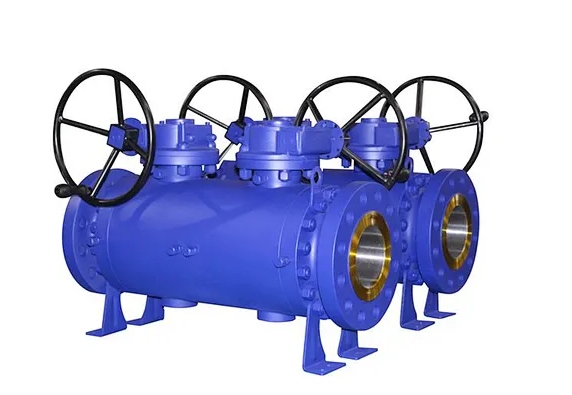
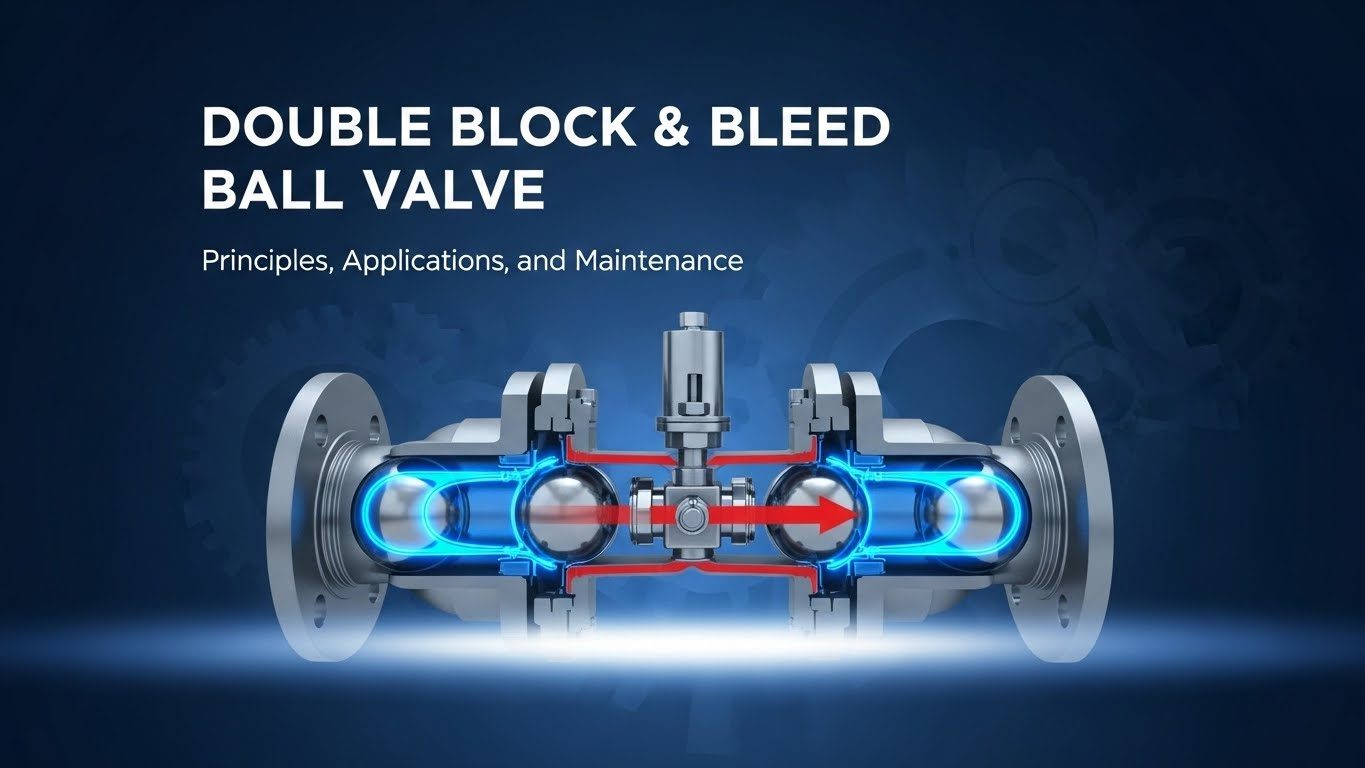
In systems handling high-pressure, toxic, flammable, or corrosive media, a single-point seal failure can lead to catastrophic consequences. The DBB ball valve adopts a dual-seal structure; even if one seal is damaged, the other can still effectively isolate the medium. Equipped with a bleed port, operators can real-time verify the seal status — if no medium flows out of the bleed port, the dual seals are intact; if there is leakage, timely early warning and handling can be performed.
2. Simplify System Design, Save Space and Costs
In traditional solutions, achieving dual isolation + bleed functionality usually requires installing two independent globe valves plus an intermediate blowdown valve, which occupies a lot of pipeline space, has multiple connection points, and thus more potential leakage points. The DBB ball valve integrates these three functions into one unit, significantly reducing installation length, the number of welds/flanges, and maintenance interfaces. It not only lowers the initial investment but also improves the overall reliability of the system.
3. Support Online Maintenance and Testing
Thanks to the bleed function, the DBB ball valve can undergo seal performance testing without interrupting the main process. For example, before the scheduled maintenance of petrochemical equipment, the bleed port can be used to confirm whether the valve has truly achieved isolation, avoiding safety accidents caused by "false shutdown." Some high-end models also support online replacement of valve seats or seals, greatly enhancing operational and maintenance flexibility.
4. Suitable for Harsh Operating Conditions
Modern DBB ball valves widely adopt fully welded valve bodies, metal seals (such as Inconel and Stellite overlay welding), fire-safe designs, and anti-static structures. They can withstand temperatures up to 500°C, pressure classes of Class 900 or higher, and corrosive environments containing H₂S, CO₂, etc., fully meeting the requirements of API 607/6FA fire-safe certifications.
5. Compliance with International Standards and Industry Trends
With the tightening of safety and environmental regulations such as OSHA, EPA, and ISO 14726, the DBB function has become a mandatory requirement in many high-risk industries. In key locations such as LNG receiving terminals, refinery reactor feed lines, and offshore platform metering skids, DBB ball valves are almost the standard configuration.
DBB vs. DIB: How to Make the Right Choice?
In valve selection, DBB (Double Block & Bleed) and DIB (Double Isolation & Bleed) are often confused. Although both provide bleed functionality, the sealing logic of their valve seats is completely different:
- DBB (Double Block & Bleed): Usually adopts self-relieving valve seats. When the pressure in the valve cavity rises abnormally (e.g., due to thermal expansion) and exceeds the pipeline pressure by a certain ratio, the valve seat will automatically open to relieve the pressure back into the pipeline.
- DIB-1 (Double Isolation & Bleed - Enhanced Type): Adopts double piston effect valve seats. The valve seat can maintain a seal regardless of whether the pressure comes from the pipeline or the valve cavity. This design offers higher safety but must be equipped with an external safety relief valve to prevent the valve cavity from overpressurizing and exploding.
- DIB-2: A hybrid design with one self-relieving valve seat and one double piston effect valve seat, balancing pressure management and one-way high-level isolation.
| Comparison Dimension | DBB (Standard Type) | DIB-1 (Enhanced Type) |
|---|---|---|
| Sealing Direction | One-way sealing (per valve seat) | Two-way sealing (per valve seat) |
| Cavity Pressure Relief | Automatic relief to the pipeline | Requires external relief device |
| Main Applications | Routine safety isolation | High safety requirements / Key location isolation |
Typical Application Scenarios
- Oil and Gas: Used for isolation and sampling points in wellhead equipment, gas transmission mains, and LNG liquefaction units.
- Chemical and Petrochemical: Achieve safe isolation in catalyst injection lines, acid-base transfer systems, and inlet/outlet of high-pressure reactors.
- Power Industry: Ensure zero leakage in auxiliary systems of nuclear power plants and feedwater control of supercritical boilers.
- Pharmaceutical and Food: Prevent cross-contamination in high-purity fluid pipelines and support CIP/SIP cleaning verification.
Conclusion
With the acceleration of Industry 4.0 and digital transformation, Double Block & Bleed Ball Valves equipped with intelligent actuators and condition monitoring systems are evolving from passive isolation equipment to intelligent safety nodes. By integrating pressure sensors, remote control modules, and predictive maintenance algorithms, modern DBB ball valves not only achieve dual reliable blocking of upstream and downstream media and safe relief of cavity pressure but also support real-time data transmission, seal integrity diagnosis, and fault early warning — this not only significantly improves the intelligence level of pipeline systems but also pushes industrial process safety to an unprecedented height.
Choosing a high-performance and highly compliant Double Block & Bleed Ball Valve is not only an investment in key equipment but also a practical commitment to enterprise safety production, employee health protection, and environmental responsibility. As a leading European provider of industrial valve solutions, Athena Engineering S.R.L. has always taken "intrinsic safety" as the core design concept and is committed to providing rigorously verified Double Block & Bleed Ball Valve products for global energy, chemical, and infrastructure projects. Trust Athena Engineering S.R.L. — Let safety go beyond standards.
 How Does a Ball Type Check Valve Prevent Pipeline Medium Backflow?
  Selection and Precautions for Natural Gas Valves
  Athena Engineering S.R.L Wraps‑up OGA 2026 Kuala Lumpur
  What is a Gate Valve? What is Its Working Principle?
  T-Type / T-Pattern / Straight Pattern Globe Valve
  Knife Gate Valve vs Wedge Gate Valve: Which Is Better for Your Industrial Piping?
  Cryogenic Ball Valve Comprehensive Product Overview
  Causes and Treatments for Poor Valve Shut‑Off
  Athena Triple Offset Butterfly Valves
  What is the Difference Between Swing Check Valve and NRV? A Complete Explanation
  Common Connection Types of Valves
  5 Piping Design Mistakes That Are Killing Your Valves
  Float Valve: Structure, Principle and Application
  High Pressure Needle Valve High-Precision Fluid Control Valve
  What is a Piston Check Valve?
  Meet Us at OGA 2026 | Booth 6802, Hall 6
  What is a Level Gauge? Working Principles, Types and Industrial Applications
  Double Sealing Protection: A Complete Interpretation of Bellows Globe Valves
  End-Suction Pump vs Inline Pumps: Which One Is Right for You?
  Method of Selecting Valve Types Based on Throttling Degree