
Wafer Valves for Industrial Precision Regulation and High-Efficiency Performance
author: ATHENA GROUP
2025-08-22

In the continuously evolving and highly competitive field of industrial engineering, wafer valves play critical and diverse roles in ensuring the stable operation of various industrial processes. Characterized by a compact structure and high efficiency, these valves achieve precise regulation of fluid and gas flow in pipelines through their unique design and functional configuration. As a result, they are capable of providing reliable and adaptable technical solutions for industrial scenarios across multiple fields, including heavy manufacturing, complex chemical processing, and hygiene-sensitive food and beverage production.
Versatility in Design and Function
Wafer valves feature a core design characteristic of a thin-sheet structure, which offers significant application advantages in pipeline systems. Their structural form allows direct installation between two flanges, with a simple and efficient installation process. This not only reduces the time required for installation work but also lowers the space occupancy demand of pipeline infrastructure. As a result, wafer valves have clear applicability in scenarios with limited space resources, with typical applications including offshore oil drilling platforms, small chemical plants, and confined food processing facilities.
The versatility of wafer valves is reflected not only in their physical design but also in their operational functionality. They are available with multiple actuation methods, including manual, pneumatic, and electric options. Manual wafer valves are typically suitable for scenarios requiring simple, low-tech, and cost-effective solutions, such as small laboratories or certain minor industrial processes. On the other hand, pneumatic wafer valves operate at a faster speed and are well-suited for applications demanding rapid response, such as high-speed packaging lines in the food industry or specific sections of chemical plants where quick flow control is essential. Electric wafer valves can be integrated into automated control systems, enabling precise remote control over the flow rate and direction of the conveyed media. This makes them a popular choice in large-scale industrial operations, such as power plants or refineries, where centralized and automated process control is of crucial importance.
In the chemical industry, where the routine handling of corrosive, toxic, and highly reactive substances is standard practice, wafer valves manufactured from specialized materials have emerged as critical components for ensuring production safety. Among these materials, stainless steel—boasting excellent corrosion resistance—serves as a widely utilized base material. For example, in fertilizer production processes that involve the conveyance of highly acidic and alkaline solutions, stainless steel wafer valves can maintain structural stability in harsh chemical environments over extended periods. They effectively curb leakage risks, thereby preventing issues such as environmental hazards and production disruptions.Furthermore, for scenarios with stringent requirements for chemical inertness, corrosion-resistant polymeric materials like PTFE (Polytetrafluoroethylene) are extensively employed. In the field of pharmaceutical manufacturing, PTFE-lined wafer valves enable physical isolation from the media, ensuring that the cleanliness of the production process remains free from contamination. This, in turn, safeguards the quality stability and clinical efficacy of pharmaceutical products.
In the food and beverage sector, where hygiene and product safety are of paramount importance, wafer valves are designed with strict industry standards in mind. They feature smooth surfaces that minimize the accumulation of residue and bacteria, making them easy to clean. Non - toxic materials are used to ensure that there is no risk of contamination to the food products. For example, in dairy processing plants, wafer valves made from food - grade stainless steel and other approved materials are used to handle milk, yogurt, and other dairy products. These valves not only meet the stringent hygiene requirements but also maintain the integrity of the products during processing, ensuring that the final consumer receives a safe and high - quality product.

Technological Advancements
The field of wafer valves has experienced a remarkable wave of technological advancements in recent years, driven by the increasing demands of modern industries for higher efficiency, reliability, and automation. One of the most significant developments is the integration of smart technology into wafer valves. These smart valves are equipped with sensors and communication modules that enable remote monitoring and control of their operation. For example, in a large - scale water treatment plant, smart wafer valves can be connected to a central control system. Operators can monitor the valve's status, such as its open/closed position, flow rate, and pressure, in real - time from a control room. They can also make adjustments to the valve's settings remotely, without the need for manual intervention on - site. This not only enhances the convenience of operation but also allows for immediate responses to changing process requirements, optimizing productivity and significantly reducing the risk of costly downtime.
Another key area of technological advancement worthy of focused attention is the research, development, and upgrading of high-precision flow control mechanisms. Currently, advanced wafer valves have integrated cutting-edge sealing technologies and optimized internal geometric structure designs. Among these, new sealing materials (such as elastomeric materials with superior sealing performance) can achieve tightly fitting sealing effects, minimizing leakage risks to the lowest level. Meanwhile, the optimized internal geometric structure of the valves, through precise design of the flow channel morphology, can effectively reduce fluid turbulence, thereby achieving more accurate and stable flow regulation results.In the field of semiconductor manufacturing, even minor fluctuations in gas flow may have a significant impact on the quality of finished chips. Such advanced wafer valves play an irreplaceable and critical role in this scenario—they can perform high-precision control over the flow rates of nitrogen, oxygen, and various process gases, providing reliable guarantees for the stable mass production of high-quality semiconductor devices.
Furthermore, advancements in manufacturing technologies such as 3D printing have also exerted an impact on the production of wafer valves. 3D printing technology enables the fabrication of complex valve geometries that are difficult or impossible to achieve with traditional methods. This allows for the production of custom-designed wafer valves, which can meet the specific requirements of various industrial applications, further enhancing the versatility and performance of such valves.

ATHENA ENGINEERING S.R.L: A Trusted Name in the Industry
Among the numerous players in the wafer valve market, ATHENA ENGINEERING S.R.L stands out as a trusted supplier. Our company focuses on quality and innovation, offering a range of wafer valve products including reliable butterfly valves and check valves. Our butterfly valves are renowned for their rapid operation, making them suitable for emergency systems; while check valves effectively prevent medium backflow in critical pipelines.
ATHENA ENGINEERING S.R.L also provides customized solutions, leveraging the team's professional expertise to meet clients' specific needs. The company is committed to offering clients full-process technical guidance from product selection to after-sales service, establishing itself as a reliable partner for various industries seeking wafer valve solutions.
As industries continue to develop and push technological boundaries, the demand for high-performance, high-reliability, and technologically advanced wafer valves will grow increasingly. Driven by ongoing technological progress and reliable enterprises like ATHENA ENGINEERING S.R.L, the future of wafer valves looks promising. These valves will continue to play a key role in ensuring the smooth and efficient operation of industrial processes, providing more innovative and reliable solutions for various application scenarios in the years to come.
 How Does a Ball Type Check Valve Prevent Pipeline Medium Backflow?
  Selection and Precautions for Natural Gas Valves
  Athena Engineering S.R.L Wraps‑up OGA 2026 Kuala Lumpur
  What is a Gate Valve? What is Its Working Principle?
  T-Type / T-Pattern / Straight Pattern Globe Valve
  Knife Gate Valve vs Wedge Gate Valve: Which Is Better for Your Industrial Piping?
  Cryogenic Ball Valve Comprehensive Product Overview
  Causes and Treatments for Poor Valve Shut‑Off
  Athena Triple Offset Butterfly Valves
  What is the Difference Between Swing Check Valve and NRV? A Complete Explanation
  Common Connection Types of Valves
  5 Piping Design Mistakes That Are Killing Your Valves
  Float Valve: Structure, Principle and Application
  High Pressure Needle Valve High-Precision Fluid Control Valve
  What is a Piston Check Valve?
  Meet Us at OGA 2026 | Booth 6802, Hall 6
  What is a Level Gauge? Working Principles, Types and Industrial Applications
 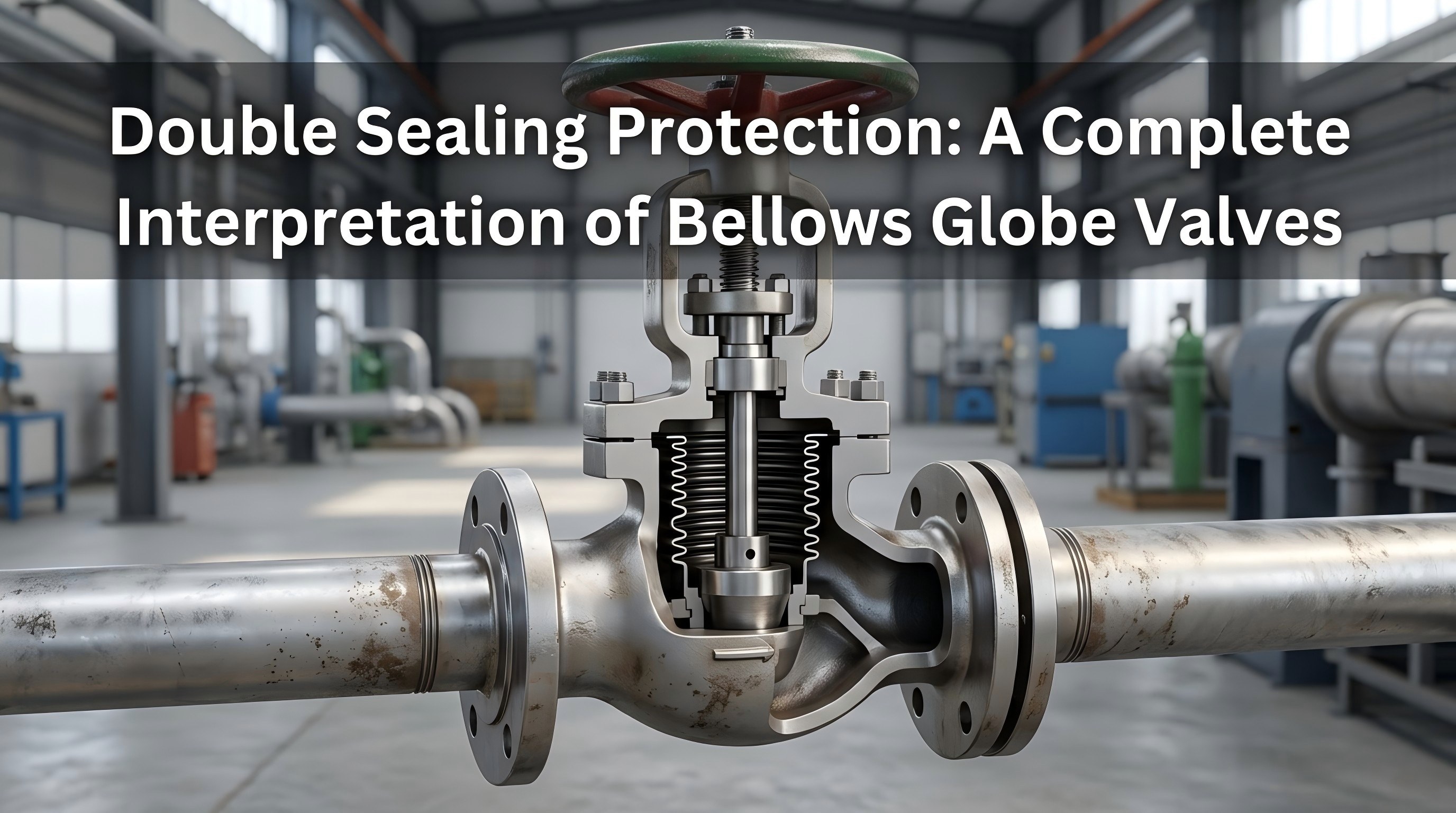 Double Sealing Protection: A Complete Interpretation of Bellows Globe Valves
  End-Suction Pump vs Inline Pumps: Which One Is Right for You?
  Method of Selecting Valve Types Based on Throttling Degree