
Professional Knowledge of Cryogenic Valves-Core Specifications & Application Guide
author: ATHENA GROUP
2026-06-23

1. Working Conditions & Temperature Classification of Cryogenic Valves
Industrial temperature classification: Working temperature ranging from -29℃to -196℃ is defined as cryogenic service. Conditions above -29℃ belong to mild low temperature; temperature from -40℃ to -104℃ is commonly applied to LPG and ethylene facilities; ultra-low temperature at -162℃ suits LNG service while -196℃ is for liquid nitrogen and liquid
Common service medium: LNG, liquid oxygen, liquid nitrogen, liquid argon, liquid carbon dioxide, liquid ethylene, liquid propane and other easily vaporized cryogenic liquids.
Typical application fields: Air separation plant, LNG receiving terminal, cryogenic storage tank, tank truck, vaporization station and petrochemical cryogenic process unit.

2. Body Material Selection & Applicable Temperature Range
WCB:Minimum applicable temperature -29℃, for conventional mild low-temperature & low-pressure service, unavailable for ultra-cryogenic working conditions.
LCB: Low-temperature carbon steel with minimum service temperature -46℃, widely used for LPG and propane pipeline.
LC3: 3.5% nickel alloy steel, lowest working temperature -101℃, special material for ethylene production unit.
CF8/CF3 (304/304L), CF8M/CF3M (316/316L): Austenitic stainless steel, full-range service from ambient down to -196℃, preferred material for liquid oxygen, liquid nitrogen and high-purity cryogenic medium without cold brittleness defect.
3. Core Structural Design Features for Cryogenic Valves
Extended Bonnet: Iconic structural feature of cryogenic valves. Extended stem sleeve isolates cold transmission from valve body to packing box and actuator via air insulation, preventing packing hardening leakage and actuator jamming under low temperature. Neck length is customized based on medium temperature and pipeline insulation thickness; neck length of LNG ultra-cryogenic valves is normally over 200mm.
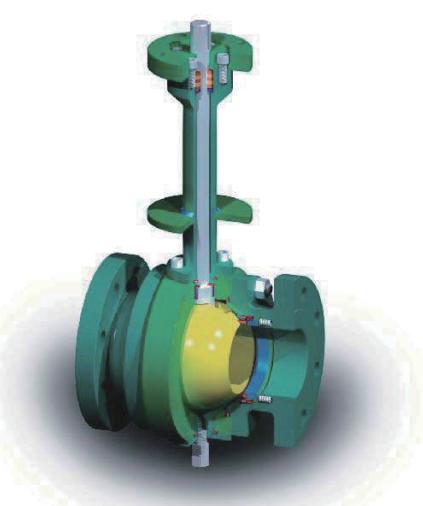
Cavity Pressure Relief Structure: Cryogenic liquid will expand drastically after vaporization due to heat absorption; closed body cavity will generate abnormal high pressure and cause valve rupture. Ball valves and gate valves shall be equipped with internal one-way relief hole to discharge excess vaporized medium upstream.
Packing & Sealing Material Selection
Packing: Flexible graphite, PTFE and special low-temperature braided packing; ordinary asbestos packing is forbidden for its shrinkage and leakage risk under cryogenic condition.
Soft sealing: Modified low-temperature PTFE, RPTFE and cryogenic HNBR. Ordinary rubber hardens below -40℃; metal-to-metal sealing is mostly adopted for ultra-low temperature working conditions.
Stem : Valve stem adopts 304/316 stainless steel.
4. Main Valve Types & Matching Applications
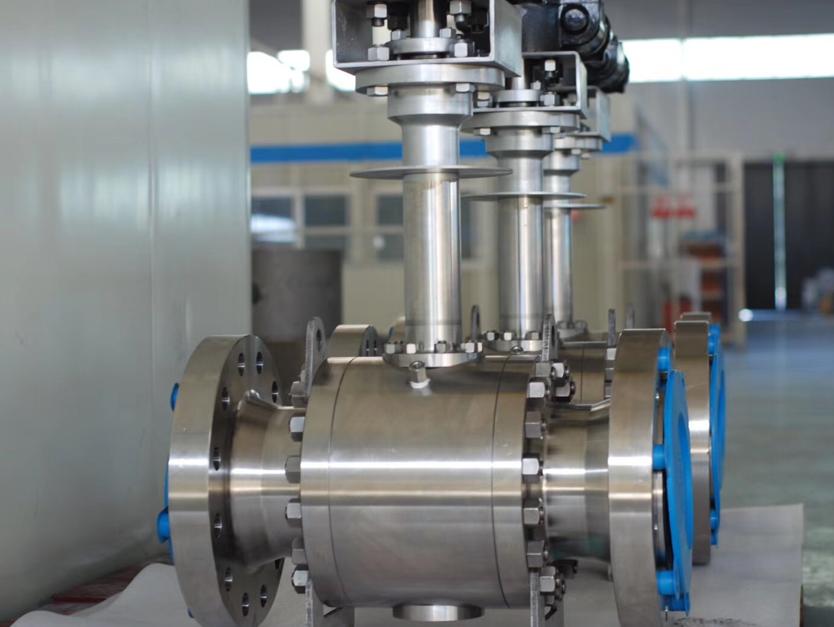
Cryogenic Ball Valve: Quick on-off action and low flow resistance. Floating ball type for small & medium bore LNG pipeline; trunnion mounted ball valve for large-bore tank inlet/outlet and loading arm; metal-seated ball valve for high-pressure ultra-cryogenic service.
Cryogenic Gate Valve: Minimum flow resistance, widely used as root valve for storage tank and main pipeline isolation, preferred option for large-bore low-pressure cryogenic piping system.
Cryogenic Globe Valve: Excellent throttling & flow regulation performance, installed at inlet/outlet of vaporizer and fine adjustment of small-bore instrument piping.
Cryogenic Check Valve: Split disc & swing type available, preventing medium backflow, essential for pump outlet and tank filling pipeline.
Cryogenic Butterfly Valve: Concentric butterfly for low-pressure large-bore vent & cryogenic waste gas pipeline; triple eccentric metal seated butterfly valve for medium & high-pressure LNG main line.
5. On-site Installation & Operation Precautions
Avoid over-tightening packing during pre-installation; excessive preload will crack sealing parts after low-temperature shrinkage. Gradual pre-cooling before commissioning is required; rapid cooling & heating is prohibited to prevent thermal stress crack on valve body.
All cryogenic valves for liquid oxygen service must undergo strict degreasing treatment; internal flow path free of grease and impurity to avoid explosion risk caused by spontaneous combustion of grease contacting liquid oxygen.
Keep valves slightly open during long-term standby to prevent sealing face locking from residual frozen cryogenic medium.
Keep valves slightly open during long-term standby to prevent sealing face locking from residual frozen cryogenic medium.
 How Does a Ball Type Check Valve Prevent Pipeline Medium Backflow?
  Selection and Precautions for Natural Gas Valves
  Athena Engineering S.R.L Wraps‑up OGA 2026 Kuala Lumpur
  What is a Gate Valve? What is Its Working Principle?
  T-Type / T-Pattern / Straight Pattern Globe Valve
  Knife Gate Valve vs Wedge Gate Valve: Which Is Better for Your Industrial Piping?
  Cryogenic Ball Valve Comprehensive Product Overview
  Causes and Treatments for Poor Valve Shut‑Off
  Athena Triple Offset Butterfly Valves
  What is the Difference Between Swing Check Valve and NRV? A Complete Explanation
  Common Connection Types of Valves
  5 Piping Design Mistakes That Are Killing Your Valves
  Float Valve: Structure, Principle and Application
  High Pressure Needle Valve High-Precision Fluid Control Valve
  What is a Piston Check Valve?
  Meet Us at OGA 2026 | Booth 6802, Hall 6
  What is a Level Gauge? Working Principles, Types and Industrial Applications
  Double Sealing Protection: A Complete Interpretation of Bellows Globe Valves
  End-Suction Pump vs Inline Pumps: Which One Is Right for You?
  Method of Selecting Valve Types Based on Throttling Degree