
Precision Meets Visibility, ATHENA Rising Stem Ball Valve
author: ATHENA GROUP
2026-01-21
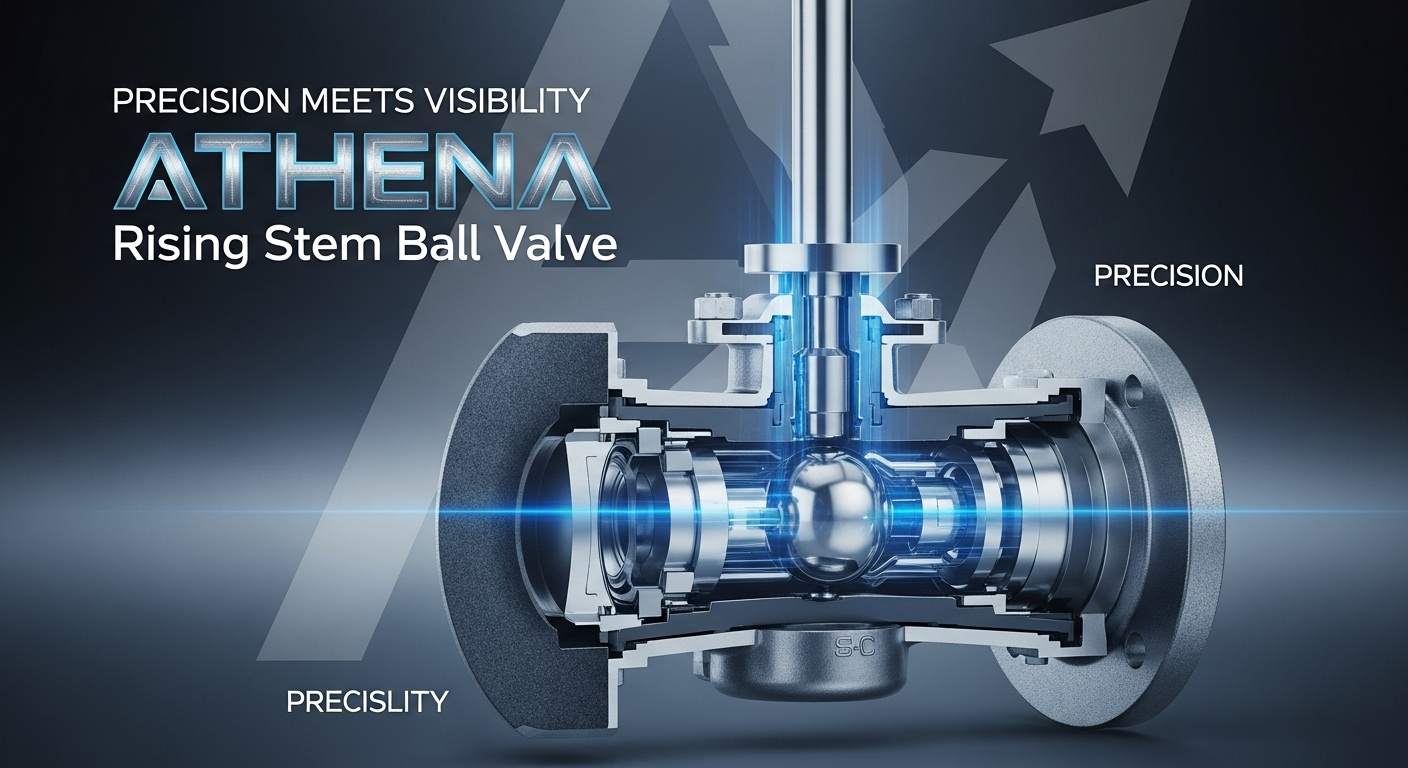
I. Rising Stem Ball Valve: A Special Valve Combining Flow and Operational Advantages?
The rising stem ball valve is a special type of ball valve, combining the advantages of both ball valves and rising stem gate valves. Its core components include a ball, rising stem, valve seat, valve body, and actuator.
Compared to ordinary ball valves, its stem rotates and moves up and down during opening and closing, precisely positioning the ball to achieve on/off and regulation functions. It offers good flowability, low resistance, and allows for direct visualization of the opening and closing status, making it suitable for industrial applications requiring precise flow control and status identification.
II. How Does a Rising Stem Ball Valve Achieve Precise Opening, Closing, and Sealing?
The rising stem ball valve achieves opening and sealing through a two-step action of "rotation + lifting": During operation, the stem first moves upward, lifting the ball away from the valve seat, then rotating 90° fully opens the valve, allowing smooth flow of the medium. To close, the operation is reversed: first, the stem is rotated to align with the valve seat, then pressed downward to press the ball tightly against the seat, achieving a seal.
III. Which Industrial Scenarios Are More Suitable for Rising Stem Ball Valves?

Rising stem ball valves, due to their comprehensive performance, are widely used in various industries such as petrochemicals, natural gas, power, metallurgy, water treatment, and pharmaceuticals. Specific scenarios include:
- Petrochemical Industry: Pipelines for transporting crude oil, refined oil, chemical raw materials, and corrosive media; inlet and outlet control of reaction vessels and storage tanks;
- Natural Gas Industry: Opening and closing and regulation of long-distance pipelines, city gas pipelines, and LNG storage facilities;
- Power Industry: Pipeline control of steam, cooling water, and lubricating oil in thermal power, nuclear power, and hydropower systems;
- Metallurgical Industry: Flow control of cooling water pipes and hydraulic pipelines in metallurgical furnaces and rolling mills;
- Water Treatment Industry: Opening and closing of pipelines in industrial wastewater, pure water, and seawater desalination systems, suitable for high flow rates and low leakage requirements;
- Pharmaceutical Industry: Pipelines for transporting pharmaceutical raw materials and solvents, requiring sealed, clean, and pollution-free environments.
IV. Comparison with Similar Valves: Where Does the Advantage Lie?
1. Compared to a standard floating ball valve: A standard floating ball valve's stem only rotates, resulting in friction between the ball and seat during opening and closing, leading to faster wear on the sealing surface. A rising stem ball valve, by first lifting and then rotating, avoids friction and wear, resulting in a longer seal life. It also provides a clearer view of the opening and closing status and higher adjustment precision.
2. Compared to a gate valve: Gate valves have high flow resistance, long opening and closing strokes, and low operating efficiency. Rising stem ball valves have low flow resistance, short opening and closing strokes (only 90° rotation + a small amount of lifting), are easy to operate, and have a stronger flow capacity, making them suitable for high-flow-rate applications.
3. Compared to a globe valve: Globe valves have high flow resistance, generally poor adjustment performance, and are prone to sealing surface wear. Rising stem ball valves offer high adjustment precision, low flow resistance, superior bidirectional sealing performance, and are suitable for a wider range of operating conditions.
2. Compared to a gate valve: Gate valves have high flow resistance, long opening and closing strokes, and low operating efficiency. Rising stem ball valves have low flow resistance, short opening and closing strokes (only 90° rotation + a small amount of lifting), are easy to operate, and have a stronger flow capacity, making them suitable for high-flow-rate applications.
3. Compared to a globe valve: Globe valves have high flow resistance, generally poor adjustment performance, and are prone to sealing surface wear. Rising stem ball valves offer high adjustment precision, low flow resistance, superior bidirectional sealing performance, and are suitable for a wider range of operating conditions.
V. Selection Recommendations: How to Choose the Right Model?
When selecting a valve, the appropriate valve body material and sealing structure should be chosen based on the characteristics of the medium (temperature, pressure, corrosiveness, and particle content); the nominal diameter and bore type (full bore/reduced bore) should be determined based on the pipeline diameter and flow requirements; the actuator should be selected based on the operating scenario (manual/automatic, remote control/on-site control); and industry standards and pipeline system requirements should be referenced to ensure valve compatibility with the system.
VI. Conclusion
Rising stem ball valves, with their core advantages of reliable sealing, intuitive operation, low flow resistance, and wide adaptability, have become ideal devices for flow control and opening/closing in industrial pipeline systems. Whether for precise regulation under complex operating conditions or stable opening/closing in conventional scenarios, they can meet the reliability, efficiency, and safety requirements of industrial production, providing strong support for media transportation systems in various industries.
 How Does a Ball Type Check Valve Prevent Pipeline Medium Backflow?
  Selection and Precautions for Natural Gas Valves
  Athena Engineering S.R.L Wraps‑up OGA 2026 Kuala Lumpur
  What is a Gate Valve? What is Its Working Principle?
  T-Type / T-Pattern / Straight Pattern Globe Valve
  Knife Gate Valve vs Wedge Gate Valve: Which Is Better for Your Industrial Piping?
  Cryogenic Ball Valve Comprehensive Product Overview
  Causes and Treatments for Poor Valve Shut‑Off
  Athena Triple Offset Butterfly Valves
  What is the Difference Between Swing Check Valve and NRV? A Complete Explanation
  Common Connection Types of Valves
  5 Piping Design Mistakes That Are Killing Your Valves
  Float Valve: Structure, Principle and Application
  High Pressure Needle Valve High-Precision Fluid Control Valve
  What is a Piston Check Valve?
  Meet Us at OGA 2026 | Booth 6802, Hall 6
  What is a Level Gauge? Working Principles, Types and Industrial Applications
 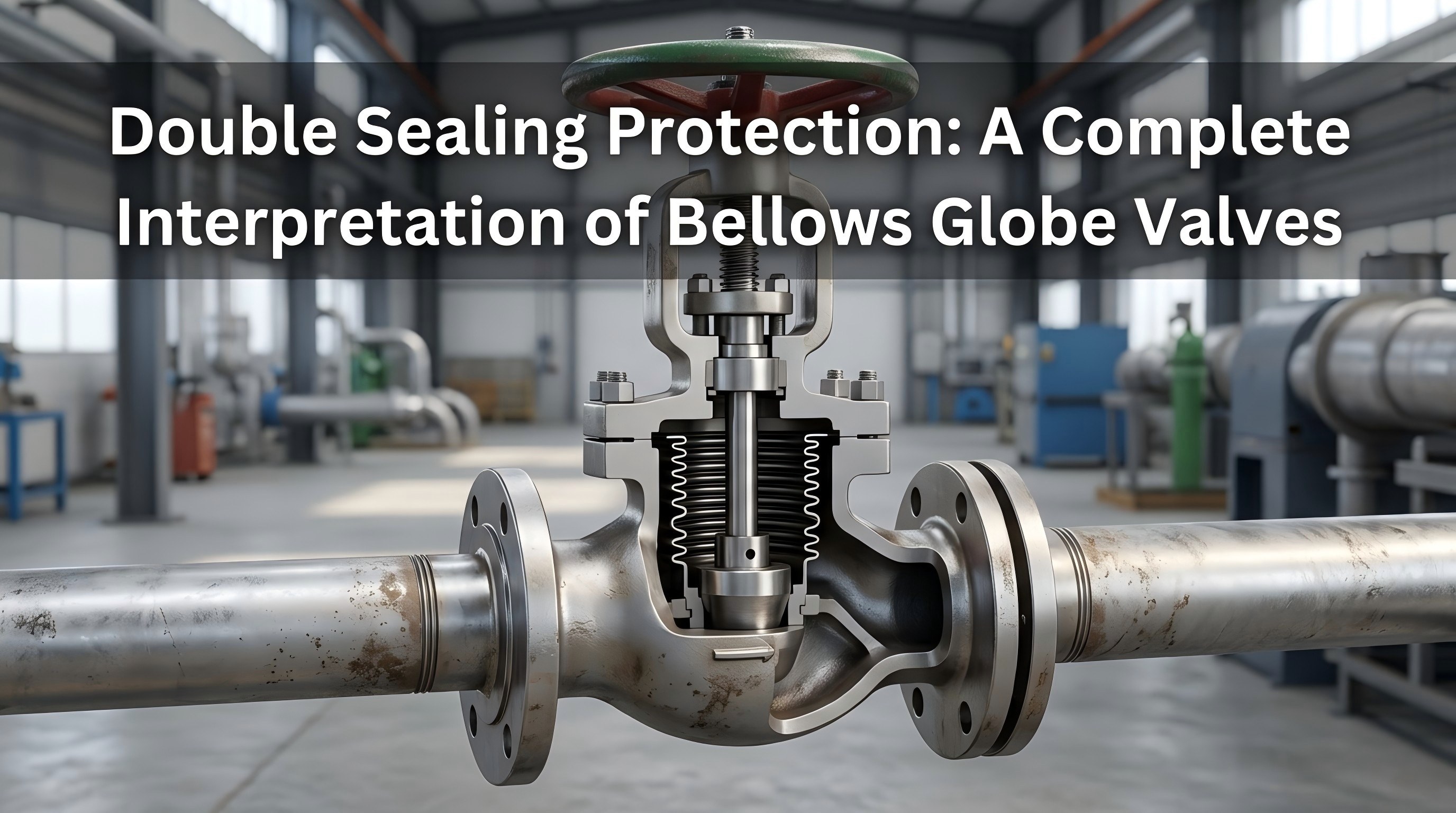 Double Sealing Protection: A Complete Interpretation of Bellows Globe Valves
  End-Suction Pump vs Inline Pumps: Which One Is Right for You?
 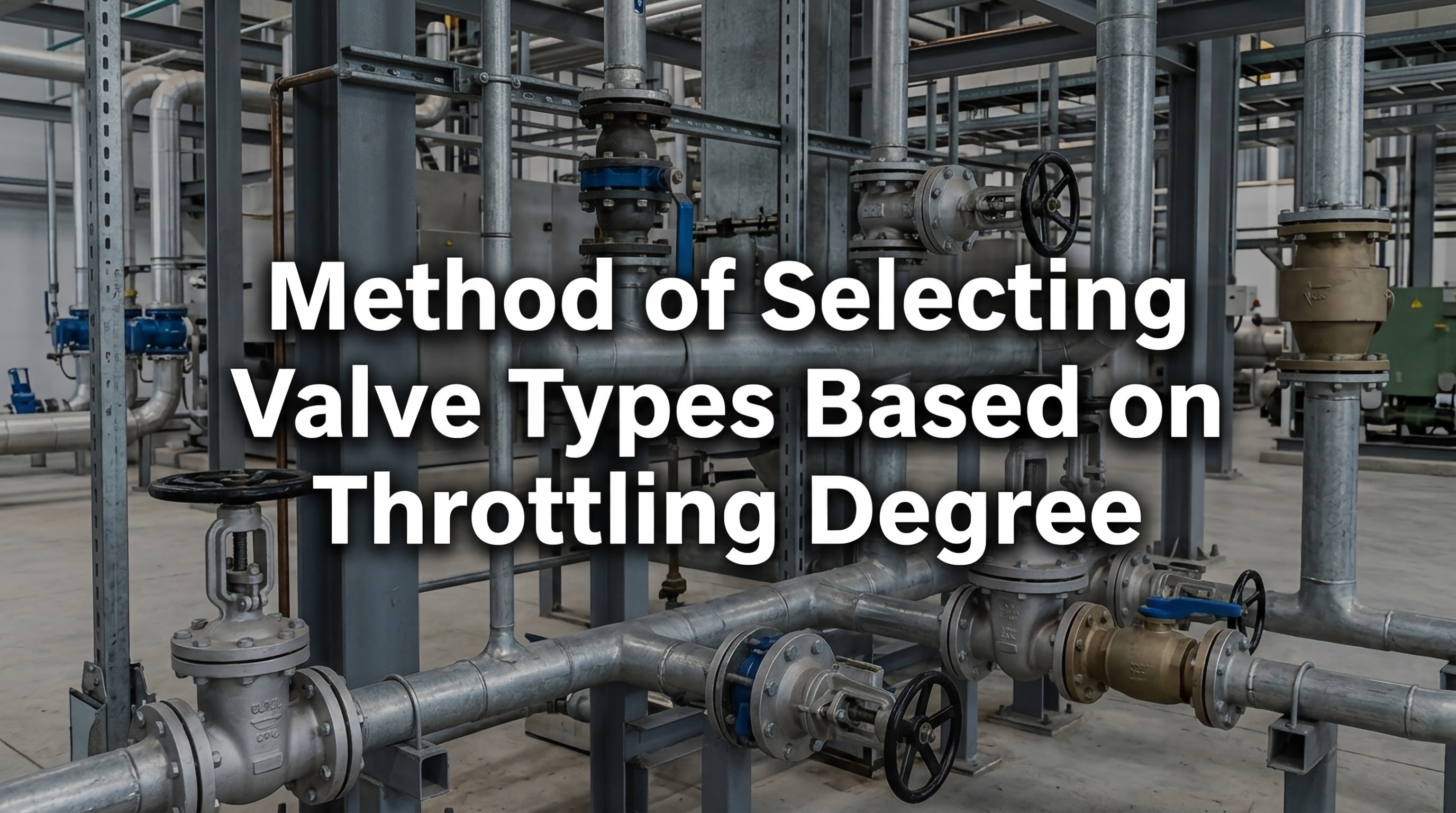 Method of Selecting Valve Types Based on Throttling Degree