
Lift Check Valves: The Reliable One-Way Protection for Industrial Pipeline Systems
author: ATHENA GROUP
2026-07-02

1. Product Overview
The lift check valve is an automatic one-way valve specially used for industrial pipelines. It requires no manual or external power drive and opens and closes automatically relying entirely on medium pressure. Its core function is to prevent medium backflow and protect the safety of pipelines and supporting equipment. Widely applied in petroleum chemical, water supply and drainage, metallurgy and other industries, it is mainly divided into horizontal and vertical installation types. Suitable for most clean fluid working conditions, it serves as an indispensable basic protective valve in pipeline systems.
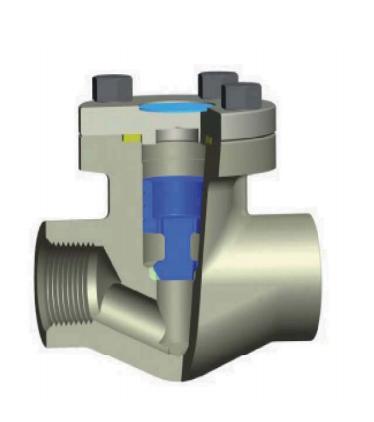
2. Structure and Working Principle
The lift check valve features a compact integral structure. The valve body is integrally cast from cast steel, stainless steel, cast iron and other materials with high strength and stable sealing performance. A built-in guide sleeve restricts the valve disc to only move vertically up and down, avoiding deviation and jamming to ensure stable opening and closing. The core components include a valve disc, valve seat and guide bracket, equipped with two sealing forms. The soft seal achieves zero leakage for conventional media, while the hard seal with surfacing alloy offers excellent wear resistance and high temperature resistance. The working principle is simple and reliable. Positive medium flow pushes up the valve disc to open the pipeline. When the pipeline pressure drops or equipment shutdown causes backflow, the valve disc quickly falls and closely fits the valve seat by its own weight and backflow pressure, instantly blocking medium backflow.
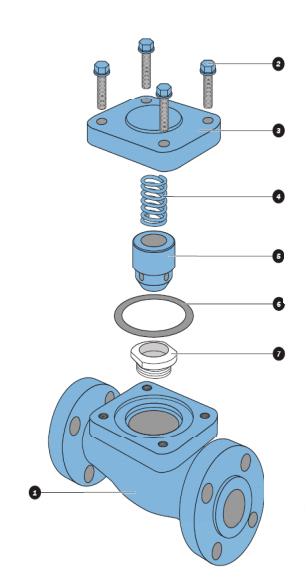
3. Core Performance Characteristics
Compared with traditional swing check valves, lift check valves have prominent advantages, including faster closing response, higher sealing accuracy and better water hammer buffering performance. They support a wide pressure range from PN16 to PN160, and the hard seal type can withstand high-temperature steam up to 450℃ and high-pressure oil products for harsh working conditions. Multiple connection modes such as flange, thread and welding are available to adapt to various pipeline layouts. Meanwhile, it has certain limitations. The valve disc structure causes slightly higher flow resistance, and the precise internal structure is prone to jamming by impurities. It is only applicable to clean media such as water, oil and steam, and not suitable for slurry pipelines containing sediment and solid particles.

4. Application Scenarios and Maintenance
The installation of lift check valves follows strict specifications: horizontal types are only for horizontal pipelines, and vertical types are for upward vertical pipelines, with the installation direction consistent with the medium flow mark. They are mainly installed at key positions such as pump outlets, boiler water supply pipelines and the front of heat exchangers, effectively preventing equipment backflow, pump idling and pipeline pressure impact. Featuring a compact structure and few parts, the valve is easy to maintain. Regular inspection of sealing surface wear and replacement of gaskets can maintain stable performance. With low operation and maintenance costs and high operational reliability, it is the preferred anti-backflow valve for small and medium-diameter clean pipelines.
 How Does a Ball Type Check Valve Prevent Pipeline Medium Backflow?
  Selection and Precautions for Natural Gas Valves
  Athena Engineering S.R.L Wraps‑up OGA 2026 Kuala Lumpur
  What is a Gate Valve? What is Its Working Principle?
  T-Type / T-Pattern / Straight Pattern Globe Valve
  Knife Gate Valve vs Wedge Gate Valve: Which Is Better for Your Industrial Piping?
  Cryogenic Ball Valve Comprehensive Product Overview
  Causes and Treatments for Poor Valve Shut‑Off
  Athena Triple Offset Butterfly Valves
  What is the Difference Between Swing Check Valve and NRV? A Complete Explanation
  Common Connection Types of Valves
  5 Piping Design Mistakes That Are Killing Your Valves
  Float Valve: Structure, Principle and Application
  High Pressure Needle Valve High-Precision Fluid Control Valve
  What is a Piston Check Valve?
  Meet Us at OGA 2026 | Booth 6802, Hall 6
  What is a Level Gauge? Working Principles, Types and Industrial Applications
  Double Sealing Protection: A Complete Interpretation of Bellows Globe Valves
  End-Suction Pump vs Inline Pumps: Which One Is Right for You?
  Method of Selecting Valve Types Based on Throttling Degree