
How to Choose the Right Type of Butterfly Valve?
author: ATHENA GROUP
2026-03-25
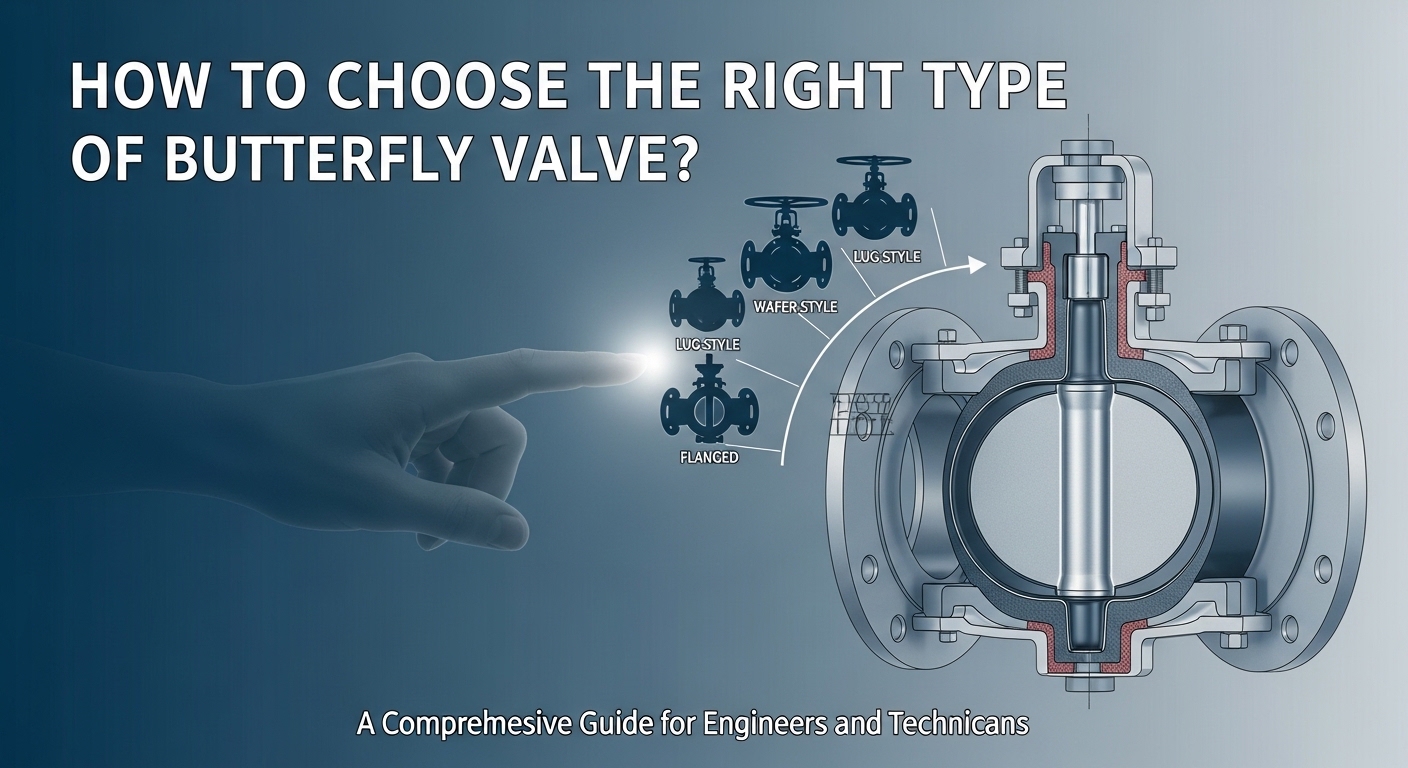
A butterfly valve is a type of valve in which the closing member is a disc that rotates around the valve shaft to achieve opening and closing. It is mainly used for cutting off and throttling in pipelines. The opening and closing member of a butterfly valve is a disc-shaped butterfly plate that rotates around its own axis within the valve body to achieve the purpose of opening, closing or regulating. The full opening to full closing of a butterfly valve is usually less than 90°. The butterfly plate and the valve stem themselves do not have self-locking ability. To position the butterfly plate, a worm gear reducer is installed on the valve stem. This not only gives the butterfly plate self-locking ability but also enables it to stop at any position, and also improves the operating performance of the valve.

The features of the industrial-specific butterfly valve include the ability to withstand high temperatures, a wide applicable pressure range, a large nominal diameter, and the valve body is made of carbon steel. The sealing ring of the valve plate is made of metal rings instead of rubber rings. The large high-temperature butterfly valve is manufactured by steel plate welding and is mainly used for the smoke and air ducts and gas pipelines with high-temperature media.
Concentric Butterfly Valve
The structural feature of the concentric butterfly valve is that the axis of the valve stem, the center of the butterfly plate, and the center of the body are all in the same position. The structure is simple and easy to manufacture. Commonly used rubber-lined butterfly valves belong to this type. The disadvantage is that the butterfly plate and the valve seat are always in a state of compression and scraping, resulting in a large resistance and rapid wear. To overcome the compression and scraping and ensure the sealing performance, the valve seat basically uses elastic materials such as rubber or PTFE. Therefore, it is also subject to temperature limitations, which is why traditionally people believed that butterfly valves are not resistant to high temperatures.

Double Eccentric Butterfly Valve
The double eccentric butterfly valve is currently one of the most widely used butterfly valves. Its structural feature is that the axis of the valve stem deviates both from the center of the butterfly plate and from the center of the body. The effect of double eccentricity enables the butterfly plate to quickly separate from the valve seat after the valve is opened, significantly reducing unnecessary excessive squeezing and scraping between the butterfly plate and the valve seat, reducing the opening travel, lowering wear, and increasing the service life of the valve seat. The scraping is significantly reduced, and the double eccentric butterfly valve can also use metal valve seats, which improves the application of butterfly valves in high-temperature fields. However, because its sealing principle is a positional sealing structure, that is, the sealing surfaces of the butterfly plate and the valve seat are in line contact, and the elastic deformation caused by the compression of the butterfly plate on the valve seat generates the sealing effect, therefore, the closing position requires high requirements (especially for metal valve seats), and the pressure-bearing capacity is low. This is why traditionally people believed that butterfly valves are not resistant to high pressure and have large leakage.

Triple Offset Butterfly Valve
If it is required to withstand high temperatures, the triple offset butterfly valve must use hard seals, but it will have a large leakage rate; to achieve zero leakage, soft seals must be used, but they are not resistant to high temperatures. To overcome this contradiction of the double eccentric butterfly valve, the valve was subjected to a third eccentricity. The structural feature of the triple offset butterfly valve is: while the valve stem and axis position of the double eccentric are eccentric, the conical axis of the butterfly plate sealing surface is inclined to the cylindrical axis of the body. After the third eccentricity, the sealing section of the butterfly plate is no longer a true circle, but an ellipse. As a result, the shape of the sealing surface is also asymmetrical, with one side inclined to the center line of the body and the other side parallel to the center line of the body.
The three-bias butterfly valve fundamentally changes the sealing structure. It is no longer a positional seal but a torque seal. That is, it does not rely on the elastic deformation of the valve seat, but completely relies on the pressure of the contact surface of the valve seat to achieve the sealing effect. Therefore, it solves the problem of zero leakage of the metal valve seat. The contact surface pressure is proportional to the medium pressure, so the problem of high pressure and high temperature resistance is also easily solved.
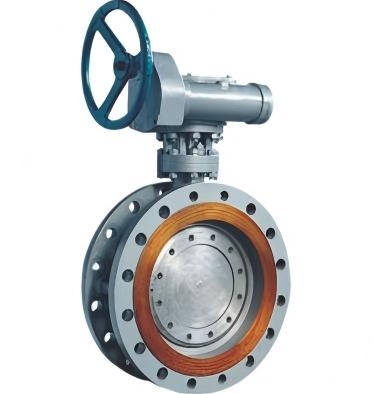
In short, the concentric butterfly valve is suitable for low-pressure and applications with low sealing requirements, featuring high sealing performance and low cost.
The double eccentric butterfly valve is suitable for medium pressure and applications requiring a long service life, reducing friction between the valve seat and the butterfly plate and prolonging the service life.
The triple offset butterfly valve is suitable for high pressure and harsh conditions, providing more reliable sealing performance, with a temperature resistance up to 425℃ and a pressure resistance up to PN ≤ 10.0MPa.
 How Does a Ball Type Check Valve Prevent Pipeline Medium Backflow?
  Selection and Precautions for Natural Gas Valves
  Athena Engineering S.R.L Wraps‑up OGA 2026 Kuala Lumpur
  What is a Gate Valve? What is Its Working Principle?
  T-Type / T-Pattern / Straight Pattern Globe Valve
  Knife Gate Valve vs Wedge Gate Valve: Which Is Better for Your Industrial Piping?
  Cryogenic Ball Valve Comprehensive Product Overview
  Causes and Treatments for Poor Valve Shut‑Off
  Athena Triple Offset Butterfly Valves
  What is the Difference Between Swing Check Valve and NRV? A Complete Explanation
  Common Connection Types of Valves
  5 Piping Design Mistakes That Are Killing Your Valves
  Float Valve: Structure, Principle and Application
  High Pressure Needle Valve High-Precision Fluid Control Valve
  What is a Piston Check Valve?
  Meet Us at OGA 2026 | Booth 6802, Hall 6
  What is a Level Gauge? Working Principles, Types and Industrial Applications
  Double Sealing Protection: A Complete Interpretation of Bellows Globe Valves
  End-Suction Pump vs Inline Pumps: Which One Is Right for You?
  Method of Selecting Valve Types Based on Throttling Degree