
Gate Valve vs. Ball Valve: Which to Choose? One Table Explains the Key Differences
author: ATHENA GROUP
2026-11-26

Gate valves and ball valves are the two most commonly used shutoff valves in industrial piping; both are used for isolating the medium in the fully open or fully closed position. Choosing the wrong one does not mean it cannot be used, but rather that it will not seal tightly, fail quickly, and cost more to maintain. This article uses a comparison table plus a few typical scenarios to help you make a quick decision.
1. The Essential Difference: One "Slow Close," One "Quick Cut-Off"
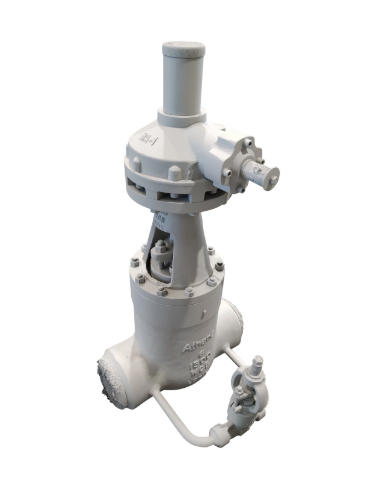
- Gate valve: The gate rises and lowers vertically along the seat, driven by the handwheel; large sizes often require hundreds of turns. When fully open, the gate retracts into the bonnet, the flow path approaches a straight pipe, and pressure loss is minimal.
- Ball valve: A ball with a through-bore rotates 90° to complete opening or closing, reaching position in seconds; the open/closed state is visible at a glance from the handle position.
2. Core Comparison Table
| Comparison Item | Gate Valve | Ball Valve |
| Actuation | Multi-turn linear drive, slow | 90° rotation, fast |
| Sealing performance | Metal-to-metal; relies on the wedge of the gate | Soft seats (PTFE, etc.) achieve bubble-tight zero leakage |
| Pressure loss | Near a straight pipe when fully open | Very low for full-bore; reduced-port versions have noticeable pressure loss |
| Operating frequency | Low; suited to staying inactive year-round | High; typically withstands tens of thousands of cycles |
| Temperature resistance | High; metal seats cover high-temperature steam | Soft seats limited to about 200°C; metal seats required for high temperatures |
| Throttling | Prohibited | Not recommended (except V-port ball valves) |
| Installation space | Requires vertical clearance for stem travel | Compact in structure |
| Automation | Multi-turn actuator, large and costly | Quarter-turn actuator (ISO 5211), spring-return available |
| Large-size cost | More economical | Rises significantly with size |
| Maintenance | Regular packing tightening and seating-surface overhaul needed | Essentially maintenance-free; seats are replaceable |
At the same size, a gate valve usually has a higher flow coefficient when fully open (reference values for 2-inch size: gate valve approx. Cv 250–350, ball valve approx. 150–220); however, actual pressure loss, Cv, and torque should always be based on the manufacturer's data sheet.
3. Choose by Scenario, Not by Price
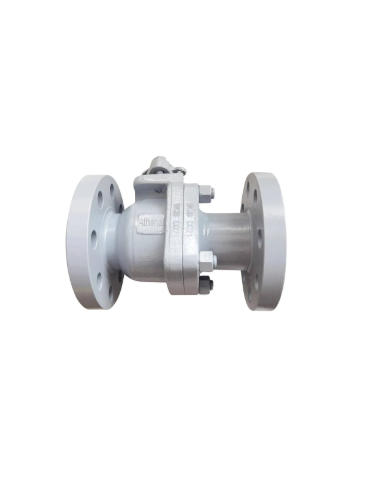
Choose a ball valve if:
- Fast shutoff is needed: emergency shutdown, tank farm switching, batch production
- Bubble-tight sealing is required: gas, toxic, or valuable media
- Frequent cycling: operating many times per day
- Automation is planned: fitted with a pneumatic or electric actuator
- Space is limited, or the line requires pigging
Choose a gate valve if:
- Large-diameter main pipelines (12 inches and above) and a tight budget
- Stays fully open or closed year-round and operates only a few times a year
- Service conditions where soft seats cannot withstand it, such as high-temperature steam
- Underground or valve-pit installation: the non-rising stem design has a low profile and is used with a position indicator
4. Three Common Misconceptions
1."If it seals well, always use a ball valve" — Under high-temperature steam service, PTFE seats fail; these conditions are exactly where metal-seated gate valves belong.
2."Both can regulate flow" — A half-open gate valve suffers erosion and vibration, and the seat of a half-open ball valve is cut by high-velocity fluid; for throttling, use a globe valve or control valve.
3."When replacing a valve, just look at the size" — A ball valve of the same size is usually longer than a gate valve; before replacement, check the face-to-face dimension and flange rating. Small sizes can generally be swapped directly, while large sizes must be measured first.
FAQ
Can a ball valve replace a gate valve? Yes in most isolation applications. Ball valves seal better, open and close faster, and require less maintenance. Keep two points in mind: first, the face-to-face dimension differs; second, choose a metal-seated ball valve for high-temperature service.
Which is better suited for an actuator? The ball valve. Its 90° rotation matches a compact quarter-turn actuator and can be spring-returned for fail-safe closure; a gate valve requires a multi-turn actuator and is not competitive in size, cost, or operating speed.
Why are large-diameter gate valves cheaper? In large sizes, gate valves have a simpler structure and use less material; however, ball valves are often cheaper in small sizes, and their life-cycle maintenance cost is generally lower.
About Athenavalve: Athenavalve focuses on the selection and supply of gate valves and ball valves for industrial piping, covering soft-seat zero-leakage ball valves, metal-seated high-temperature gate valves, and matching pneumatic/electric actuators; tailored solutions are available from standard sizes to large-diameter main pipelines. Need selection advice or a manufacturer data sheet for your service conditions (medium, temperature, pressure, size, frequent or infrequent cycling)? Welcome to visit the Athenavalve website at www.athenavalve.com for online consultation, or send your service parameters directly; our engineering team will help you settle the choice quickly.
 Single Eccentric Butterfly Valve
 Stainless Steel Angle Globe Valve
 What Is a Double Check Valve? Working Principle, Applications, and Selection Guide
 NACE MR0175 Ball Valves: A Concise Guide to Material Selection and Compliance
 What RTJ Means in a Check Valve
 Valve Pickling Methods
 Concentric vs. Eccentric Butterfly Valve: Which Suits HVAC and Water Systems?
 Slurry Knife Gate Valve
 2026 Ranking of the World’s Top 10 Ball Valve Brands
 How to Select Part‑Turn, Linear‑Stroke and Multi‑Turn Electric Actuators
 How to Fix a Leaking Ball Valve
 How to Repair a Gate Valve
 Pressure Seal Type Gate Valve for High-Pressure High-Temperature Industrial Isolation
 What Are the Differences Between Forged Valves and Cast Valves?
 Characteristics, Applications and Advantages of Carbon Steel Globe Valves
 Why Are Instrument Valves Indispensable for Industrial Control Systems?
 What is Bi-Directional Valves?
 How Does a Ball Type Check Valve Prevent Pipeline Medium Backflow?
 Selection and Precautions for Natural Gas Valves
 Athena Engineering S.R.L Wraps‑up OGA 2026 Kuala Lumpur