
Single Eccentric Butterfly Valve

A butterfly valve is usually the cheapest way to isolate or regulate a large flow path, and that is exactly why its weakest point deserves attention. In a conventional centerline valve the disc wipes across the seat during the whole 90° stroke. Every cycle removes a little material, adds a little torque and brings the valve one step closer to the leak that will eventually force a shutdown. The single eccentric butterfly valve was created to remove that weakness, not by adding complexity, but by moving the shaft axis a few millimetres.
At Athena, the single eccentric valve is the workhorse of our resilient-seated range. It is the design we recommend whenever a project needs tight shutoff, frequent cycling and a predictable maintenance budget in water, HVAC, desalination, power generation and general industrial service.
1. What "single eccentric" actually means
In a concentric, or centerline, butterfly valve, the stem passes through the centre of the disc and lies on the axis of the bore. The sealing circle of the disc and the sealing circle of the seat share the same centre. As a result the two surfaces touch at every angle of rotation: from the moment the valve starts to open until it is fully closed, the seat is being wiped by the disc edge.
A single eccentric valve keeps one offset. The stem axis is displaced from the plane of the seat by a distance normally described as the eccentricity, and that displacement generates the characteristic motion:
- At 0° the disc sealing face is pressed against the seat.
- During the first few degrees of opening the disc lifts off the seat along an almost axial path, releasing the interference without sliding.
- Beyond that point the disc rotates freely inside the bore, with no contact between disc and seat for the remaining travel.
- On closing the sequence reverses: the disc approaches the seat without rubbing and compresses it only at the end of the stroke.
2. Three consequences that decide operating cost
Torque. Seating and unseating torque in a butterfly valve is dominated by friction between disc and seat plus the pressure load acting on the disc area. In a centerline valve that friction is present whenever the disc moves, so the actuator must be sized for the worst case across the whole stroke. In a single eccentric valve, seat friction is confined to a few degrees at each end of the travel and the torque curve falls away sharply once the disc is off the seat. Compared with a concentric resilient-seated valve of the same size and rating, a reduction of roughly 30% to 50% in required operating torque is typical. That translates directly into a smaller actuator, lower air consumption on pneumatic units, a smaller electric motor and a lighter mounting interface.
Seat wear. Friction is the main wear mechanism of an elastomer seat. When the seat is compressed only at the closed position and never wiped, the number of cycles a valve survives increases significantly. This matters most in modulating duty such as filter backwash, level control or cooling water regulation, where a centerline valve may need a new seat long before the body is worn out.
Sealing quality. Because the disc arrives at the seat almost axially instead of sliding into it, the elastomer is compressed rather than sheared. A compressed seat recovers its shape, holds its interference and keeps a bubble-tight shutoff far more reliably over a long service life. It is also the reason single eccentric valves can reach zero-leakage classes without the very high seating torque a centerline design would need for the same result.
One trade-off should be stated honestly. The single eccentric geometry is not a high-temperature or high-pressure solution. Because it relies on a resilient seat to seal, its natural territory is the moderate range, typically up to PN25 or Class 150 and about 120 °C with EPDM, lower with NBR, and higher with PTFE or a metal seat where zero leakage is not mandatory. Projects that require metal-to-metal sealing at 400 °C belong to the triple offset family, not to this one.
3. How an Athena single eccentric valve is built
Body. Wafer, lugged and double-flanged patterns are produced in the same eccentric geometry. The body is normally cast in WCB carbon steel, ductile iron, CF8 or CF8M stainless steel, with duplex stainless and aluminium bronze available for seawater and chloride-rich duties. Wall thickness and pressure ratings follow ASME B16.34 and EN 593, and every casting is pressure-tested before assembly.
Disc. The disc carries a streamlined, spherically machined edge that matches the seat cone. Its profile is not cosmetic: a thinner, better-profiled disc raises the flow coefficient and lowers the dynamic torque, while a heavier section resists deformation under differential pressure. Discs are offered in CF8M, duplex, nickel-plated ductile iron and, for abrasive slurries, in a hardened variant.
Seat. The seat is the component that defines the valve's chemical and thermal limits, so we treat it as a selection decision rather than a catalogue default. EPDM covers potable water, wastewater and hot water up to about 120 °C; NBR suits water and non-aggressive hydrocarbons at lower temperatures; PTFE and RTFE serve acids, solvents and aggressive chemicals; a stainless steel seat with stellite facing extends the range upwards where zero leakage is not required.
Shaft and bearings. Stems are 17-4PH or duplex stainless steel, blow-out-proof by construction, with anti-static contact between disc, stem and body where the application requires it. Self-lubricated PTFE-lined bearings keep friction low, prevent galling and protect the bore from galvanic attack in seawater service.
Packing and mounting. PTFE V-ring packing is standard, with graphite packing for higher temperatures and low-emission packing to ISO 15848-1 available on request. Every body carries an ISO 5211 mounting pad with a square or keyed stem drive, so manual levers, worm gearboxes, pneumatic double-acting and spring-return actuators, and electric actuators can all be fitted directly without an intermediate bracket.
Range coverage is DN50 to DN600 as standard, in PN10, PN16, PN25, Class 150 and Class 300, with wafer, lug and double-flanged end connections drilled to ASME B16.5, ASME B16.47 and EN 1092-1.
4. Standards and testing
Design and face-to-face dimensions follow API 609 and ISO 5752 or EN 558, so the valves drop into piping designed around international footprints. Pressure testing is carried out to API 598 and ISO 5208: a shell test at 1.5 times the rated pressure and a seat test at 1.1 times the rated pressure, with resilient-seated units normally accepted at rate A, meaning no visible leakage.
For fire-risk areas such as refineries, tank farms and firewater networks, a fire-safe seat and secondary metal sealing arrangement can be supplied and qualified to API 607 and ISO 10497. Electric and pneumatic actuation for hazardous zones is delivered with ATEX certification, and material certificates to EN 10204 3.1 are issued with every valve that enters a project package.
5. Where it sits in the butterfly family
| Design | Sealing principle | Typical rating | Best fit | Relative cost |
| Concentric | Disc and seat in contact throughout the stroke | Low pressure, ≤ PN16 | On/off isolation, cost-driven projects | Lowest |
| Single eccentric | Contact only at the closed position, resilient seat | PN10 to PN25, ≤ 120 °C with EPDM | Tight shutoff with frequent cycling | Moderate |
| Double eccentric | Larger offset, PTFE or metal seat possible | PN25 to PN40, up to about 200 °C | Higher temperature, more aggressive media | Higher |
| Triple offset | Conical metal-to-metal torque seal | Class 300 and above, up to 400 °C+ | High pressure, high temperature, fire-safe critical | Highest |
The single eccentric valve occupies the sweet spot of this table. It costs a little more than a centerline valve and considerably less than a double or triple offset design, while giving most of the shutoff quality and cycle life that plant operators actually notice.
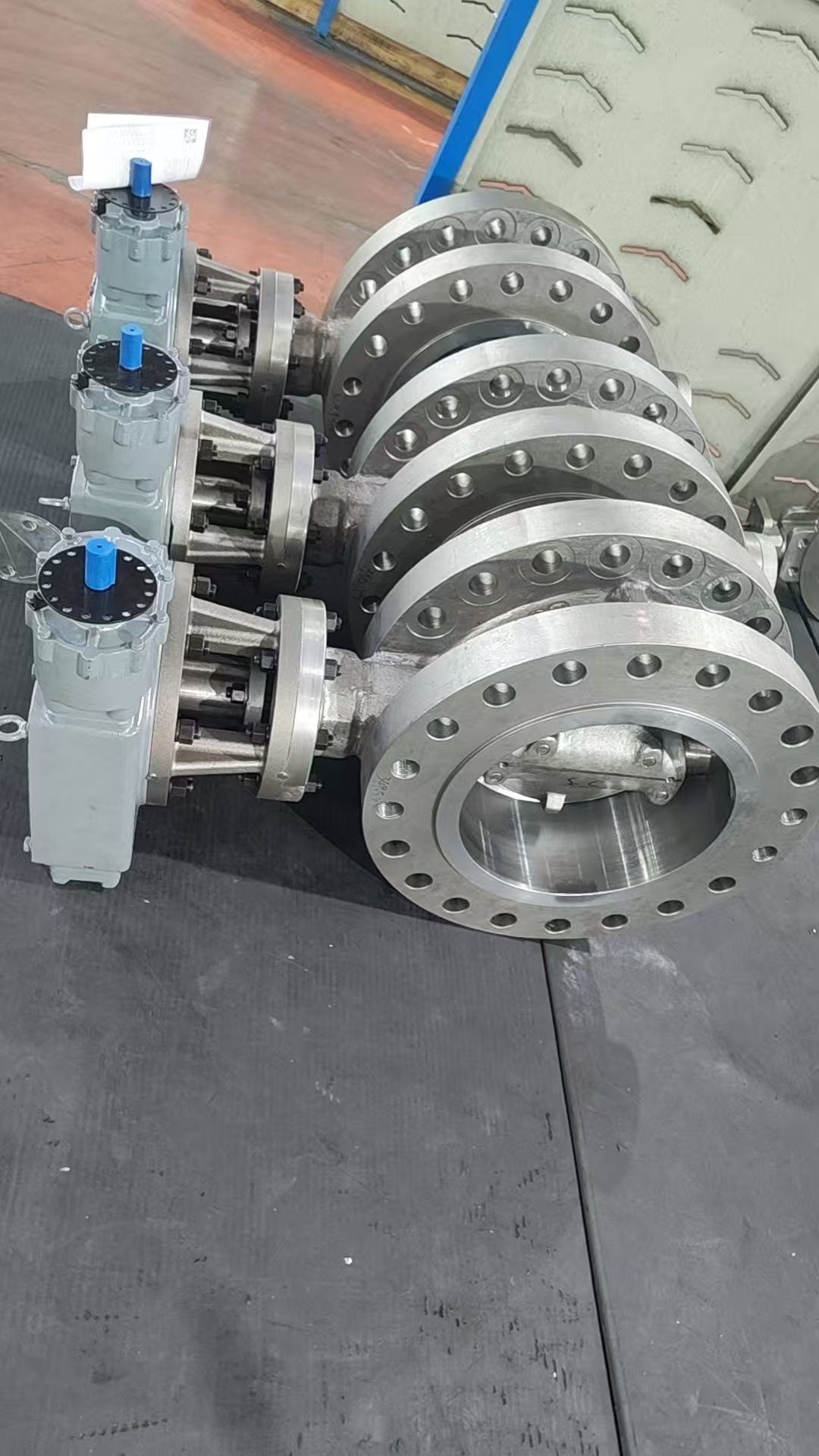
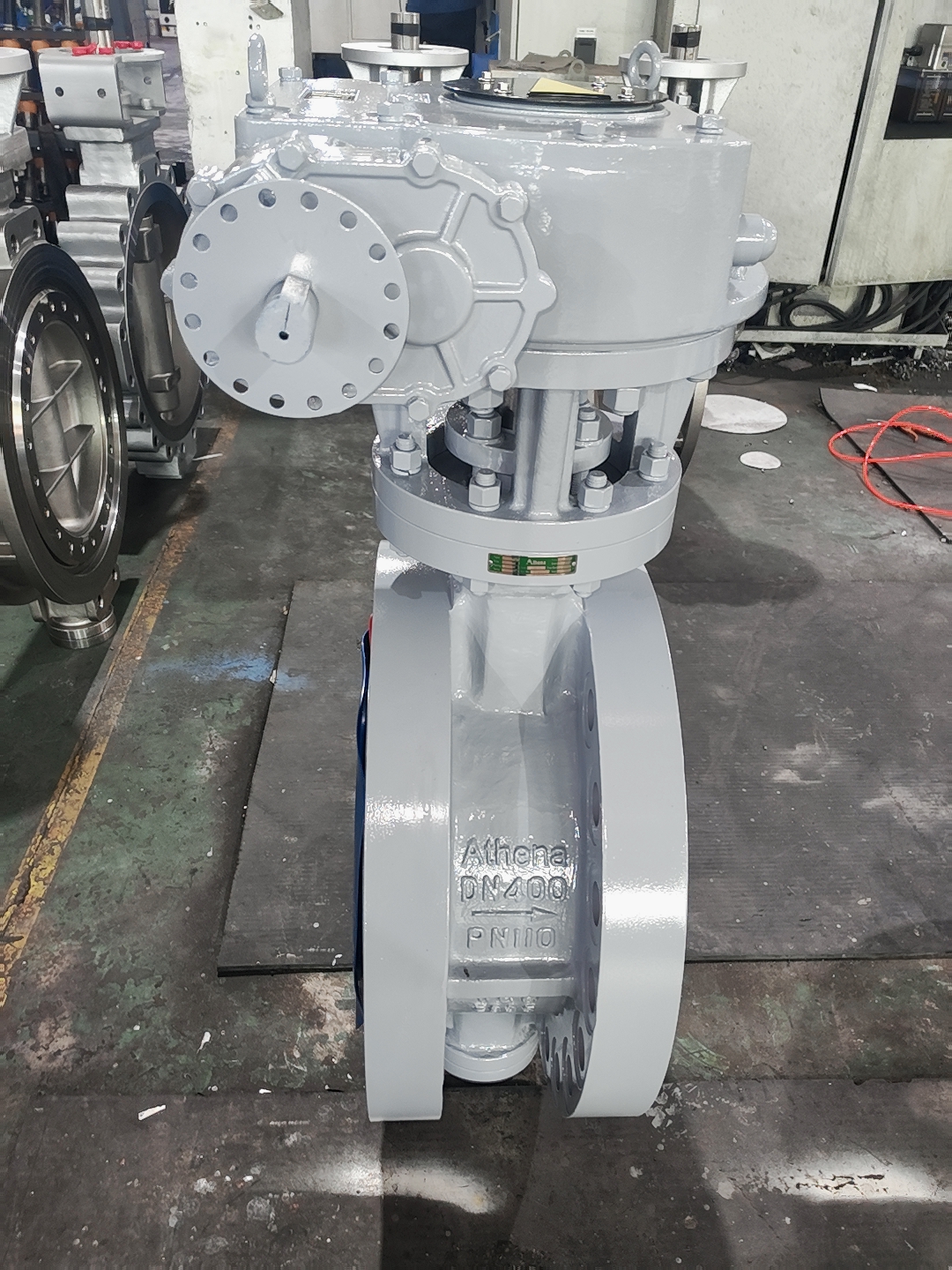
6. Where single eccentric valves earn their place
Water and wastewater. Distribution networks, pumping stations, filter galleries and aeration lines are the largest application area. Zero-leakage shutoff protects pumps from running against a closed valve, and the low torque keeps gearbox sizes small in buried or confined installations.
HVAC and district energy. Chilled water and hot water loops cycle constantly. Because the seat is not wiped on every stroke, a single eccentric valve holds its shutoff far longer than a centerline unit in modulating service.
Desalination and seawater. Duplex discs and aluminium bronze bodies with PTFE-lined bearings resist chloride attack in RO trains, brine lines and seawater intake systems.
Power generation. Cooling water, condensate and auxiliary systems use single eccentric valves where tight isolation and long intervals between overhauls both matter.
Fire protection. Firewater mains and deluge systems demand reliable full-open to full-closed operation after long idle periods. A valve whose seat has not been worn by years of static contact is the safer choice.
Pulp and paper, marine and general process. Stock lines, ballast and cooling systems and chemical plants with PTFE seats all fall within range, provided the temperature and pressure limits are respected.
7. How to specify one correctly
Sizing comes first. Flow coefficient and velocity limits should be checked rather than assumed: as a rule of thumb, continuous liquid service sits between 2 and 3 m/s and should not exceed 4 m/s, while gas service is normally kept below 25 m/s. An oversized valve throttles at a nearly closed disc angle, where vibration and cavitation risk rise quickly.
Then confirm the four limits that decide the seat material: design pressure and temperature, media chemistry, cycling frequency and required leakage class. Dead-end service, where the valve holds pressure on one side with no flow behind it, requires a lugged body and a bidirectional seat, and the actuator must be sized with the reverse pressure direction included. Torque selection should carry a safety factor of at least 1.3, and 1.5 where the medium is dirty or the valve sits idle for long periods.
Finally, match the valve to the project's piping standards. A wafer body needs a suitable gasket and adequate bolt length; a lugged body can be installed between two flanges and removed without draining the line on one side. Disc swing clearance inside the pipe must be verified at the design stage, because a butterfly disc travels beyond its own face-to-face dimension at part-open positions.
8. Installation and maintenance notes
Install with the stem horizontal where the piping allows, so that bearing loads and line debris stay symmetric. Keep the seat free of weld spatter and grit during construction, and do not use the disc as a line blind while flushing. Inspection intervals should follow the duty: a valve cycling hundreds of times a day deserves an annual seat check, while an isolation valve in a firewater main can go several years on a functional test alone.
Typical maintenance is limited to three items: seat inspection or replacement, packing renewal, and actuator servicing. Because the seat is compressed rather than wiped, replacement intervals in clean water service are usually measured in years, not months.
Athena: engineering that keeps the offset honest
The eccentricity in a single eccentric valve is a small number, and it is unforgiving. A fraction of a millimetre in the wrong direction shows up as leakage, seating torque or premature seat failure a year later. Athena machines the seat cone and the disc edge in the same fixture, checks the interference on every assembly, and pressure-tests every valve before it leaves the plant. That is why our single eccentric valves are specified in pumping stations, desalination plants and firewater networks on four continents.
To discuss a specific line, send us the media, pressure, temperature and required leakage class, and our engineers will return a selection with torque data, actuator recommendation and drawing package: www.athenavalve.com, or write to sales@athenavalve.com. Athena — precision where it counts.
 Stainless Steel Angle Globe Valve
 What Is a Double Check Valve? Working Principle, Applications, and Selection Guide
 NACE MR0175 Ball Valves: A Concise Guide to Material Selection and Compliance
 What RTJ Means in a Check Valve
 Valve Pickling Methods
 Concentric vs. Eccentric Butterfly Valve: Which Suits HVAC and Water Systems?
 Slurry Knife Gate Valve
 2026 Ranking of the World’s Top 10 Ball Valve Brands
 How to Select Part‑Turn, Linear‑Stroke and Multi‑Turn Electric Actuators
 How to Fix a Leaking Ball Valve
 How to Repair a Gate Valve
 Pressure Seal Type Gate Valve for High-Pressure High-Temperature Industrial Isolation
 What Are the Differences Between Forged Valves and Cast Valves?
 Characteristics, Applications and Advantages of Carbon Steel Globe Valves
 Why Are Instrument Valves Indispensable for Industrial Control Systems?
 What is Bi-Directional Valves?
 How Does a Ball Type Check Valve Prevent Pipeline Medium Backflow?
 Selection and Precautions for Natural Gas Valves
 Athena Engineering S.R.L Wraps‑up OGA 2026 Kuala Lumpur
 What is a Gate Valve? What is Its Working Principle?