
DBB Valves: Double Block & Bleed – Safety, Efficiency, Reliability
author: ATHENA GROUP
2026-02-26
About DBB Valves: What Makes Them Unique?
Athena Valve’s Double Block & Bleed (DBB) valves are integrated, compact valve assemblies designed to redefine safety and efficiency in industrial isolation. Unlike traditional single-valve setups, DBB valves combine two independent sealing barriers (double block) with a dedicated bleed port, creating a redundant safety system that eliminates risks associated with unintended media flow. Engineered for simplicity and performance, they consolidate multiple components into one unit, reducing complexity and ensuring reliable operation in the most demanding environments.

Core Definitions and Operational Principles
A DBB valve is a single compact assembly that executes three core functions: primary block, secondary block, and bleed. The dual block seals create independent pressure boundaries, while the bleed port (equipped with a small bore valve) enables venting or draining of trapped pressure/fluids in the intermediate cavity. This configuration ensures that even if one seal fails, the second maintains isolation, and the bleed function verifies seal integrity—a critical distinction from conventional single-valve isolation.
Operational Sequence
1.Primary Block Activation: The upstream seal engages, stopping fluid flow from the process side.
2.Secondary Block Activation: The downstream seal closes, establishing a redundant isolation barrier.
3.Bleed Function Execution: The bleed valve opens, depressurizing the cavity between the two seals to atmospheric pressure. Visual or pressure-based indicators confirm zero cavity pressure, validating the integrity of both block seals.
This sequence eliminates the risk of unplanned release during maintenance, as the system is fully isolated and depressurized before any work commences.
Versatile Applications Across Industries
DBB valves are the preferred choice for critical applications where safety and reliability are non-negotiable. Our solutions serve a wide range of sectors:
•Oil & Gas: Upstream, midstream, and downstream operations, including wellhead control, pipeline isolation, and offshore terminals.
•Hydrogen Energy: Hydrogen refueling stations and green energy infrastructure, supporting the global shift to clean energy.
•Chemical & Petrochemical: Safe isolation of toxic, flammable, or corrosive fluids, enabling secure maintenance protocols.
•LNG & Cryogenic Systems: Reliable performance in low-temperature environments, ensuring leak-free operation.
•Power Generation: Isolation for boilers, turbines, and auxiliary systems, minimizing downtime and enhancing safety.
•Water & Wastewater: Prevent cross-contamination and accidental fluid release in treatment facilities.
Design Configurations and Key Components
DBB valves are manufactured in multiple configurations, each optimized for specific pressure, temperature, and fluid compatibility requirements. The three most prevalent designs are ball, gate, and plug valves, each with unique structural attributes.
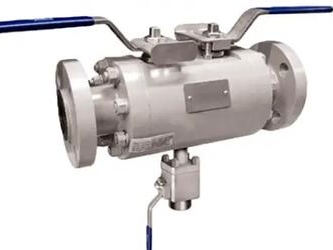
1 DBB Ball Valves
The most widely adopted configuration, DBB ball valves are categorized by body design and actuation mechanism:
- Top-Entry Design: Enables in-line maintenance of seats and stems without removing the valve from the pipeline—a critical feature for subsea and skid-mounted systems.
- Split-Body vs. Welded-Body: Split-body valves facilitate easy disassembly for repair, while welded-body designs are preferred for high-pressure gas service (compliant with ASME B31.8) due to their reduced leak points.
- Trunnion-Mounted Design: Utilizes trunnion supports to reduce stem loads in large-bore (≥56”) and high-pressure (ANSI 600+) applications, ensuring long-term seal integrity.
Key components include a floating or trunnion-supported ball, dual resilient or metal seats, a blowout-proof stem, and an integrated bleed valve. Full-port designs maximize flow efficiency (Cv values >2000), while reduced-bore options offer cost savings for non-critical flow paths.
2 DBB Gate Valves
Ideal for high-temperature and slurry applications, DBB gate valves utilize an expanding gate mechanism that laterally presses against seats to create a positive seal. This design eliminates seat wear from particulate matter and ensures bubble-tight isolation even in abrasive fluid conditions. Slab gate valves, a variant of DBB gate valves, are commonly used in pipeline transmission due to their low pressure drop and robust sealing performance.
3 DBB Plug Valves
Suited for corrosive and high-pressure applications, DBB plug valves feature a cylindrical or tapered plug with dual sealing surfaces. They are often specified for chemical processing and offshore platforms due to their compact footprint and resistance to harsh chemicals.
Critical Component Materials
Material selection is dictated by process conditions (temperature, pressure, fluid type) and compliance with standards such as NACE MR0175 for sour service. Key material specifications include:
- Body: Carbon steel (ASTM A216 WCB) for general service, stainless steel (ASTM A351 CF8M) for corrosive environments, and duplex stainless steel for high-strength, corrosion-resistant applications.
- Seats: Polytetrafluoroethylene (PTFE) for low-temperature service, Inconel 625 overlay for erosion control (e.g., LNG applications), and metal-to-metal seats for high-temperature (≥400°C) operations.
- Stems: Alloy 400 or 316 stainless steel, with anti-corrosion coatings for aggressive fluids.
As a professional valve manufacturer, Athena Valve has been committed to the R&D, production and manufacturing of high-quality DBB valves, adhering to strict quality control and advanced manufacturing processes. Our DBB valve products are tailored to meet the diverse needs of various industrial fields, providing customers with reliable, safe and efficient industrial isolation solutions. Athena Valve will continue to innovate and upgrade its technology, and strive to become a trusted partner in the global industrial valve industry with excellent products and thoughtful services.
 How Does a Ball Type Check Valve Prevent Pipeline Medium Backflow?
  Selection and Precautions for Natural Gas Valves
  Athena Engineering S.R.L Wraps‑up OGA 2026 Kuala Lumpur
  What is a Gate Valve? What is Its Working Principle?
  T-Type / T-Pattern / Straight Pattern Globe Valve
  Knife Gate Valve vs Wedge Gate Valve: Which Is Better for Your Industrial Piping?
  Cryogenic Ball Valve Comprehensive Product Overview
  Causes and Treatments for Poor Valve Shut‑Off
  Athena Triple Offset Butterfly Valves
  What is the Difference Between Swing Check Valve and NRV? A Complete Explanation
  Common Connection Types of Valves
  5 Piping Design Mistakes That Are Killing Your Valves
  Float Valve: Structure, Principle and Application
  High Pressure Needle Valve High-Precision Fluid Control Valve
  What is a Piston Check Valve?
  Meet Us at OGA 2026 | Booth 6802, Hall 6
  What is a Level Gauge? Working Principles, Types and Industrial Applications
  Double Sealing Protection: A Complete Interpretation of Bellows Globe Valves
  End-Suction Pump vs Inline Pumps: Which One Is Right for You?
  Method of Selecting Valve Types Based on Throttling Degree