
Working Principles and Application Scenarios of Six Common Types of Valves
author: ATHENA GROUP
2025-12-08
In our daily lives, there is a type of device that often goes unnoticed yet exists everywhere—from turning on the faucet to wash up in the morning, to the precision-controlled chemical processes in factories; from urban water supply networks to the high-temperature and high-pressure systems of nuclear power plants. This is the valve.
I. What Exactly Can Valves Do?
In simple terms, valves have three core functions:
- On-off Control: Just like the faucet at home, it is turned on when water is needed and off when not in use;
- Flow Regulation: By fine-tuning the opening degree, the flow rate is precisely controlled to meet different process requirements;
- Safety Assurance: Prevent hazardous situations such as medium backflow and overpressure explosion, serving as the final line of defense for the safe operation of the system.
It is these seemingly basic functions that form the cornerstone of the stable operation of modern industry and urban infrastructure.
II. Common Valve Types and Their Application Scenarios
Although there are many types of valves, the following six are the most common:
1. Gate Valve: The "Gate" of Pipelines

It adopts a gate plate structure that moves up and down. When fully open, there is almost no resistance, making it suitable for on-off operations in main pipelines. However, due to its slow opening and closing speed, it is not suitable for occasions requiring frequent start-stop.
2. Globe Valve: The Expert in Precise Flow Regulation

The valve disc moves vertically and has excellent sealing performance. It is often used in systems that require precise regulation or frequent operation. Attention should be paid to the flow direction during installation to ensure sealing effectiveness.
3. Ball Valve: The Quick-acting Rotation Expert
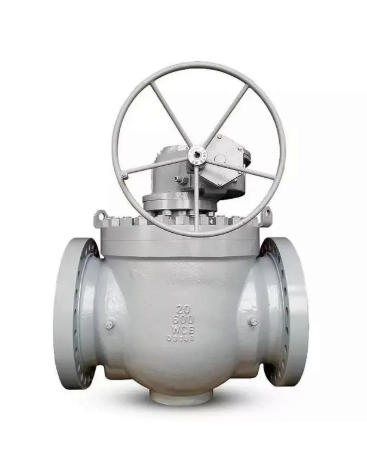
It only needs a 90-degree rotation to complete the on-off action, featuring fast operation and reliable sealing. It is widely used in high-pressure systems such as gas and petroleum. However, it is relatively sensitive to media containing particulate impurities.
4. Butterfly Valve: The Energy-saving Choice for Large-diameter Pipelines

It has a compact structure and light weight, making it particularly suitable for large-diameter pipelines. Although its regulation accuracy is slightly lower than that of other types, it performs excellently in low-pressure difference and large-flow scenarios.
5. Check Valve: The Guardian Against Backflow

It automatically opens or closes using the pressure of the medium itself, effectively preventing backflow. Lift-type check valves are suitable for vertical pipelines, while swing-type check valves are more commonly used in horizontal installations.
6. Safety Valve: The "Safety Barrier" for Pressure Systems
When the system pressure rises abnormally, the safety valve will automatically release pressure to avoid equipment damage or even explosion. Parameters such as its popping pressure and reseating performance are directly related to the safety level of the entire system.
III. Choose the Right Valve, Install It Properly, and Maintain It Well for Peace of Mind in Use
No matter how good a valve is, if it is improperly selected, incorrectly installed, or neglected in maintenance, it may become a safety hazard. Therefore, in practical applications, the following must be noted:
Scientific Selection: Choose the appropriate type based on the medium properties (corrosiveness, temperature, pressure), frequency of use, and environmental conditions;
Standardized Installation: Pay attention to the flow direction mark, support and fixation, and pipeline cleaning to avoid failure caused by foreign object jamming;
Regular Maintenance: Check for seal aging, lubrication status, and operational flexibility, and clean up scale in a timely manner to extend the service life.
Conclusion
Although valves are small, they bear significant responsibilities. It is evident that valves are key components for fluid control, and their selection, installation, and maintenance must strictly comply with specifications—which is also the core principle that Athena Engineering S.R.L has always adhered to.
As a manufacturer specializing in precision fluid control equipment, Athena's valve products follow international standards throughout the entire process from design to delivery, helping customers avoid selection and installation risks at the source; meanwhile, our professional team can also provide customized maintenance guidance to assist users in regularly checking sealing performance, lubrication status, and blockage, ensuring that each valve operates flexibly and reliably.
Details determine safety, and a small valve is often crucial to the stable operation of the entire system—Athena Engineering S.R.L is willing to become a reliable partner for your fluid control system with high-quality valve products and professional services.
 How Does a Ball Type Check Valve Prevent Pipeline Medium Backflow?
  Selection and Precautions for Natural Gas Valves
  Athena Engineering S.R.L Wraps‑up OGA 2026 Kuala Lumpur
  What is a Gate Valve? What is Its Working Principle?
  T-Type / T-Pattern / Straight Pattern Globe Valve
  Knife Gate Valve vs Wedge Gate Valve: Which Is Better for Your Industrial Piping?
  Cryogenic Ball Valve Comprehensive Product Overview
  Causes and Treatments for Poor Valve Shut‑Off
  Athena Triple Offset Butterfly Valves
  What is the Difference Between Swing Check Valve and NRV? A Complete Explanation
  Common Connection Types of Valves
  5 Piping Design Mistakes That Are Killing Your Valves
  Float Valve: Structure, Principle and Application
  High Pressure Needle Valve High-Precision Fluid Control Valve
  What is a Piston Check Valve?
  Meet Us at OGA 2026 | Booth 6802, Hall 6
  What is a Level Gauge? Working Principles, Types and Industrial Applications
  Double Sealing Protection: A Complete Interpretation of Bellows Globe Valves
  End-Suction Pump vs Inline Pumps: Which One Is Right for You?
  Method of Selecting Valve Types Based on Throttling Degree