
Working Principle of a Ball Check Valve
author: ATHENA GROUP
2026-05-11

Ball check valve is an automatic one-way valve. It relies on the pressure of the medium itself and the floating ball to achieve one-way flow and automatically prevent the backflow of the medium. It has no manual operation structure and is widely used in pipeline systems such as water supply and drainage, municipal sewage, chemical industry, and water conservancy pumping stations.

The structure of ball check valve
Body:The mainstream types are straight-through and Y-shaped structures, serving as the pressure-bearing shell of the valve body with reserved spherical movement chambers inside. Common materials include cast iron, ductile iron, cast steel, WCB, 304/316 stainless steel, etc
Ball: It is the key component for opening, closing and sealing, divided into soft-seat ball and hard-seat ball.The soft-seat ball is mostly metal substrate coated with NBR, EPDM, rubber and PTFE;The hard-seat ball adopts materials such as stainless steel, hard alloy and ceramic.
Seat: It serves as the sealing mating surface, closely fitting with the ball to achieve zero-leakage sealing. Its material matches the ball sealing type, suitable for working conditions of different temperatures and corrosion environments.

Working Principle
When the medium flows in the forward direction, the medium pressure in the pipeline overcomes the self-weight of the ball and sealing resistance, pushing the ball away from the seat. The ball moves along the guide structure to the limit position, making the pipeline fully open for normal medium transportation.
When the medium stops flowing, the pressure drops or reverse flow occurs, the reverse back pressure of the medium, the self-weight of the ball, and the auxiliary spring force (spring-loaded type) act together. They push the ball back to fit closely with the valve seat, cut off the reverse flow passage, and effectively prevent medium backflow, equipment reverse rotation and pipe network backflow pollution.

Product Advantages
Low flow resistance. Full bore design brings low medium pressure drop, with better energy-saving effect than swing check valves and lift check valves.
Excellent sealing performance. Soft-seat type achieves zero leakage, suitable for clean water, sewage and media with slight particle impurities.
Sensitive opening and closing response. The light-weight ball has small inertia and fast closing speed, which effectively weakens water hammer impact in the pipeline.
Simplified structure. The only moving part is the floating ball, featuring low failure rate, easy disassembly and maintenance, and low later operation and maintenance cost.
Strong installation adaptability. It can be installed on both horizontal and vertical pipelines, adapting to various on-site pipeline layouts.
Product Disadvantages
Poor adaptability under low flow rate conditions. When the medium flow velocity is too low, the ball cannot be fully opened, easily causing increased local pressure drop and poor flow capacity.
Under ultra-high flow rate conditions, the ball is prone to vibration and shaking, generating noise and accelerating wear of sealing parts.
Temperature resistance of soft-seat rubber is limited. Conventional rubber types are only applicable to low temperature conditions; hard-seat type must be adopted for high temperature working conditions with higher cost.
Not applicable for media with high abrasion, strong corrosion, high viscosity and heavy impurities, which may cause ball wear, jamming and functional failure.
Scope of Applicable Working Conditions
1.Outlet pipelines of water pump units, to prevent backflow and pump reverse rotation when the pump stops, and protect pump equipment.
2.Municipal water supply and drainage pipe networks, water plants and residential building water supply systems.
3.Sewage treatment plants, rainwater pipe networks and sewage pumping station pipelines conveying fluid with slight impurities.
4.HVAC circulating water, industrial cooling water pipelines, as well as oil products and general weakly corrosive chemical medium transportation.
5.One-way anti-backflow systems for hydraulic engineerin
 How Does a Ball Type Check Valve Prevent Pipeline Medium Backflow?
  Selection and Precautions for Natural Gas Valves
  Athena Engineering S.R.L Wraps‑up OGA 2026 Kuala Lumpur
  What is a Gate Valve? What is Its Working Principle?
  T-Type / T-Pattern / Straight Pattern Globe Valve
  Knife Gate Valve vs Wedge Gate Valve: Which Is Better for Your Industrial Piping?
  Cryogenic Ball Valve Comprehensive Product Overview
  Causes and Treatments for Poor Valve Shut‑Off
  Athena Triple Offset Butterfly Valves
  What is the Difference Between Swing Check Valve and NRV? A Complete Explanation
  Common Connection Types of Valves
  5 Piping Design Mistakes That Are Killing Your Valves
  Float Valve: Structure, Principle and Application
  High Pressure Needle Valve High-Precision Fluid Control Valve
  What is a Piston Check Valve?
  Meet Us at OGA 2026 | Booth 6802, Hall 6
  What is a Level Gauge? Working Principles, Types and Industrial Applications
 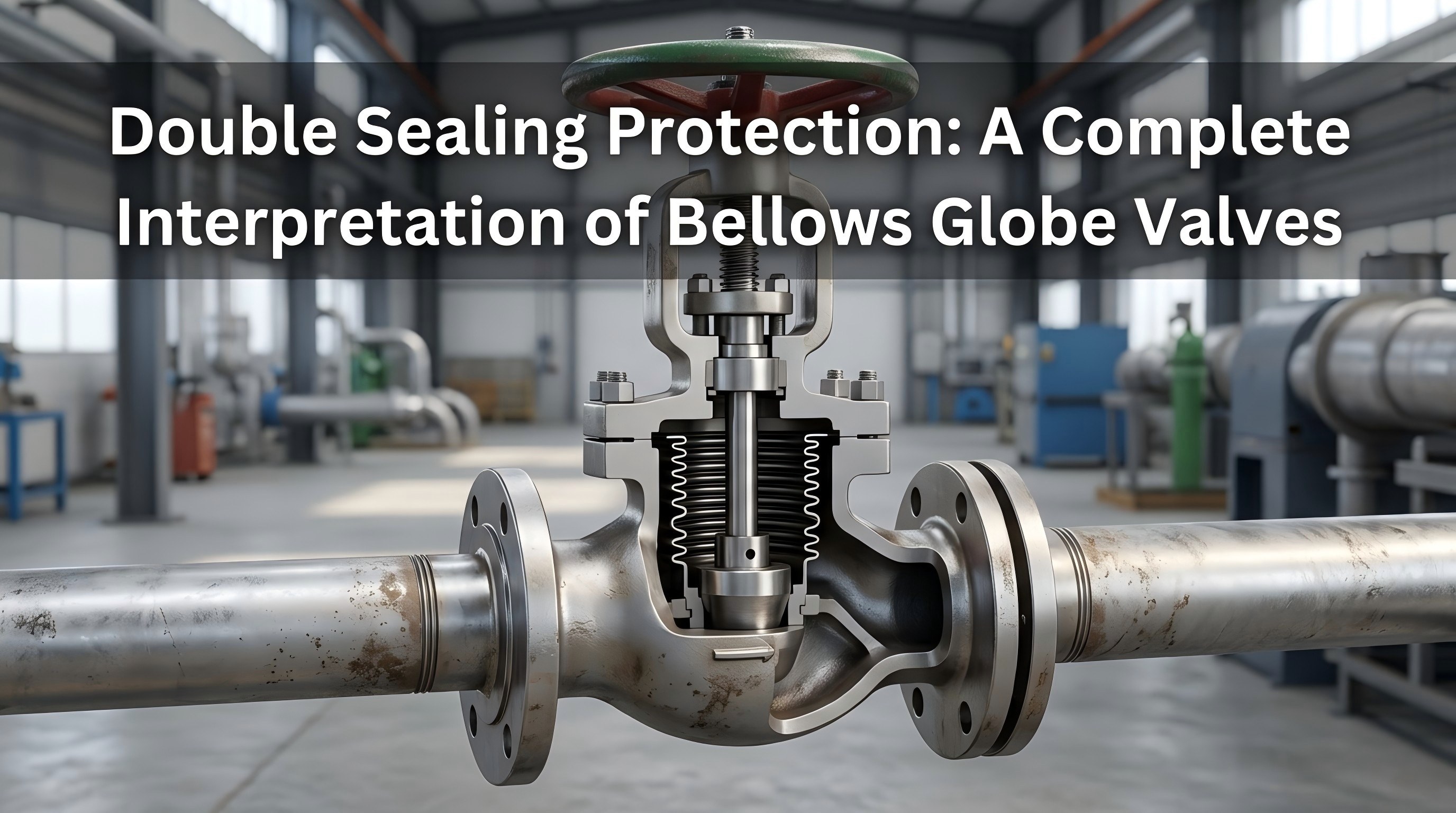 Double Sealing Protection: A Complete Interpretation of Bellows Globe Valves
  End-Suction Pump vs Inline Pumps: Which One Is Right for You?
  Method of Selecting Valve Types Based on Throttling Degree