
What is a Piston Check Valve?
author: ATHENA GROUP
2026-08-04
A piston check valve is a robust automatic one-way lift check valve widely adopted in high-pressure, high-temperature industrial pipeline systems. It is mounted on fluid pipelines to block medium backflow and suppress destructive water hammer and flow pulsation. It gains its name from the cylindrical guided piston serving as the sealing closure component.
The piston check valve mainly consists of valve body, piston assembly, internal guide sleeve, compression spring, valve seat, top bonnet, sealing gaskets and fastening bolts. It is commonly installed at pump outlets, reciprocating compressor discharge ports, heat exchanger inlets and high-pressure branch pipelines. When pumps or compressors shut down or system pressure fluctuates sharply, it instantly cuts off reverse medium flow, stops equipment reverse rotation, mitigates pipeline surge impact, and safeguards the stable, safe operation of pumps, compressors, boilers and other critical high-pressure equipment.
The piston check valve mainly consists of valve body, piston assembly, internal guide sleeve, compression spring, valve seat, top bonnet, sealing gaskets and fastening bolts. It is commonly installed at pump outlets, reciprocating compressor discharge ports, heat exchanger inlets and high-pressure branch pipelines. When pumps or compressors shut down or system pressure fluctuates sharply, it instantly cuts off reverse medium flow, stops equipment reverse rotation, mitigates pipeline surge impact, and safeguards the stable, safe operation of pumps, compressors, boilers and other critical high-pressure equipment.

1. Structural Composition
- Valve Body: Cast or forged from ductile iron, carbon steel (WCB/A105), low-temperature steel (LCB), and stainless steel (304/316L/CF8M). End connection options include flange, socket weld, butt weld and threaded. A bolted top-entry bonnet is reserved for full internal maintenance.
- Piston Assembly (Core Component): Cylindrical guided sealing plug machined from stainless steel or hard alloy steel, fitted with replaceable soft PTFE or hard Stellite overlay sealing rings. It slides linearly along the integrated guide sleeve without lateral offset. Built-in balanced flow holes reduce opening resistance under low differential pressure. Custom sealing surface treatments are available for corrosive, super-high temperature and ultra-high pressure working media.
- Guide Sleeve & Compression Spring: The integral cylindrical guide sleeve restricts piston movement to a straight vertical path to guarantee perfect seat alignment during closure. A stainless steel coiled spring preloads the piston toward the closed position, enabling fast shutoff even under low-flow or vertical downward installation conditions.
- Sealing & Fastening Parts: Metal/PTFE composite gaskets, positioning pins, high-temperature alloy bolts and limit stops. The guide sleeve fully isolates the spring and sliding mating surfaces from corrosive media to prevent jamming caused by scale and sediment. The top-entry split bonnet design allows full disassembly and piston seal replacement without cutting off pipeline segments.
2. Working Principle
a. Forward medium flows into the valve body from the inlet channel, turns upward and exerts hydraulic pressure on the bottom surface of the piston assembly. When fluid pressure overcomes the combined resistance of piston gravity and spring preload, the piston lifts vertically along the guide sleeve, forming an annular streamlined flow passage between the piston and valve seat. The piston maintains a stable floating open state under continuous steady forward flow.
b. When the pump/compressor stops running or upstream pipeline pressure declines, forward flow velocity gradually drops. The preloaded compression spring plus the self-weight of the piston push the assembly to slide downward automatically, fitting tightly against the valve seat to isolate the upstream and downstream flow channels.
c. Once reverse backflow initiates, reverse medium pressure superimposes on spring force to accelerate piston closing, achieving instant bubble-tight shutoff to block backflow. For large-bore pulsating flow pipelines, the optional hydraulic buffer cavity slows the piston’s descending stroke to eliminate violent metal-to-metal slamming and severe water hammer damage. Routine maintenance includes cleaning the guide sleeve of sediment, inspecting piston sealing ring wear and replenishing sliding surface lubricant to sustain long-term zero-leakage sealing performance.

3. Core Features
- Ultra-tight shutoff & backpressure self-sealing: Linear guided piston eliminates eccentric leakage gaps; sealing contact pressure rises proportionally with reverse backpressure, achieving zero bubble leakage even under maximum rated working pressure, far superior to swing check valves with hinged disc offset leakage.
- Strong adaptability to complex installation orientations: Spring-assisted closure supports horizontal pipelines, vertical upward flow and vertical downward flow layouts, while tilting and swing check valves are limited to specific installation directions only.
- Excellent anti-pulsation & anti-water hammer performance: Short vertical piston stroke plus optional hydraulic buffer structure suppress flow chatter and impact noise, making it the preferred solution for reciprocating compressor and pump discharge pipelines with frequent pressure oscillation.
- Durable sliding structure & low maintenance frequency: The fully enclosed guide sleeve prevents medium impurities from scratching sealing surfaces; wear-resistant hard alloy piston trim extends service life under media containing tiny solid particles. The top-entry bonnet enables on-site seal replacement within minutes without pipeline dismantling.
- Wide extreme working condition coverage: Applicable nominal pressure range PN1.0–16.0MPa (forged high-pressure series up to 42MPa); operating temperature ranges from -29℃ to 425℃.
4. Application Scenarios
- Thermal & Nuclear Power Generation Industry: Boiler steam pipelines, circulating cooling water systems, feedwater pump outlets and nuclear auxiliary process pipelines. Effectively blocks steam backflow and eliminates water hammer hazards in high-temperature, long-distance large-diameter transmission pipelines.
- Petrochemical & Oil & Gas Energy Industry: Crude oil, refined fuel, high-pressure natural gas and process solvent pipelines, installed at reciprocating compressor and multi-stage pump discharge ports to prevent medium reverse flow and costly equipment reverse rotation breakdowns.
- Water Treatment & Municipal Engineering: Industrial high-pressure circulating water, fire protection pressurized water supply, deep well water pump stations and seawater desalination pipelines, stainless steel hygienic models avoid medium cross-contamination.
- Food, Pharmaceutical & Fine Chemical Industry: High-viscosity liquid medicine, edible oil, fruit juice and solvent delivery pipelines, sanitary polished piston trim meets food-grade hygiene standards and prevents backflow pollution of finished products.
With outstanding pulsation suppression, ultra-reliable zero-leakage sealing, flexible multi-orientation installation and simplified maintenance, piston check valves are extensively deployed in power, petrochemical, metallurgy, municipal water supply, food, pharmaceutical, marine and high-pressure fluid laboratory industries.
 How Does a Ball Type Check Valve Prevent Pipeline Medium Backflow?
  Selection and Precautions for Natural Gas Valves
  Athena Engineering S.R.L Wraps‑up OGA 2026 Kuala Lumpur
  What is a Gate Valve? What is Its Working Principle?
  T-Type / T-Pattern / Straight Pattern Globe Valve
  Knife Gate Valve vs Wedge Gate Valve: Which Is Better for Your Industrial Piping?
  Cryogenic Ball Valve Comprehensive Product Overview
  Causes and Treatments for Poor Valve Shut‑Off
  Athena Triple Offset Butterfly Valves
  What is the Difference Between Swing Check Valve and NRV? A Complete Explanation
  Common Connection Types of Valves
  5 Piping Design Mistakes That Are Killing Your Valves
  Float Valve: Structure, Principle and Application
  High Pressure Needle Valve High-Precision Fluid Control Valve
  Meet Us at OGA 2026 | Booth 6802, Hall 6
  What is a Level Gauge? Working Principles, Types and Industrial Applications
 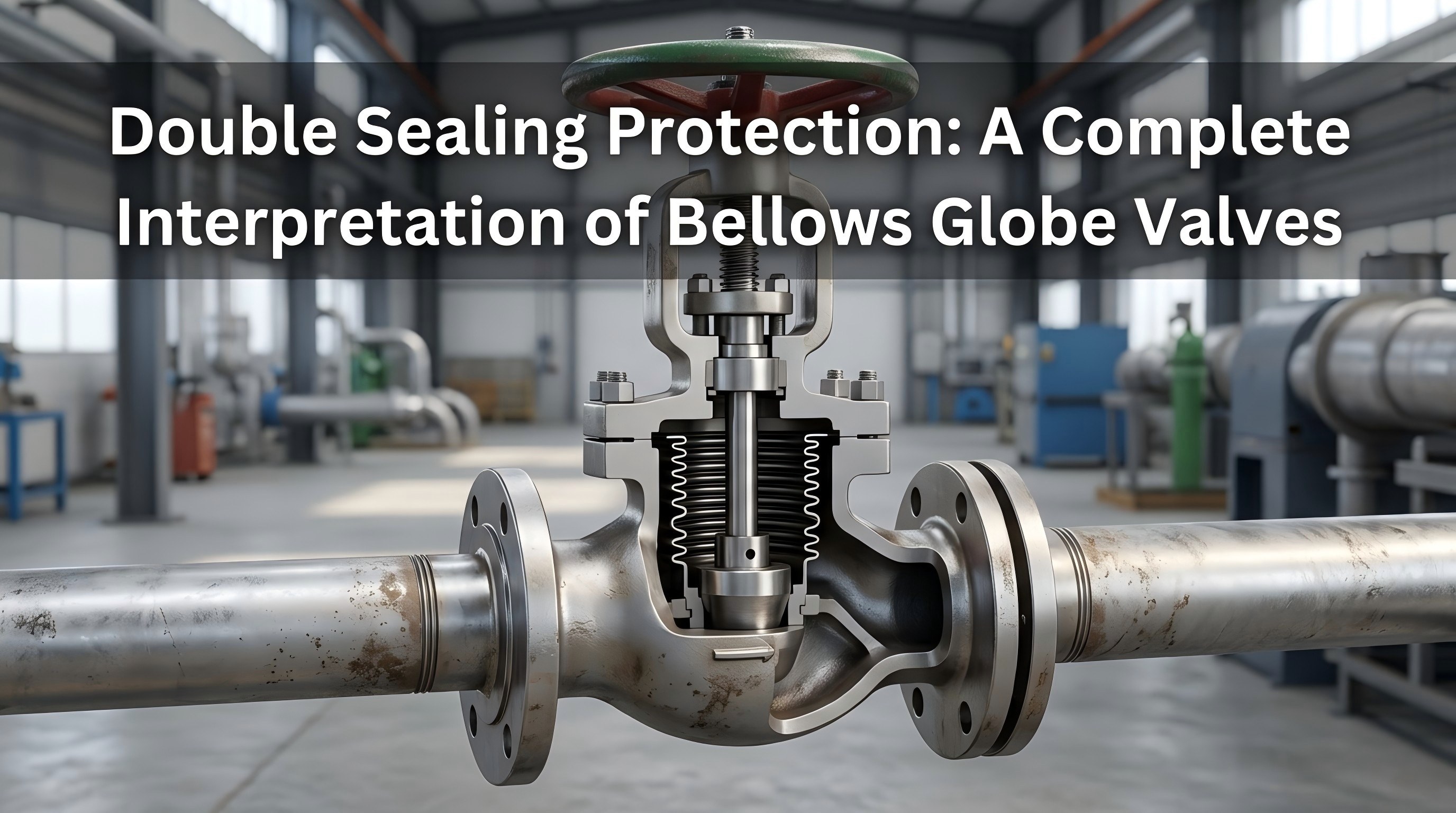 Double Sealing Protection: A Complete Interpretation of Bellows Globe Valves
  End-Suction Pump vs Inline Pumps: Which One Is Right for You?
  Method of Selecting Valve Types Based on Throttling Degree
  Safety Valves–Core Protection for Pressure Equipment