
What is a Jacketed Plug Valve?
author: ATHENA GROUP
2026-05-20
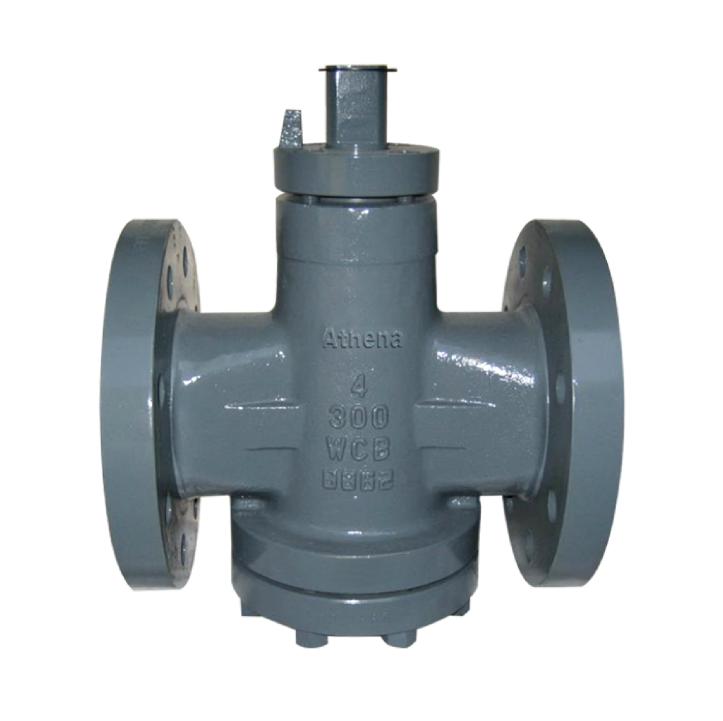
A jacketed plug valve is a specialized valve equipped with an additional jacket structure for thermal insulation or cold retention on the basis of a conventional plug valve. It combines the convenient opening and closing performance of plug valves with the temperature control advantages of the jacket structure, and is widely used in petroleum, chemical, road construction, pharmaceutical and other industries. It is an indispensable fluid control device in special medium conveying systems.
A.Core Structural Components
Based on a conventional plug valve, the jacketed plug valve is added with a jacket insulation assembly. The overall design is centered on precise temperature control, reliable sealing and convenient operation. It is mainly composed of the following key components, which work together to ensure stable operation of the valve:
- Valve Body and Jacket: The valve body is the core carrier for medium flow, with a hollow interior forming a flow passage, and a metal jacket welded on the outside (a closed cavity is formed between the jacket and the valve body). The jacket is equipped with inlet and outlet ports for introducing temperature control media such as steam, thermal oil and cooling water to insulate or cool the medium inside the valve body. The valve body is usually made of carbon steel, stainless steel (304/316) or alloy steel, and the jacket is mostly made of carbon steel or stainless steel to ensure sealing performance and thermal conductivity.
- Plug (Opening/Closing Part): The core control component, with precision-machined surface and through holes matching the flow passage, realizes the on-off and flow regulation of the medium by rotation.
- Sealing Components: The core parts to ensure the sealing performance of the valve, including sealing rings, bushings, packing, etc. The inlet and outlet ports of the valve body often adopt a double-groove sealing ring structure, which can fix the PTFE bushing to prevent displacement, and adapt to the slight deformation of the bushing caused by temperature changes. A wiping effect is formed between the plug and the bushing to extend the service life of the sealing surface. PTFE is mostly used for packing, which is compressed by a packing gland to prevent medium leakage from the gap between the plug and the valve body. Some high-temperature working conditions use metal seals to improve temperature resistance.
- Actuating Mechanism: Used to drive the rotation of the plug, divided into manual (handle, handwheel) and automatic (electric, pneumatic, worm gear) types. Manual drive has a simple structure and is suitable for small valves or scenarios with low operation frequency. Automatic drive (such as pneumatic jacketed plug valves) can realize remote control and automatic regulation, suitable for large valves or continuously operating industrial systems. Some lift-type models are also equipped with a lifting drive handwheel to realize the linkage of lifting and rotation of the plug, reducing friction on the sealing surface.
- Other Auxiliary Components: Including flanges, sealing gaskets, limit devices, etc. for jacket ports. The limit device prevents excessive rotation of the plug and protects the sealing surface; the sealing gaskets at jacket ports ensure no leakage of temperature control media. Some models are also equipped with a drain port on the jacket for regular cleaning of impurities in the cavity to avoid blockage.

B.Temperature Control Principle
This is the core difference between a jacketed plug valve and an ordinary plug valve. The circulating temperature control medium in the jacket cavity maintains a stable temperature of the medium inside the valve body, preventing it from solidifying, crystallizing or abnormal viscosity changes due to temperature fluctuations. It is divided into two working conditions:
1.Thermal Insulation Condition: When conveying media that are easy to solidify or have high viscosity at room temperature, steam, thermal oil or other superheated gases are introduced into the cavity through the jacket ports. The temperature control medium circulates in the jacket and transfers heat to the valve body and the medium inside, keeping the medium temperature above the solidification point to ensure fluidity and prevent flow passage blockage.
2.Cold Insulation Condition: When conveying media that are volatile, easily gasified or prone to deterioration at high temperatures, low-temperature media such as cooling water or cold air are introduced into the jacket cavity. Heat exchange reduces the valve body temperature, thereby maintaining the low-temperature state of the medium inside the valve, preventing medium volatilization, gasification or deterioration, and ensuring conveying safety.
The integrated jacket design ensures more uniform temperature distribution, effectively reducing heat or cold loss of the medium in the pipeline, and avoiding medium state changes caused by local cold or hot spots, guaranteeing long-term stable operation of the valve.
C.Core Features
- Precise Temperature Control, Suitable for Special Media: Through the circulation of jacketed media, it can accurately control the medium temperature inside the valve, effectively solving the conveying problems of high-viscosity, easily solidifiable and easily crystallizable media, avoiding medium solidification blocking the flow passage or crystallization damaging the valve. It is especially suitable for conveying media such as asphalt, heavy oil, sulfur, which is the core advantage that ordinary plug valves cannot achieve.
- Excellent Sealing Performance: Adopting a multi-sealing structure of double-groove sealing rings, PTFE bushings and packing seals. When the plug rotates, the sealing specific pressure between the sealing pairs changes gradually, generating sufficient sealing specific pressure at the fully open or fully closed position to achieve zero leakage. It is suitable for harsh medium scenarios such as toxic, volatile and high-hazardous media, and the wiping effect of the sealing surface can extend the service life.
- Convenient Opening/Closing, Low Flow Resistance: The plug can complete opening/closing by rotating 90°, with light and fast operation, and can be used for emergency cut-off. When the valve is fully open, the passage is almost unobstructed, the medium flows smoothly with low pressure loss, suitable for rapid conveying of high-viscosity media, and the fluid resistance is much lower than that of globe valves and gate valves.
- Reasonable Structure, Low Wear: Some models adopt an integrated balanced plug, which keeps the pressure constant above and below the plug with uniform sealing specific pressure, avoiding the impact of medium pressure and temperature changes on sealing. The lift-type structure allows the plug to disengage from the sealing surface before rotation, realizing zero-friction rotation, greatly reducing sealing surface wear and extending the service life of the valve.
- Wide Application Range, Strong Customization: Different valve body and jacket materials (carbon steel, stainless steel, etc.), sealing forms (soft seal, hard seal) and driving modes can be selected according to working condition requirements. The temperature control range covers -40°C to 350°C, and the nominal pressure can reach 6.4MPa. Meanwhile, the jacket structure can be customized according to medium characteristics to meet different insulation and cooling requirements.
- Easy Maintenance: The overall structure is compact, and core components (plug, bushing, sealing ring) can be quickly disassembled and replaced without overall dismantling of the valve. The jacket is equipped with a drain port for regular cleaning of cavity impurities to avoid blockage and reduce maintenance costs.
 How Does a Ball Type Check Valve Prevent Pipeline Medium Backflow?
  Selection and Precautions for Natural Gas Valves
  Athena Engineering S.R.L Wraps‑up OGA 2026 Kuala Lumpur
  What is a Gate Valve? What is Its Working Principle?
  T-Type / T-Pattern / Straight Pattern Globe Valve
  Knife Gate Valve vs Wedge Gate Valve: Which Is Better for Your Industrial Piping?
  Cryogenic Ball Valve Comprehensive Product Overview
  Causes and Treatments for Poor Valve Shut‑Off
  Athena Triple Offset Butterfly Valves
  What is the Difference Between Swing Check Valve and NRV? A Complete Explanation
  Common Connection Types of Valves
  5 Piping Design Mistakes That Are Killing Your Valves
  Float Valve: Structure, Principle and Application
  High Pressure Needle Valve High-Precision Fluid Control Valve
  What is a Piston Check Valve?
  Meet Us at OGA 2026 | Booth 6802, Hall 6
  What is a Level Gauge? Working Principles, Types and Industrial Applications
  Double Sealing Protection: A Complete Interpretation of Bellows Globe Valves
  End-Suction Pump vs Inline Pumps: Which One Is Right for You?
  Method of Selecting Valve Types Based on Throttling Degree