
Valve Pressure Testing: Methods and Core Techniques for Accurate Results
2025-12-31
In industrial systems, valves serve as key components for fluid control, and their pressure-bearing performance is directly related to system safety and operational efficiency. Valve pressure testing is an essential means to verify their strength and tightness, widely used in new valve acceptance, maintenance re-inspection, and regular maintenance. Accurate test results not only ensure compliance with international standards such as API and ISO but also form the first line of defense against accidents like leakage and burst.
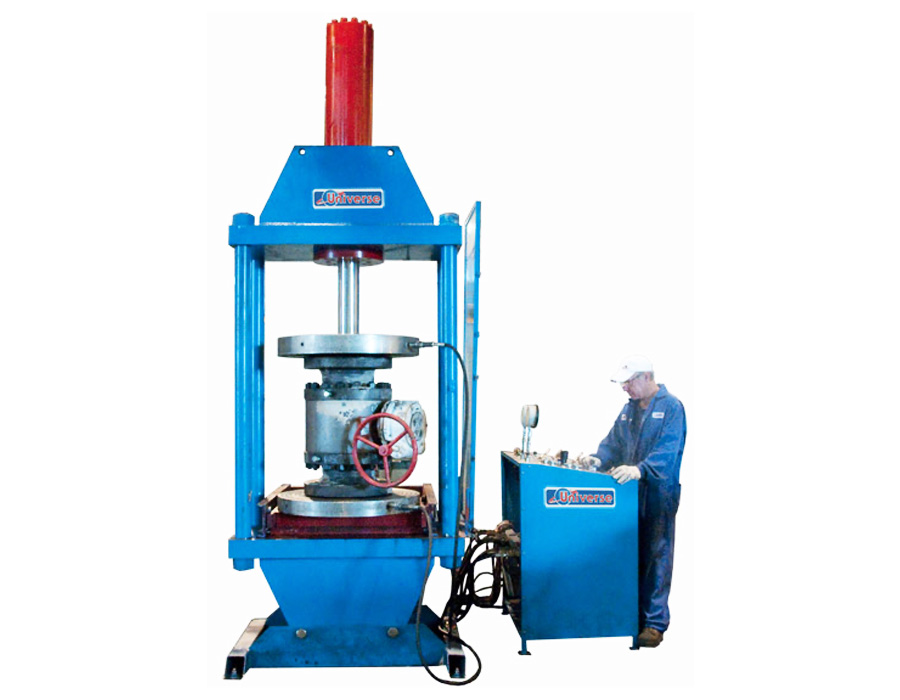
Why Must We Attach Importance to Pressure Testing?
Industrial valves often operate in high-temperature, high-pressure, or corrosive environments. If pressure-bearing failure occurs due to manufacturing defects or aging, it may cause medium leakage and shutdown losses at best, or lead to safety accidents at worst. Industry data shows that over 60% of valve failures stem from undetected pressure-bearing issues. Therefore, mastering scientific valve pressure testing methods and ensuring accurate results is crucial.
Three Common Testing Methods and Operational Key Points
1. Hydrostatic Test (Most Commonly Used)
Using water as the medium, it is suitable for most valves. The test pressure is usually 1.5 times the nominal pressure (PN).
- Key steps: Clean the valve → Visual inspection → Tighten connections → Purge air → Step-by-step pressure increase → Hold pressure for 5–10 minutes → Relieve pressure slowly.
- Precision techniques: Use a calibrated pressure gauge (accuracy ≥ Class 1.5); strictly prohibit residual air; observe pressure stability and whether the sealing surface leaks during pressure holding.
2. Pneumatic Test (For Water-Prohibited Occasions)
Using dry air or nitrogen as the medium, it is suitable for gas transmission systems or moisture-sensitive valves. Due to the compressibility of gases, the risk is relatively high, requiring extra caution.
- Key steps: Pre-test at 0.2MPa to check for leaks → Increase pressure to 1.1 times PN → Hold pressure for monitoring → Leak detection with soapy water.
- Precision techniques: Prefer nitrogen; install a safety relief valve; operators stay away from the test area; strictly prohibit overpressure.
3. Vacuum Test (For Vacuum Systems)
Used to verify the tightness of valves under negative pressure, commonly applied in chemical and semiconductor equipment.
- Operational key points: Evacuate to 10⁻³~10⁻⁵ Pa, hold pressure for 30–60 minutes, and observe whether the vacuum degree is stable.
- Precision techniques: Ensure the system is clean and free of leakage points; use a high-precision vacuum gauge; record minor pressure rise changes.
Five Core Techniques for Obtaining Accurate Results
- Scientific pressure setting: Select the test pressure based on the valve type, material, and standards to fully verify performance without exceeding the maximum allowable working pressure.
- Mandatory equipment calibration: Measuring tools such as pressure gauges and sensors need regular verification to ensure reliable readings.
- Thorough test preparation: Clean the valve, inspect for defects, and tighten connections—any looseness or impurities may interfere with results.
- Full-process monitoring and recording: Track pressure changes in real-time and fully record data for traceability and analysis.
- Post-test handling: Drain the medium, wipe dry for rust prevention, and re-inspect for damage to avoid secondary issues.
Conclusion
Accurate valve pressure testing is not simply about applying pressure but a systematic project integrating standards, equipment, operations, and experience. Only by combining standardized processes with detailed techniques can potential hazards be truly identified and safety guaranteed.
If you need international standard-compliant test plans, equipment support, or technical consulting, please feel free to contact us—Athena Engineering S.R.L. We provide professional, efficient, and actionable valve pressure testing services to ensure your system operates safely and smoothly.
 How Does a Ball Type Check Valve Prevent Pipeline Medium Backflow?
  Selection and Precautions for Natural Gas Valves
  Athena Engineering S.R.L Wraps‑up OGA 2026 Kuala Lumpur
  What is a Gate Valve? What is Its Working Principle?
  T-Type / T-Pattern / Straight Pattern Globe Valve
  Knife Gate Valve vs Wedge Gate Valve: Which Is Better for Your Industrial Piping?
  Cryogenic Ball Valve Comprehensive Product Overview
  Causes and Treatments for Poor Valve Shut‑Off
  Athena Triple Offset Butterfly Valves
  What is the Difference Between Swing Check Valve and NRV? A Complete Explanation
  Common Connection Types of Valves
  5 Piping Design Mistakes That Are Killing Your Valves
  Float Valve: Structure, Principle and Application
  High Pressure Needle Valve High-Precision Fluid Control Valve
  What is a Piston Check Valve?
  Meet Us at OGA 2026 | Booth 6802, Hall 6
  What is a Level Gauge? Working Principles, Types and Industrial Applications
  Double Sealing Protection: A Complete Interpretation of Bellows Globe Valves
  End-Suction Pump vs Inline Pumps: Which One Is Right for You?
  Method of Selecting Valve Types Based on Throttling Degree