
The differences between ball valves and butterfly valves
author: ATHENA GROUP
2026-03-11
Ball valves and butterfly valves, as two of the most widely used rotary valves, undertake the core functions of fluid transportation, shut-off and regulation. Both adopt a quarter-circle operation mode, but due to differences in structural design, they have their own advantages in terms of performance, cost, and applicable scenarios, becoming "customized choices" for different industrial environments. Identifying the differences between the two and accurately matching them to the application scenarios is the key to enhancing the efficiency of the pipeline system and reducing operating and maintenance costs.
The following will provide a detailed analysis of the differences between the two and their specific applications from three core dimensions.
The following will provide a detailed analysis of the differences between the two and their specific applications from three core dimensions.
1.The structural design is different, which leads to fundamental differences in performance.
The structural differences are the most fundamental distinction between ball valves and butterfly valves, and they directly determine the performance trends of the two.
The ball valve has a spherical valve core as its core component and is composed of four major parts: the valve body, the valve core, and the valve seat. The structure is relatively complex and requires the use of more robust materials to be manufactured, thus resulting in a larger volume and greater weight. The core design logic is to achieve fluid on-off through the rotation of the valve core's inner hole, and the sealing surface uses a spherical shape to closely fit the valve seat, which lays the foundation for its excellent sealing performance.

In contrast, the butterfly valve uses a disc-shaped valve flap as the opening and closing component. The structure is simple, with fewer components than the ball valve, and it is small in size and lightweight. Especially for large-diameter models, the overall design places greater emphasis on convenience and economy. Its opening and closing relies on the rotation of the valve flap around the valve axis. The contact area between the valve flap and the valve seat is smaller than that of the ball valve, and the sealing principle is relatively simple, so it is slightly inferior in high-pressure and high-precision sealing scenarios.

2.The performance focuses differ, and they are adapted to meet the requirements of various working conditions.
Due to structural differences, the performance characteristics of ball valves and butterfly valves are completely different, forming complementary advantages.
The core advantages of ball valves lie in sealing, pressure resistance, temperature resistance, and flow regulation accuracy. High-quality ball valves can reach the VI-level leakage standard and achieve absolute zero leakage. They can be adapted to high-pressure, high-temperature, and corrosive working conditions, and have extremely low flow resistance. Ball valves with V-port design can also achieve precise flow regulation and meet the requirements of precise control. However, their shortcomings are also quite obvious. The initial purchase cost is higher, and the installation and maintenance are slightly more difficult.
The performance advantages of butterfly valves lie in high cost-effectiveness and convenience. Their purchase cost is only 1/3 to 1/5 of that of ball valves of the same specification. Installation, disassembly, and maintenance are more convenient. They are suitable for medium and low pressure, and normal temperature working conditions. However, due to the design of the valve disc, their sealing performance is slightly inferior. In high-pressure environments, slight leakage may occur. The pressure resistance and temperature resistance levels are lower, and the flow regulation accuracy can only meet rough control requirements, unable to adapt to high-precision control scenarios.
3.Application scenarios are differentiated, and each takes advantage of its own strengths to achieve precise implementation.
The difference in performance and cost determines the clear differentiation of their application scenarios, and both have been successfully implemented in different industrial fields by leveraging their respective advantages.
The ball valve, with its zero leakage, high-pressure tolerance, and corrosion resistance, is widely used in key fields such as oil and gas, chemical processing, etc., to safely control hazardous media such as hydrocarbons and corrosive chemicals. It is also suitable for scenarios with strict requirements for sealing and pressure, such as high-pressure water systems in power plants and high-purity fluid transportation. The large-diameter ball valve is mainly used for special high-pressure conditions ranging from DN300 to DN1200.
The butterfly valve, due to its high cost-effectiveness, lightweight, and easy maintenance features, has become the preferred choice for large-diameter and medium-low pressure scenarios. In the water treatment industry, it is widely used for water and sludge transportation in water plants and sewage treatment plants; in HVAC systems, it is used to regulate air and water flow; in the food and beverage industry, it is adapted to various hygiene-level processes due to its easy cleaning feature; for large-diameter pipes above DN300, the butterfly valve can be adapted to an ultra-large diameter of DN3000+, and it is an economical and efficient flow control solution.

Therefore, based on these reasons, when making a choice, a comprehensive judgment should be made according to the specific working conditions: for scenarios requiring high pressure, zero leakage, and precise regulation, ball valves should be preferred; for traditional scenarios with medium and low pressure, large diameter, and emphasis on cost-effectiveness, butterfly valves are more suitable. With the upgrading of valve manufacturing technology, the performance of both has been continuously optimized, but the core division of labor differences will still be an important basis for industrial selec
 How Does a Ball Type Check Valve Prevent Pipeline Medium Backflow?
  Selection and Precautions for Natural Gas Valves
  Athena Engineering S.R.L Wraps‑up OGA 2026 Kuala Lumpur
  What is a Gate Valve? What is Its Working Principle?
  T-Type / T-Pattern / Straight Pattern Globe Valve
  Knife Gate Valve vs Wedge Gate Valve: Which Is Better for Your Industrial Piping?
  Cryogenic Ball Valve Comprehensive Product Overview
  Causes and Treatments for Poor Valve Shut‑Off
  Athena Triple Offset Butterfly Valves
  What is the Difference Between Swing Check Valve and NRV? A Complete Explanation
  Common Connection Types of Valves
  5 Piping Design Mistakes That Are Killing Your Valves
  Float Valve: Structure, Principle and Application
  High Pressure Needle Valve High-Precision Fluid Control Valve
  What is a Piston Check Valve?
  Meet Us at OGA 2026 | Booth 6802, Hall 6
  What is a Level Gauge? Working Principles, Types and Industrial Applications
 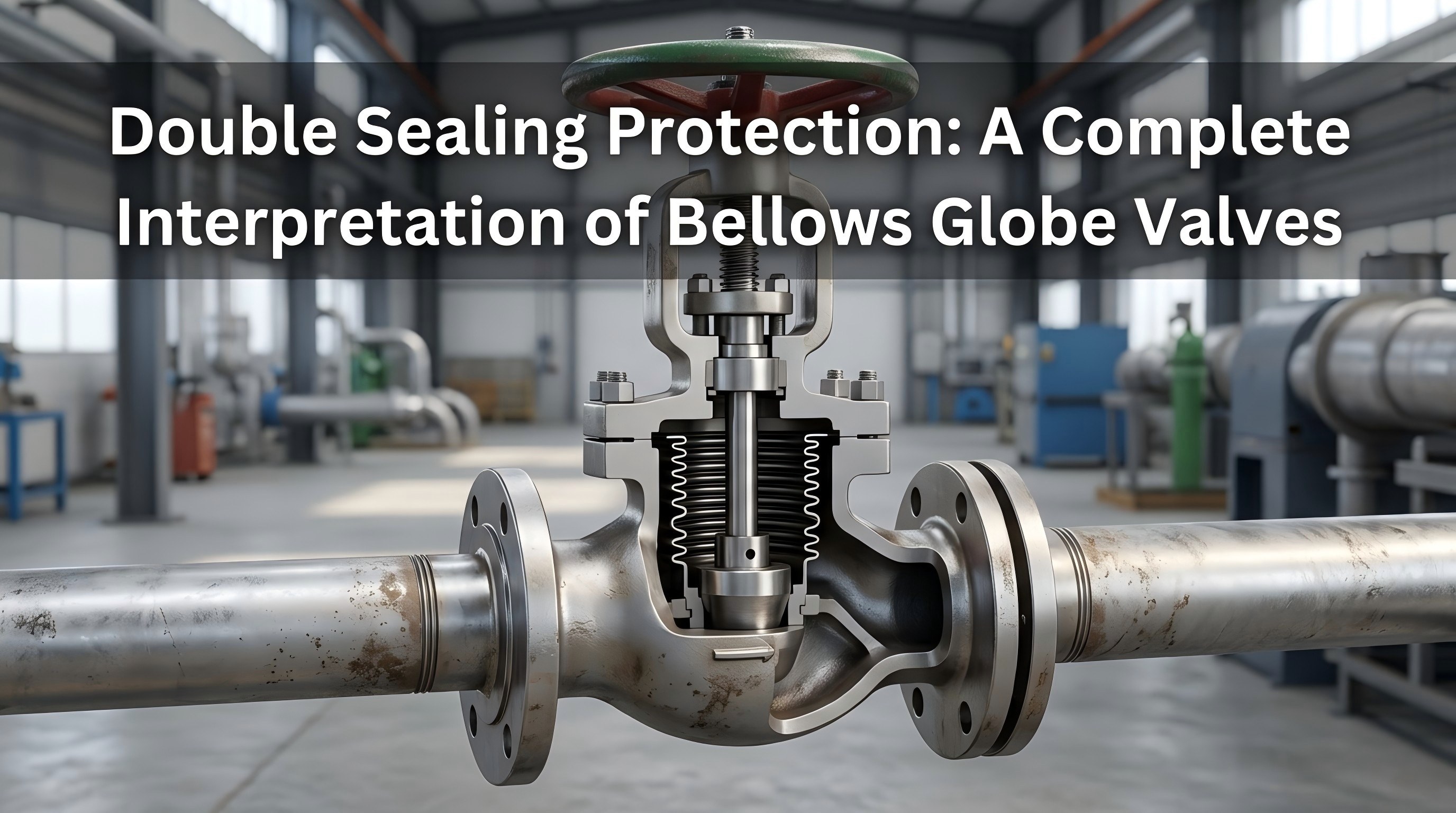 Double Sealing Protection: A Complete Interpretation of Bellows Globe Valves
  End-Suction Pump vs Inline Pumps: Which One Is Right for You?
  Method of Selecting Valve Types Based on Throttling Degree