
O-type vs V-type Ball Valves: Core Differences and Application Guidelines
author: ATHENA GROUP
2025-12-16
O-type and V-type ball valves are two types of valves designed for different operational requirements. Although they both follow the basic principle of ball valves, which is to use a rotating spherical valve core to regulate flow, they differ significantly in structural details, sealing performance, and application scope.

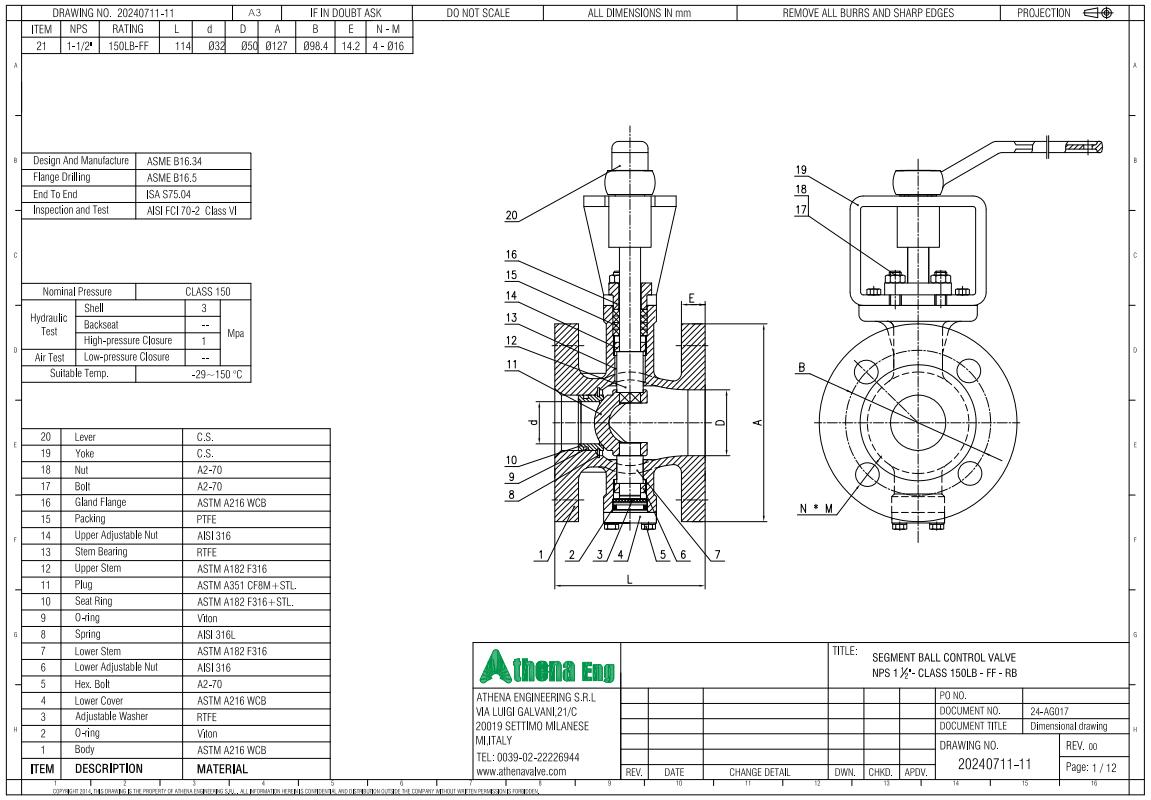
O-type Ball Valve V-type Ball Valve
Structural Distinctions: Design for Function
The fundamental difference between O-type and V-type ball valves lies in the design of the spherical core’s flow passage, which directly dictates their operational characteristics.
O-type Ball Valves: Straight-through, Full-port Design
O-type ball valves feature a spherical core with a circular (O-shaped) full port (flow bore) that matches the inner diameter of the pipeline when fully open. This full-port design ensures unobstructed fluid flow—minimizing pressure drop and allowing for pigging (pipeline cleaning) operations. The spherical core rotates 90 degrees to switch between fully open and fully closed positions, with a simple, robust structure consisting of the ball, valve seat, stem, and body. The streamlined design reduces turbulence and makes the valve suitable for on-off control rather than throttling.

V-type Ball Valves: Notched, Throttling-optimized Design
V-type ball valves incorporate a spherical core with a V-shaped notch (or V-port) instead of a full circular bore. The angle of the V-notch (typically 15°, 30°, 60°, or 90°) determines the flow characteristics. When the valve is partially open, the V-notch creates a precise, adjustable flow path—enabling accurate throttling and flow control. The structural design also includes a metal-to-metal or soft-seated contact between the ball and valve seat, enhanced by the shearing action of the V-notch, which prevents clogging by cutting through viscous media or small solids.
Sealing Performance: Trade-offs Between Leakage Control and Durability
Sealing efficiency is a critical performance metric for ball valves, and the two types adopt different sealing mechanisms to suit their intended uses.
O-type Ball Valves: Bubble-tight Soft Sealing
Most O-type ball valves use soft sealing materials (e.g., PTFE, RPTFE, or Viton) for the valve seat. The full-contact between the smooth spherical surface and the soft seat creates a bubble-tight seal (ANSI Class VI leakage standard) when closed—effectively preventing fluid leakage even for corrosive, toxic, or high-purity media. However, soft seals have temperature and pressure limitations: they typically perform reliably at temperatures up to 200–260°C and pressures up to Class 150–300. They are also susceptible to damage from abrasive particles, making them unsuitable for media with solids.
V-type Ball Valves: Robust Hard Sealing for Harsh Conditions
V-type ball valves often employ hard sealing (e.g., Stellite, tungsten carbide, or ceramic) between the ball and seat, though soft-sealed versions are available for low-pressure, clean media. Hard seals offer exceptional durability, resisting high temperatures (up to 500°C or higher), high pressures (up to Class 600–1500), and abrasive media. While hard-sealed V-type valves may not achieve the same zero-leakage performance as soft-sealed O-type valves (typically meeting ANSI Class IV or V), their ability to withstand wear and tear makes them ideal for harsh industrial environments. The V-notch design also enhances sealing by scraping debris from the seat during operation.
Application Scenarios: Matching Valves to Operational Needs
The structural and sealing differences between O-type and V-type ball valves make them suited for distinct industrial scenarios.
O-type Ball Valves: Ideal for On-off Control of Clean Media
O-type ball valves excel in applications requiring reliable on-off control with zero leakage. Key use cases include:
•Chemical processing: Handling corrosive liquids, gases, and solvents (e.g., acids, alkalis) where leakage could cause safety hazards.
•Water treatment: Controlling the flow of clean water, wastewater, or treated effluent in municipal and industrial plants.
•Oil and gas: Low-pressure fuel gas systems, crude oil transfer, and refined product pipelines where unobstructed flow is critical.
•Food and beverage: Processing of clean, non-abrasive media (e.g., juices, dairy products) requiring hygienic, leak-tight valves.
V-type Ball Valves: Precision Control for Abrasive or Viscous Media
V-type ball valves are the preferred choice for throttling, flow regulation, and handling challenging media. Key applications include:
•Mining and mineral processing: Controlling slurry, pulp, and abrasive solids (e.g., coal, ore slurries) where the V-notch’s shearing action prevents clogging.
•Power generation: Regulating steam, flue gas desulfurization (FGD) slurries, and ash handling systems in thermal power plants.
•Pulp and paper: Managing wood pulp, black liquor, and bleaching chemicals—media that are viscous and contain fibrous solids.
•Wastewater treatment: Throttling sludge, grit, and industrial effluent with suspended particles.
•Chemical manufacturing: Controlling viscous or crystallizing media that require precise flow adjustment.
As a leading supplier of industrial fluid control solutions, Athena Engineering S.R.L. specializes in the design, manufacturing, and supply of high-performance O-type and V-type ball valves. We are committed to customer satisfaction, providing customized solutions, technical support, and global after-sales service to ensure our valves operate reliably and consistently even in the most demanding environments.
Whether you need on/off control for clean media or precise regulation in harsh operating conditions, Athena's ball valves provide the reliability and efficiency your operations require. For more product information or to consult with our technical experts, please visit our website //www.athenavalve.com/ or contact our sales team SALES@ATHENAVALVE.COM.
Whether you need on/off control for clean media or precise regulation in harsh operating conditions, Athena's ball valves provide the reliability and efficiency your operations require. For more product information or to consult with our technical experts, please visit our website //www.athenavalve.com/ or contact our sales team SALES@ATHENAVALVE.COM.
 How Does a Ball Type Check Valve Prevent Pipeline Medium Backflow?
  Selection and Precautions for Natural Gas Valves
  Athena Engineering S.R.L Wraps‑up OGA 2026 Kuala Lumpur
  What is a Gate Valve? What is Its Working Principle?
  T-Type / T-Pattern / Straight Pattern Globe Valve
  Knife Gate Valve vs Wedge Gate Valve: Which Is Better for Your Industrial Piping?
  Cryogenic Ball Valve Comprehensive Product Overview
  Causes and Treatments for Poor Valve Shut‑Off
  Athena Triple Offset Butterfly Valves
  What is the Difference Between Swing Check Valve and NRV? A Complete Explanation
  Common Connection Types of Valves
  5 Piping Design Mistakes That Are Killing Your Valves
  Float Valve: Structure, Principle and Application
  High Pressure Needle Valve High-Precision Fluid Control Valve
  What is a Piston Check Valve?
  Meet Us at OGA 2026 | Booth 6802, Hall 6
  What is a Level Gauge? Working Principles, Types and Industrial Applications
  Double Sealing Protection: A Complete Interpretation of Bellows Globe Valves
  End-Suction Pump vs Inline Pumps: Which One Is Right for You?
  Method of Selecting Valve Types Based on Throttling Degree