
Method of Selecting Valve Types Based on Throttling Degree
author: ATHENA GROUP
2026-07-20
1. Core Principles of Valve Selection
The core of valve throttling selection is to match the flow regulation accuracy of working conditions. According to the system’s requirements for flow and pressure control, working conditions are divided into four types: precise throttling, conventional throttling, rough throttling and pure switch non-throttling. Different valves have great differences in flow characteristics and opening and closing structures. Only selecting valves according to actual needs can ensure stable regulation, reduce medium erosion and loss, and guarantee the safe operation and service life of equipment.
2. Valve Selection for Different Throttling Degrees
1. High-precision throttling selection
This working condition requires high fluid control accuracy. It is mainly used in precision instrument pipelines, chemical micro batching, hydraulic pressure stabilization, laboratory fluid regulation and other scenarios. The key requirement is to form a stable linear relationship between valve opening and medium flow and pressure, and avoid flow fluctuation and sudden pressure change.
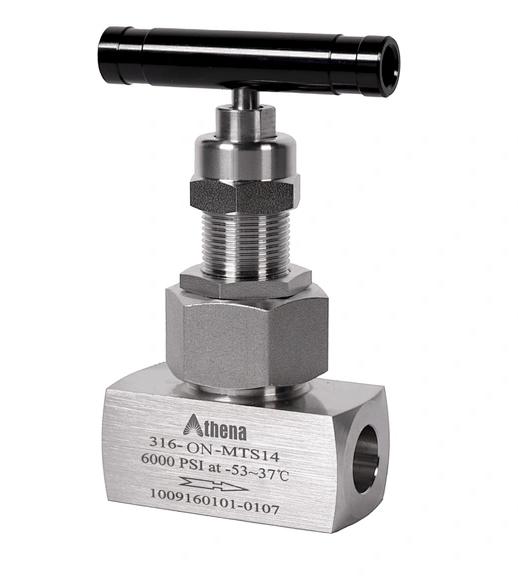
Needle valves are preferred for such scenarios. With a special conical valve core structure, it can realize micro opening adjustment and much higher throttling accuracy than ordinary valves. It can accurately control the flow of tiny medium and is suitable for fine regulation of small-diameter and low-pressure-difference working conditions. For industrial high-precision throttling scenarios with medium pressure and medium pipe diameter, straight-through globe valves can be adopted. It has stable valve core stroke, good sealing performance and stable linear flow regulation, which can effectively buffer the fluctuation of medium pressure drop and meet the long-term demand of precise flow regulation.
2. Medium-range throttling selection
This is the most common throttling working condition in industry and civil use, widely applied in water supply and drainage pipe networks, HVAC systems, ordinary process transmission pipelines and other scenarios. It does not require ultra-high regulation accuracy, but needs stable regulation, high flow efficiency and good wear resistance.
V-type ball valves can form an approximate linear flow regulation curve with a wide adjustable opening range. The valve core fits closely with the valve seat and has excellent erosion resistance. It is suitable not only for clean media such as clean water and oil products, but also for throttling mixed media with slight solid particles.

High-performance butterfly valves have a compact structure, small occupation space and low flow resistance, which are especially suitable for medium-range throttling of large-diameter pipelines. The optimal working opening range is 15% to 75%, which can effectively avoid turbulence and negative pressure loss caused by small opening, with stable operation and low maintenance cost.

3. Low-precision throttling and on-off selection
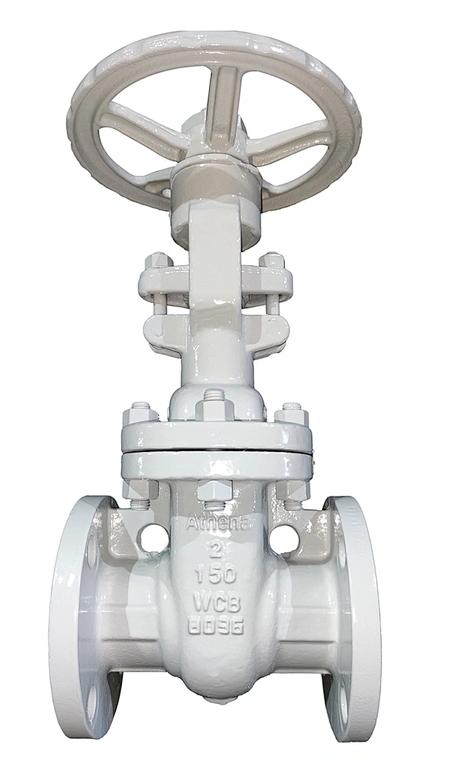
This working condition has no demand for regular precise throttling, and only needs to realize full on-off of pipeline medium or temporary and wide-range rough flow regulation. It is commonly seen in fire-fighting pipelines, ordinary water and gas transmission main pipes, standby pipelines and other scenarios, with ordinary ball valves and gate valves as applicable types. The core design function of these two valves is pipeline isolation and on-off control. When fully open, they have smooth flow channels and minimal flow resistance, causing no energy loss of the medium. However, they have poor throttling performance. When half open, the medium flows disorderly, which easily causes turbulence and cavitation, and continuously erodes the valve core and sealing surface. Long-term half-open throttling will lead to sealing failure, valve leakage, valve body damage and other faults. Therefore, such valves can only be used for emergency temporary rough flow regulation, and are strictly prohibited from being used as special throttling valves for long-term operation.

3. Summary of Valve Selection
In conclusion, valve selection must be based on the system’s throttling accuracy requirements. Needle valves and globe valves are preferred for precise micro-regulation scenarios to ensure regulation accuracy and stability. V-type ball valves and high-performance butterfly valves are the best choices for conventional medium-range stable throttling, which are suitable for most industrial and civil conventional working conditions. Gate valves and ordinary ball valves can be used for scenarios requiring only on-off isolation or temporary rough flow regulation. Scientific matching of valve types can effectively avoid unstable throttling, valve body loss and pipeline fluctuation, greatly improve the operation stability of fluid transmission systems, and reduce equipment failure probability and later operation and maintenance costs.
 How Does a Ball Type Check Valve Prevent Pipeline Medium Backflow?
  Selection and Precautions for Natural Gas Valves
  Athena Engineering S.R.L Wraps‑up OGA 2026 Kuala Lumpur
  What is a Gate Valve? What is Its Working Principle?
  T-Type / T-Pattern / Straight Pattern Globe Valve
  Knife Gate Valve vs Wedge Gate Valve: Which Is Better for Your Industrial Piping?
  Cryogenic Ball Valve Comprehensive Product Overview
  Causes and Treatments for Poor Valve Shut‑Off
  Athena Triple Offset Butterfly Valves
  What is the Difference Between Swing Check Valve and NRV? A Complete Explanation
  Common Connection Types of Valves
  5 Piping Design Mistakes That Are Killing Your Valves
  Float Valve: Structure, Principle and Application
  High Pressure Needle Valve High-Precision Fluid Control Valve
  What is a Piston Check Valve?
  Meet Us at OGA 2026 | Booth 6802, Hall 6
  What is a Level Gauge? Working Principles, Types and Industrial Applications
  Double Sealing Protection: A Complete Interpretation of Bellows Globe Valves
  End-Suction Pump vs Inline Pumps: Which One Is Right for You?
  Safety Valves–Core Protection for Pressure Equipment