
Knife Gate Valve Working Condition, Structure and Features
author: ATHENA GROUP
2026-06-02
A knife gate valve, also known as a slurry gate valve, is a straight-through single-direction cut-off valve. Featuring an ultra-thin valve body, knife-shaped gate and non-resistance straight-through flow channel, it is specially designed for media containing particles, fibers, slurry and high-viscosity clog-prone substances. It is only applicable for full opening and full closing cut-off operation and prohibited for flow regulation, and is widely used in sewage treatment, mining, chemical, papermaking and metallurgy industries.

1. Applicable Working Conditions
It is suitable for low-pressure, normal-temperature and large-flow pipelines with complex media. The standard pressure rating is PN10/PN16, with customized versions available up to PN25/PN40, and the applicable temperature ranges from -20℃ to 420℃. Different material configurations enable adaption to wear-resistant, anti-corrosion and medium-temperature working conditions.
Applicable Scenarios: Cut-off service for solid-liquid mixed and impurity-containing media, including sludge discharge in sewage treatment, mine slurry and tailings transportation, papermaking slurry pipelines, viscous corrosive chemical slurry, and municipal water supply and drainage sewage.
Inapplicable Scenarios: Not suitable for high-pressure, ultra-high temperature and high-vacuum working conditions, as well as flammable, explosive, toxic media and scenarios requiring strict zero leakage. Half-open operation is forbidden to avoid gate erosion damage and seal failure.
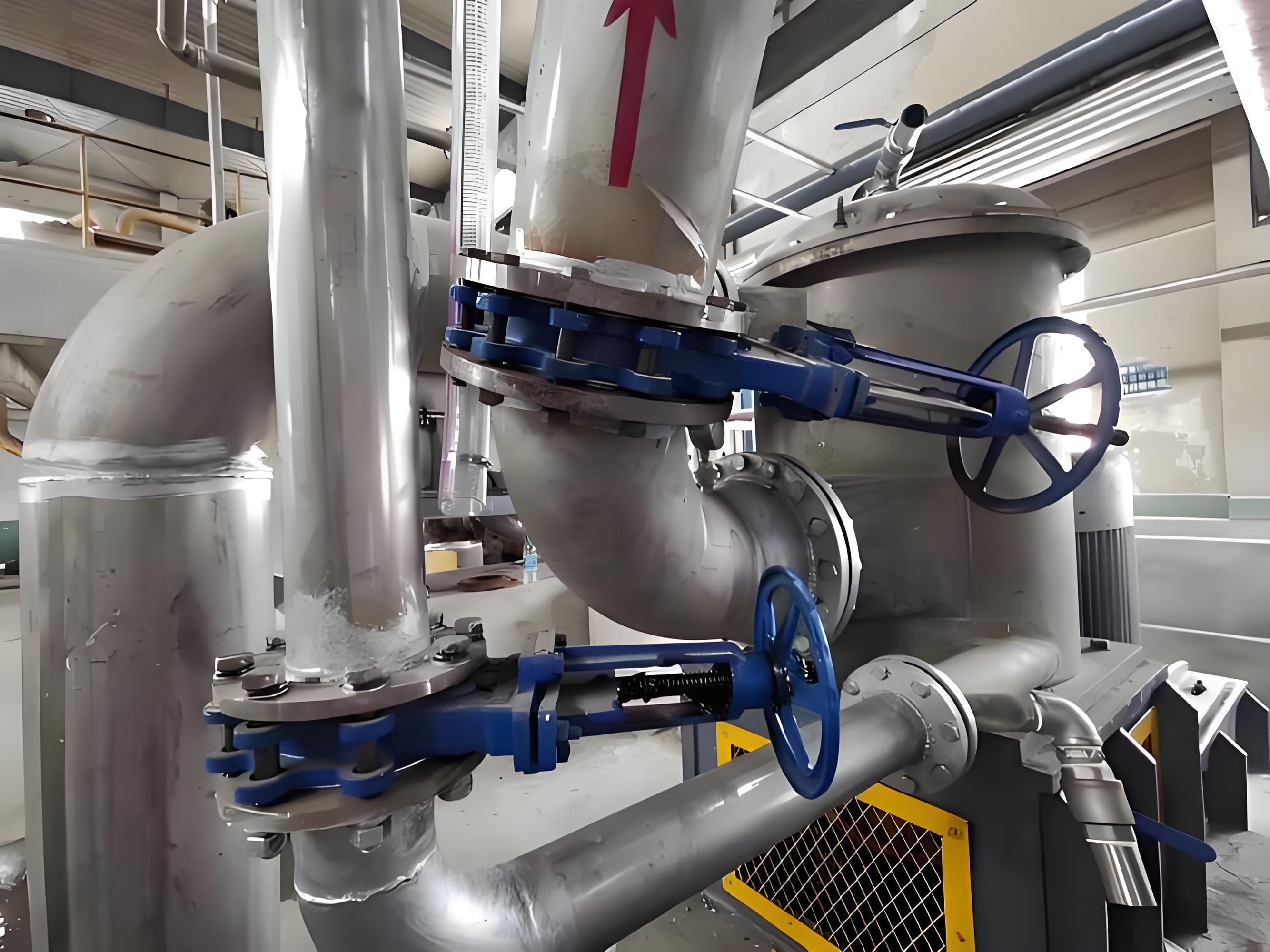
2. Core Structure
The valve features a compact structure with no material accumulation dead angles. It is mainly of wafer-type installation (flange-type for individual models) with easy disassembly and maintenance. It consists of seven core components:
- Body: Adopts an ultra-thin flat straight-through structure with no inner cavity or material deposition. Available materials include cast iron, carbon steel, stainless steel, fluorine lining and rubber lining to adapt to diverse working conditions, featuring small size and low space occupation.
- Knife-shaped Gate: Made of high-strength hardened thin plate. The bottom knife edge can shear fibers, flocs and granular impurities to prevent jamming and ensure tight valve closure.
- Seat Seal:Divided into soft seal and hard seal. Soft seals adopt rubber and PTFE with excellent tightness for normal-temperature sewage and slurry media. Hard seals adopt hard alloy surfacing and ceramic materials with high wear and temperature resistance for severely abrasive granular media. The valve seat is replaceable individually.
- Stem: Integrated stainless steel structure with outstanding rust resistance, corrosion resistance and high strength. It delivers precise transmission and is compatible with all types of driving devices.
- Packing Seal: Multi-layer composite seal of PTFE and graphite prevents medium leakage along the valve stem. It features temperature resistance, wear resistance and convenient on-line replacement.
- Bracket and Drive Assembly: The stable support structure prevents structural deformation during operation. It supports manual, electric, pneumatic, hydraulic and other driving modes, adapting to manual operation and automatic control systems.
3. Core Product Features
1. Excellent Anti-clogging Performance: The unique knife edge shears various impurities effectively, solving common pipeline problems such as valve jamming and incomplete closure in slurry and sewage systems.
2. Ultra-low Flow Resistance: The straight-through dead-angle-free flow channel is fully unobstructed when fully open, leaving no residual media and minimizing pressure loss, ideal for large-flow working conditions.
3. Lightweight and Easy Installation: The ultra-thin lightweight design reduces the volume to one-third of conventional gate valves. The wafer-type installation adapts well to narrow pipeline spaces.
4. Wide Adaptability: Replacement of valve body materials and seal types enables adaption to anti-corrosion, wear-resistant, high-temperature resistant and other working conditions.
5. Low Operation and Maintenance Cost: Simple overall structure with few wearing parts that can be replaced individually without valve disassembly, ensuring low failure rate and long service life.
6. Fast Opening and Closing: Low resistance during gate movement enables fast response of automated models, meeting the requirements of emergency pipeline cut-off.
7. Working Condition Limitations: Not applicable for flow throttling and pressure regulation. Soft seals cannot withstand high/low pressure and ultra-high temperature, and the valve is not suitable for toxic media and scenarios requiring ultra-high sealing performance.
 How Does a Ball Type Check Valve Prevent Pipeline Medium Backflow?
  Selection and Precautions for Natural Gas Valves
  Athena Engineering S.R.L Wraps‑up OGA 2026 Kuala Lumpur
  What is a Gate Valve? What is Its Working Principle?
  T-Type / T-Pattern / Straight Pattern Globe Valve
  Knife Gate Valve vs Wedge Gate Valve: Which Is Better for Your Industrial Piping?
  Cryogenic Ball Valve Comprehensive Product Overview
  Causes and Treatments for Poor Valve Shut‑Off
  Athena Triple Offset Butterfly Valves
  What is the Difference Between Swing Check Valve and NRV? A Complete Explanation
  Common Connection Types of Valves
  5 Piping Design Mistakes That Are Killing Your Valves
  Float Valve: Structure, Principle and Application
  High Pressure Needle Valve High-Precision Fluid Control Valve
  What is a Piston Check Valve?
  Meet Us at OGA 2026 | Booth 6802, Hall 6
  What is a Level Gauge? Working Principles, Types and Industrial Applications
  Double Sealing Protection: A Complete Interpretation of Bellows Globe Valves
  End-Suction Pump vs Inline Pumps: Which One Is Right for You?
  Method of Selecting Valve Types Based on Throttling Degree