
How to Select Materials for Butterfly Valves?
author: ATHENA GROUP
2026-04-18
Butterfly valves are one of the most common valve types in industrial piping systems. They are widely used in water supply and drainage, HVAC, petrochemical, power, and many other fields due to their simple structure, easy operation, and low cost.

Principles of Material Selection: Compatibility is More Important Than Special
Material selection for butterfly valves (body, disc, seat, stem) must be comprehensively evaluated based on medium characteristics, temperature, pressure, and other parameters. Misunderstandings in practical applications often lead to premature valve failure.
a.Valve Body Material: Not “The More Expensive, The Better”
- Cast Iron vs. Ductile Iron: Many assume ductile iron outperforms cast iron for all conditions.
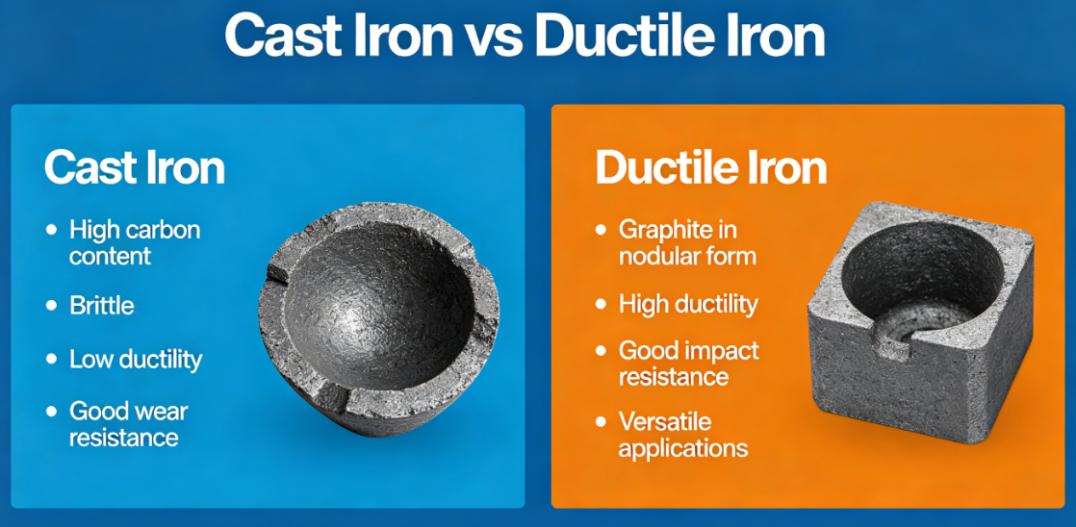
- However, in sulfur-bearing media (e.g., natural gas), graphite in ductile iron reacts with sulfur to form sulfides, causing hydrogen embrittlement — making gray cast iron more corrosion-resistant in such cases. Cast iron with nickel content ≥13% is recommended, as nickel inhibits sulfur corrosion.
- Stainless Steel “Model Traps”: 304 stainless steel butterfly valves work for neutral media but suffer pitting corrosion from chloride ions in chloride-bearing media (e.g., seawater). 316 stainless steel (with molybdenum) is preferred, but above 250°C, molybdenum precipitates and corrosion resistance drops. Hastelloy C276 should be used instead — a detail often overlooked in high-temperature applications.
- Plastic Body “Temperature Threshold”: PVC butterfly valves are low-cost and suitable for normal temperature and low pressure. However, above 60°C, PVC releases plasticizers, reducing body strength by over 50% and risking rupture under pressure fluctuations. Hot water systems must use CPVC (chlorinated polyvinyl chloride), with a maximum temperature resistance of 95°C.
b.Valve Seat Material: The “Last Line of Defense” for Sealing
The valve seat is critical for butterfly valve sealing; its material details directly determine leakage rates but are often neglected.
- NBR “Oil Resistance Misconception”: Nitrile rubber (NBR) has good oil resistance but swells and fails in aromatic oils (e.g., gasoline). Fluororubber (FKM) should be used instead. A hidden risk: NBR hardens and loses elasticity below -10°C, causing cold-shrink leakage in outdoor pipelines in northern winters.
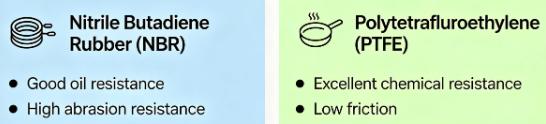
- PTFE “Filling Secrets”: Pure PTFE has poor wear resistance. In practice, it is filled with fiberglass (improved wear resistance), carbon fiber (enhanced thermal conductivity), or bronze powder (reduced friction coefficient). However, filling ratios matter: fiberglass content over 25% makes PTFE brittle and prone to cracking. Many low-cost butterfly valves use excessive filler to cut costs, shortening seal life.
- Metal Seat “Matching Principle”: Metal seats are common in high-pressure butterfly valves (PN ≥ 40). Hardness grading between the seat and disc is required: if the disc is 316 stainless steel (≈180 HB), the seat should be Hastelloy (≈230 HB). Similar hardness causes scoring and leakage due to mutual friction. This “hardness difference” rule is rarely stated in manuals but is a common field failure cause.
c.Valve Stem Material: The “Unnoticed Load Bearer”
Though slender, the valve stem bears both operating torque and medium corrosion. Material selection details are easily overlooked.
- Chrome Plating “Thickness Rule”: Standard stems are chrome-plated for rust prevention. Plating thickness should be 0.02–0.05 mm. Excessive thickness (over 0.1 mm) reduces adhesion and causes flaking; insufficient thickness fails to form a complete protective film. In humid environments, pinholes (diameter < 0.01 mm) in the plating create galvanic cells, accelerating corrosion — a common cause of “unexplained rusting” stems.
- Duplex Steel “Application Boundary”: 2205 duplex steel stems offer strong corrosion resistance but experience metallurgical changes and reduced toughness above 300°C. Inconel 625 alloy should be used instead. Many high-temperature application users overlook this trait, leading to stem fractures after long service.
For more details on butterfly valve material selection and professional sizing guidance, please visit our brand official website: Athena valve (www.athenavalve.com). Athena valve focuses on the R&D and production of high-quality butterfly valves, providing suitable valve solutions for various industrial working conditions.
 How Does a Ball Type Check Valve Prevent Pipeline Medium Backflow?
  Selection and Precautions for Natural Gas Valves
  Athena Engineering S.R.L Wraps‑up OGA 2026 Kuala Lumpur
  What is a Gate Valve? What is Its Working Principle?
  T-Type / T-Pattern / Straight Pattern Globe Valve
  Knife Gate Valve vs Wedge Gate Valve: Which Is Better for Your Industrial Piping?
  Cryogenic Ball Valve Comprehensive Product Overview
  Causes and Treatments for Poor Valve Shut‑Off
  Athena Triple Offset Butterfly Valves
  What is the Difference Between Swing Check Valve and NRV? A Complete Explanation
  Common Connection Types of Valves
  5 Piping Design Mistakes That Are Killing Your Valves
  Float Valve: Structure, Principle and Application
  High Pressure Needle Valve High-Precision Fluid Control Valve
  What is a Piston Check Valve?
  Meet Us at OGA 2026 | Booth 6802, Hall 6
  What is a Level Gauge? Working Principles, Types and Industrial Applications
  Double Sealing Protection: A Complete Interpretation of Bellows Globe Valves
  End-Suction Pump vs Inline Pumps: Which One Is Right for You?
  Method of Selecting Valve Types Based on Throttling Degree