
How to Choose Between wedge Gate Valve and Slab Gate Valve
author: ATHENA GROUP
2026-07-07
1. Core Structural Differences
Wedge gate valves mostly adopt the traditional wedge gate plate structure. Sealing is realized by the downward thrust of the valve stem which presses the wedge-shaped inclined surfaces of the gate plate tightly against the fixed valve seat. A closed cavity is reserved inside the valve body, which traps medium residues after valve switching and forms dead zones without an integrated pressure relief structure. During long-term operation, sediments such as sediment and scale easily accumulate in the dead zones, increasing flow resistance and continuously wearing the sealing surfaces. Featuring a simple structure, wedge gate valves have low working condition tolerance and only meet basic pipeline cut-off requirements.
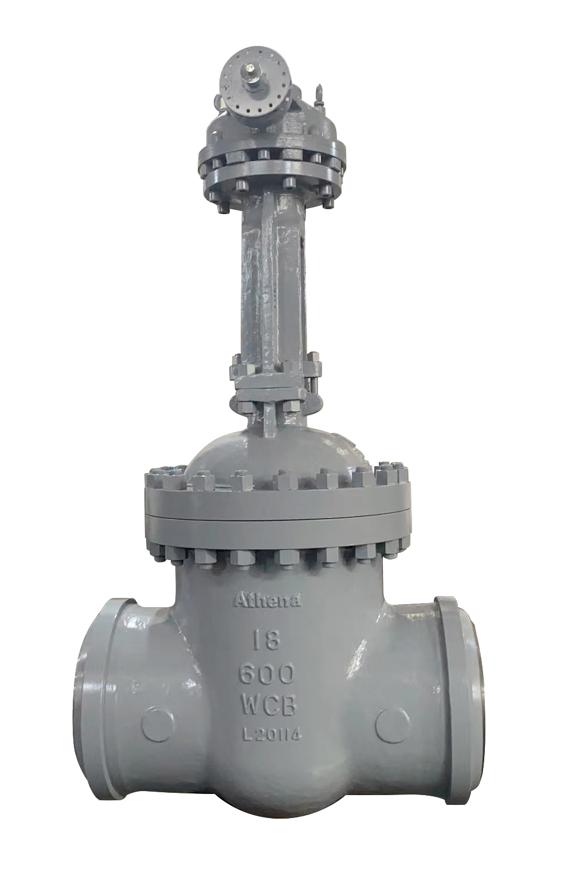
In contrast, slab gate valves adopt a parallel slab gate plate and floating valve seats with built-in preloaded springs, achieving tight sealing through flat surface compression without wedge structures that easily trap impurities. Equipped with a full-bore straight flow channel, the valve has no diameter reduction, inner protrusions or medium retention dead zones, delivering extremely low flow resistance. The valve body is integrated with a dedicated pressure relief structure to balance cavity pressure. It is divided into two types: with and without diversion holes. The fully open type with diversion holes realizes complete pipeline penetration suitable for long-distance continuous transmission pipelines, while the non-diversion-hole type is applied for precise cut-off working conditions.

2. Operational Performance Differences
Opening and closing performance:the wedge sealing surfaces of wedge gate valves keep fitting and sliding throughout the switching process, resulting in long friction strokes and severe wear. Under medium scaling, corrosion or high-pressure conditions, the wedge surfaces are prone to self-locking and jamming, sharply increasing operating torque and requiring high-torque driving equipment. Frequent long-term operation easily causes switching failure.

Slab gate valves operate via parallel translation of the gate plate. The sealing surfaces only fit at the fully open and fully closed positions and separate completely during switching with no sliding friction, fundamentally eliminating sealing surface wear and jamming. They feature stable and low operating torque with strong adaptability to high and low pressure conditions, compatible with conventional small electric and pneumatic actuators.

Sealing performance:wedge gate valves adopt a one-way sealing design without wear or deformation compensation mechanisms. Abrasion, medium corrosion or thermal deformation of sealing surfaces will directly produce gaps and cause persistent internal leakage, especially under high temperature, high pressure and fluctuating pressure working conditions. Slab gate valves support equivalent two-way sealing to adapt to positive and negative pipeline pressure. The built-in spring can automatically compensate sealing gaps in real time, offsetting tiny abrasion, thermal deformation and pressure fluctuation errors, ensuring high-precision and long-term stable sealing performance with negligible leakage.
The two valve types differ greatly in medium adaptability and safety.
The wedge sealing gaps of wedge gate valves easily trap impurities, so they are only applicable to pure media such as clean water, normal-pressure clean oil and low-pressure air. They cannot withstand media with solid particles, impurities or corrosive components, which easily lead to sealing failure.
Slab gate valves have smooth and compact sealing surfaces with hardening wear-resistant treatment, providing excellent anti-scouring, anti-wear and anti-corrosion performance. They stably adapt to complex media including oil and gas, coal slurry, mine pulp, sewage and high-temperature high-pressure steam. In terms of safety, the closed cavity of wedge gate valves suffers pressure build-up caused by medium thermal expansion and contraction.
Without autonomous pressure relief devices, they face risks of valve body deformation and cracking, requiring additional pressure relief accessories. Slab gate valves are equipped with an integrated pressure balance structure to eliminate cavity overpressure risks and greatly improve operational safety.
3. Application Scenarios and Operation Costs
Wedge gate valves are applied in pipelines with mild working conditions, clean media and low temperature and pressure, mainly used in municipal water supply and drainage, HVAC systems, low-pressure fire protection and civil oil transmission pipelines.
They are suitable for basic cut-off scenarios with infrequent switching, low sealing requirements and limited budgets. Slab gate valves are designed for harsh industrial working conditions, widely used in long-distance oil and gas transmission pipelines, wellheads, coal chemical industry, high-pressure power pipe networks, mine slurry transmission and corrosive medium pipelines. They adapt to high-frequency switching, high temperature and pressure, two-way pressure bearing, flammable and explosive media and high-precision industrial pipeline systems with impurity-containing media.

In terms of operation and maintenance costs: wedge gate valves have simple manufacturing processes and low procurement costs but poor wear resistance and high failure rates. Leakage and jamming faults require overall valve disassembly and replacement, causing long downtime losses and high long-term operating costs.
Slab gate valves feature high machining precision and complex processes with higher initial procurement costs, but they deliver excellent durability and long maintenance-free cycles. With no vulnerable major components, only valve seat sealing rings need regular replacement without overall disassembly. They achieve superior comprehensive cost performance in long-term continuous industrial operation compared with wedge gate valves.
Slab gate valves feature high machining precision and complex processes with higher initial procurement costs, but they deliver excellent durability and long maintenance-free cycles. With no vulnerable major components, only valve seat sealing rings need regular replacement without overall disassembly. They achieve superior comprehensive cost performance in long-term continuous industrial operation compared with wedge gate valves.
Boasting years of gate valve manufacturing experience, Athenavalve customizes wedge and slab gate valves for all pipeline conditions. We maintain strict standards for machining precision and sealing performance, balancing long-term equipment stability and full lifecycle O&M costs, and deliver premium all-in-one valve solutions for water, oil & gas, coal chemical, power and mining sectors.
Website: www.athenavalve.com
Email: SALES@ATHENAVALVE.COM
Website: www.athenavalve.com
Email: SALES@ATHENAVALVE.COM
 How Does a Ball Type Check Valve Prevent Pipeline Medium Backflow?
  Selection and Precautions for Natural Gas Valves
  Athena Engineering S.R.L Wraps‑up OGA 2026 Kuala Lumpur
  What is a Gate Valve? What is Its Working Principle?
  T-Type / T-Pattern / Straight Pattern Globe Valve
  Knife Gate Valve vs Wedge Gate Valve: Which Is Better for Your Industrial Piping?
  Cryogenic Ball Valve Comprehensive Product Overview
  Causes and Treatments for Poor Valve Shut‑Off
  Athena Triple Offset Butterfly Valves
  What is the Difference Between Swing Check Valve and NRV? A Complete Explanation
  Common Connection Types of Valves
  5 Piping Design Mistakes That Are Killing Your Valves
  Float Valve: Structure, Principle and Application
  High Pressure Needle Valve High-Precision Fluid Control Valve
  What is a Piston Check Valve?
  Meet Us at OGA 2026 | Booth 6802, Hall 6
  What is a Level Gauge? Working Principles, Types and Industrial Applications
  Double Sealing Protection: A Complete Interpretation of Bellows Globe Valves
  End-Suction Pump vs Inline Pumps: Which One Is Right for You?
  Method of Selecting Valve Types Based on Throttling Degree