
How to Choose a Valve Actuator?
2025-12-20

How to choose a valve actuator? In modern industries such as logistics, food processing, pharmaceuticals, and cold chain warehousing, industrial valves are no longer simple "switch devices" — they are directly related to energy efficiency, production safety, temperature control stability, and overall operating costs. As a high-end Italian industrial door system manufacturer, Athena Engineering S.R.L has always provided global customers with customized, high-reliability industrial door solutions based on engineering-grade precision and European manufacturing standards.
1. Manual Actuation: A Reliable Bottom Line Under Extreme Working Conditions
Despite the trend of automation, manual actuators remain irreplaceable in specific isolation and backup scenarios.

Mechanical Logic: Torque is directly transmitted through handwheels or levers, and gear reducers are supplemented for large-diameter valves to reduce operating intensity.
Core Advantages:
- Zero energy consumption and low ownership cost: No need for electricity or air supply, and the maintenance cycle is extremely long.
- Independence: Provides the most reliable intervention method in extreme environments such as full-plant power outages or remote pipelines.
Limitations: Response speed depends on human effort, and it cannot be integrated into the remote monitoring loop of modern factories.
2. Pneumatic Actuation: The Golden Standard for High-Frequency Switching and Explosion-Proof Safety
In the chemical, oil, and gas sectors, pneumatic actuators have become the industry standard due to their response speed and inherent safety.
Technical Path: Driven by 40-120 PSI instrument air, rapid opening and closing are achieved through rack-and-pinion or fork mechanisms.
Why Choose Pneumatic Actuation?
- Explosion-proof nature: No internal electronic components, no risk of electric sparks, making it the most economical safety solution for hazardous areas.
- Fail-Safe: The spring return design ensures that the valve automatically returns to the preset safe position when the air supply is interrupted.
Engineering Considerations: A complete air supply treatment system must be equipped, and the compressibility of air limits its performance in high-precision regulation.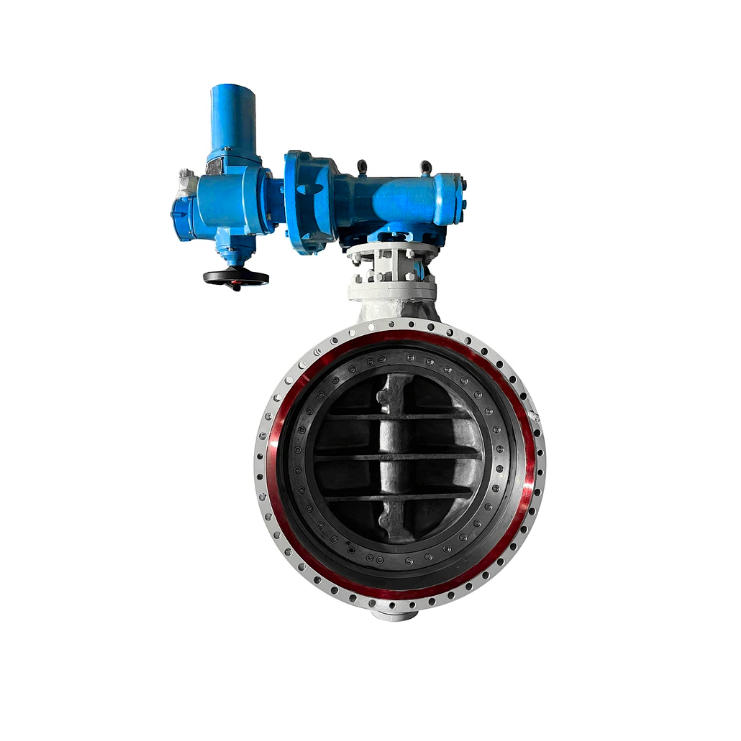
3. Electric Actuation: The Intelligent Regulation Hub of Digital Factories
With the advancement of Industry 4.0, the electric actuators of Athena Engineering S.R.L are gradually becoming the preferred choice for precise flow control.
Intelligent Features: Integrates a motor and precision gear set, supports analog/digital signal input, and achieves thousand-level opening control.
Key Values:
- Efficient integration: Easily connects to PLC or DCS systems, supporting remote fault diagnosis and predictive maintenance.
- Energy consumption optimization: Consumes energy only during operation, making it more energy-efficient than pneumatic systems that maintain constant pressure.
Challenges: High initial investment, and additional explosion-proof housing costs are required in flammable and explosive areas.
Summary
Athena Engineering S.R.L has extensive experience in the field of valve actuation and fluid control, with engineering reliability and technological innovation at its core. To further focus on the high-end actuator market, Athena Engineering officially launches its sub-brand ValenTech, specializing in the R&D and manufacturing of intelligent electric, high-performance pneumatic, and safety interlocking valve actuators. If you are still unsure how to choose an actuator, you can contact us. We have a professional technical consulting team and customized selection solutions to help your project accurately match cost-effective actuator products that are suitable for working conditions and balance safety and efficiency. We provide full-cycle technical support and implementation guidance to help your project reduce costs, increase efficiency, and operate stably.
 How Does a Ball Type Check Valve Prevent Pipeline Medium Backflow?
  Selection and Precautions for Natural Gas Valves
  Athena Engineering S.R.L Wraps‑up OGA 2026 Kuala Lumpur
  What is a Gate Valve? What is Its Working Principle?
  T-Type / T-Pattern / Straight Pattern Globe Valve
  Knife Gate Valve vs Wedge Gate Valve: Which Is Better for Your Industrial Piping?
  Cryogenic Ball Valve Comprehensive Product Overview
  Causes and Treatments for Poor Valve Shut‑Off
  Athena Triple Offset Butterfly Valves
  What is the Difference Between Swing Check Valve and NRV? A Complete Explanation
  Common Connection Types of Valves
  5 Piping Design Mistakes That Are Killing Your Valves
  Float Valve: Structure, Principle and Application
  High Pressure Needle Valve High-Precision Fluid Control Valve
  What is a Piston Check Valve?
  Meet Us at OGA 2026 | Booth 6802, Hall 6
  What is a Level Gauge? Working Principles, Types and Industrial Applications
  Double Sealing Protection: A Complete Interpretation of Bellows Globe Valves
  End-Suction Pump vs Inline Pumps: Which One Is Right for You?
  Method of Selecting Valve Types Based on Throttling Degree