
How Much Do You Know About Gate Valves?
author: ATHENA GROUP
2026-05-06

Basic Overview of Gate Valves
Gate valve is a common cut-off valve, which is widly applied in municipal water supply and drainage, industrial circulating water, fire protection pipeline, building water supply, as well as oil and gas transmission systems. It relies on the up-and-down movement of the gate to control the connection and cut-off of the pipeline medium. Its core function is to realize pipeline isolation and medium cut-off, and it is not suitable for precise adjustment of flow rate or pressure.
Structure and Working Principle
The main components of the gate valve include body, bonnet, wedge, stem, packing and handwheel drive assembly. When operating the handwheel, the stem drives the gate to lift vertically. When fully open, the gate completely exits the flow passage, with minimal flow resistance . When fully closed, the gate is closely attached to the valve seat to realize tight sealing and completely block the medium delivery.

Classification by Valve Stem Structure
According to the structural difference of valve stem, gate valves can be divided into rising stem type and non-rising stem type. The rising stem gate valve has an exposed telescopic stem, which can clearly display the opening degree. It features good corrosion resistance and is mostly used in indoor pipelines, pump stations and outdoor equipment.
The non-rising stem gate valve has a compact overall structure, no change in overall height during operation, saving installation space, and is more suitable for buried underground pipelines and narrow pipe wells.

Classification by Sealing Type
In terms of sealing forms, it is divided into soft seal gate valve and metal hard seal gate valve. The soft seal gate valve adopts rubber lining sealing, with good sealing effect, zero leakage, light opening and closing torque, and strong anti-corrosion performance, which is widely used in clean tap water pipelines. The metal hard seal gate valve adopts metal contact sealing, with high pressure resistance, high temperature resistance and wear resistance, adapting to harsh working conditions such as high-temperature water, industrial sewage and high-pressure pipelines.
Main Advantages
Gate valves have outstanding practical advantages. The straight-through flow design ensures low water flow resistance and no water pressure loss. It supports bidirectional medium flow without installation direction restriction. With firm structure and stable pressure bearing performance, it can meet the long-term operation needs of various pipe networks and is the preferred valve for pipeline maintenance and cut-off isolation.

Disadvantages and Operation
Notes Nevertheless, it also has certain shortcomings. The valve is bulky and heavy, resulting in high transportation and installation costs. The opening and closing operation requires multiple rotations, with slow switching speed. It is forbidden to operate in a half-open state, otherwise the high-speed flowing medium will erode the sealing surface, causing valve damage and permanent leakage.
Summry
This kind of valve is commonly used in municipal water supply main pipes, community supporting water pipes, water plant facilities and fire protection systems. Meanwhile, it is widely applied in petrochemical plants, oil depots, natural gas transmission pipelines, oil field gathering and transportation pipelines and other oil and gas related fields. It is not applicable to working conditions with frequent switching, precise flow regulation, or media mixed with a large amount of sediment and sundries, so as to avoid abrasive wear of sealing parts and affecting the service life and operation safety of the valve.
 How Does a Ball Type Check Valve Prevent Pipeline Medium Backflow?
  Selection and Precautions for Natural Gas Valves
  Athena Engineering S.R.L Wraps‑up OGA 2026 Kuala Lumpur
  What is a Gate Valve? What is Its Working Principle?
  T-Type / T-Pattern / Straight Pattern Globe Valve
  Knife Gate Valve vs Wedge Gate Valve: Which Is Better for Your Industrial Piping?
  Cryogenic Ball Valve Comprehensive Product Overview
  Causes and Treatments for Poor Valve Shut‑Off
  Athena Triple Offset Butterfly Valves
  What is the Difference Between Swing Check Valve and NRV? A Complete Explanation
  Common Connection Types of Valves
  5 Piping Design Mistakes That Are Killing Your Valves
  Float Valve: Structure, Principle and Application
  High Pressure Needle Valve High-Precision Fluid Control Valve
  What is a Piston Check Valve?
  Meet Us at OGA 2026 | Booth 6802, Hall 6
  What is a Level Gauge? Working Principles, Types and Industrial Applications
 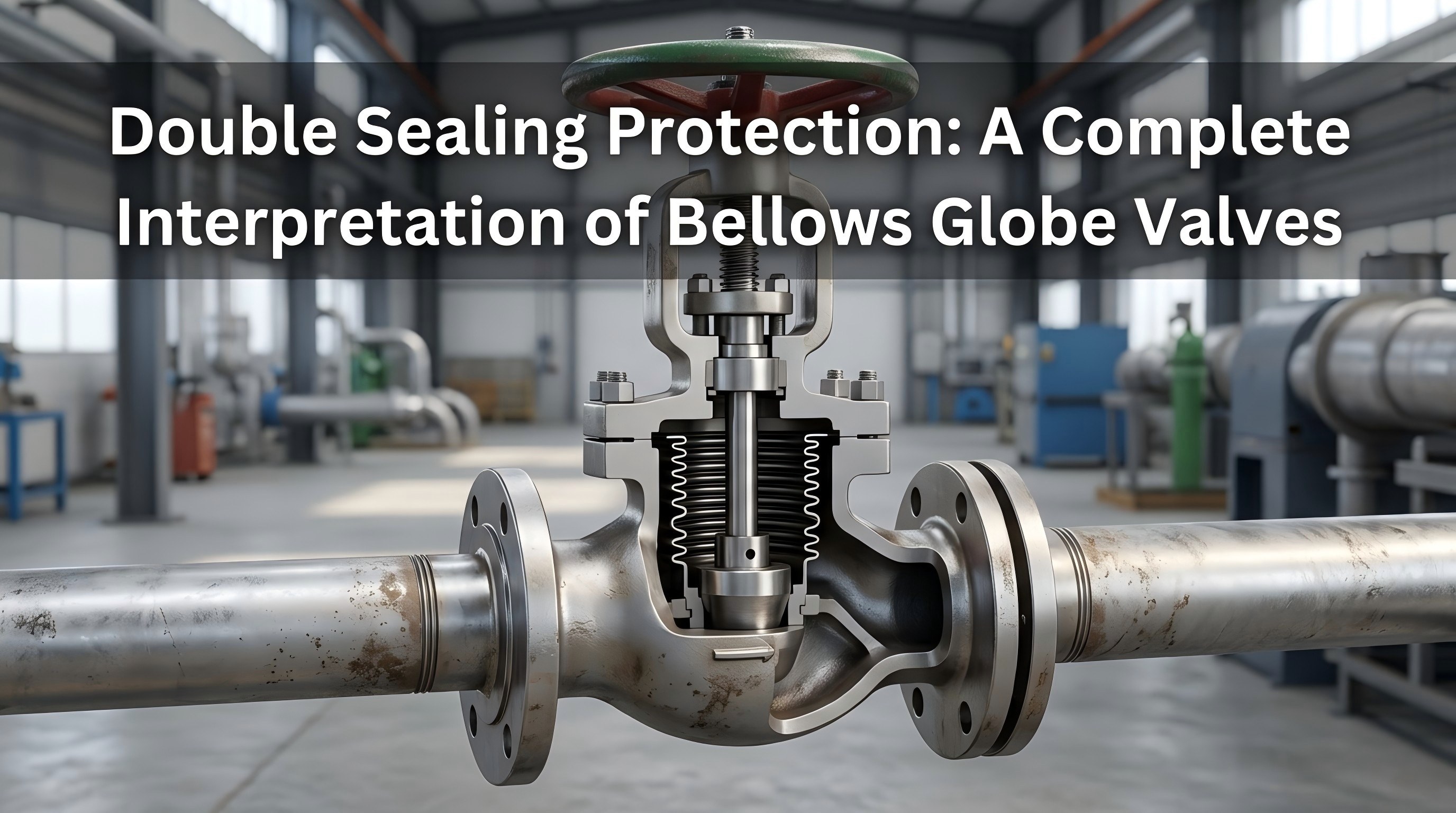 Double Sealing Protection: A Complete Interpretation of Bellows Globe Valves
  End-Suction Pump vs Inline Pumps: Which One Is Right for You?
  Method of Selecting Valve Types Based on Throttling Degree