
How Does the Bellow Valve Achieve Sealing?
author: ATHENA GROUP
2026-05-12
In many industrial fields, ensuring the sealing performance of valves during operation is crucial. Good sealing prevents material leakage and ingress of external contaminants, guaranteeing the reliability and sustained efficient operation of valves.
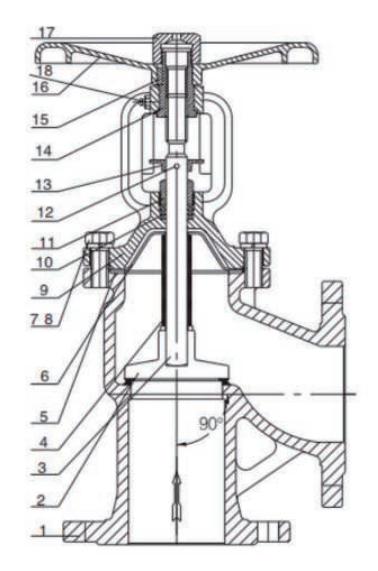
Bellows sealing is a commonly used sealing method. The opening and closing components of valves usually adopt bellows sealing to ensure zero leakage when the valve is closed. A bellows is formed by laminating multiple layers of thin metal sheets into a corrugated structure. Under pressure, the bellows achieves adaptive sealing through elastic deformation to maintain excellent sealing performance.
Bellows sealing is a commonly used sealing method. The opening and closing components of valves usually adopt bellows sealing to ensure zero leakage when the valve is closed. A bellows is formed by laminating multiple layers of thin metal sheets into a corrugated structure. Under pressure, the bellows achieves adaptive sealing through elastic deformation to maintain excellent sealing performance.

Detailed Explanation of Bellows Sealing Principle
Due to its special structure, the bellows can deform under external pressure to achieve sealing.
• When the pressure of the internal medium increases, the bellows expands radially and elongates axially, effectively resisting leakage of the internal medium.
• Similarly, when the internal pressure decreases, the bellows returns to its original shape, thus maintaining the sealed state.
The basic principle of bellows sealing is to fully utilize the elastic deformation capacity of the bellows to adapt to changes in medium pressure, so as to achieve reliable sealing effect.
Considerations for Using Bellows Sealing
The design of bellows sealing requires consideration of the following factors:
Ⅰ. Elastic deformation capacity: The material selection and design structure of the bellows should have sufficient elasticity to adapt to changes in medium pressure.
Ⅱ. Sealing performance: The bellows design must effectively prevent medium leakage and ensure the required sealing effect.
Ⅲ. Pressure resistance: The bellows design must meet the working pressure requirements of the equipment to ensure that sealing performance is not lost due to excessive pressure.
Ⅳ. Corrosion resistance: Select corrosion-resistant materials according to the characteristics of the medium to ensure that the bellows can be used in corrosive media for a long time.
Ⅴ. Operating temperature range: Select appropriate bellows materials according to the temperature requirements of the working environment to ensure that sealing performance is maintained in high or low temperature environments.
Ⅵ. Safety: Sealing reliability is the core of bellows sealing design, ensuring the safety of personnel and equipment.
Bellows valve feature
a:The valve body adopts investment casting technology.Advanced technology to ensure that the valve body has no sand holes,surface more smooth and quality more reliable.
b:Conical sealing surface will remove impurity automatically.
c:Flexible pin,easy to replace the disc when broken.
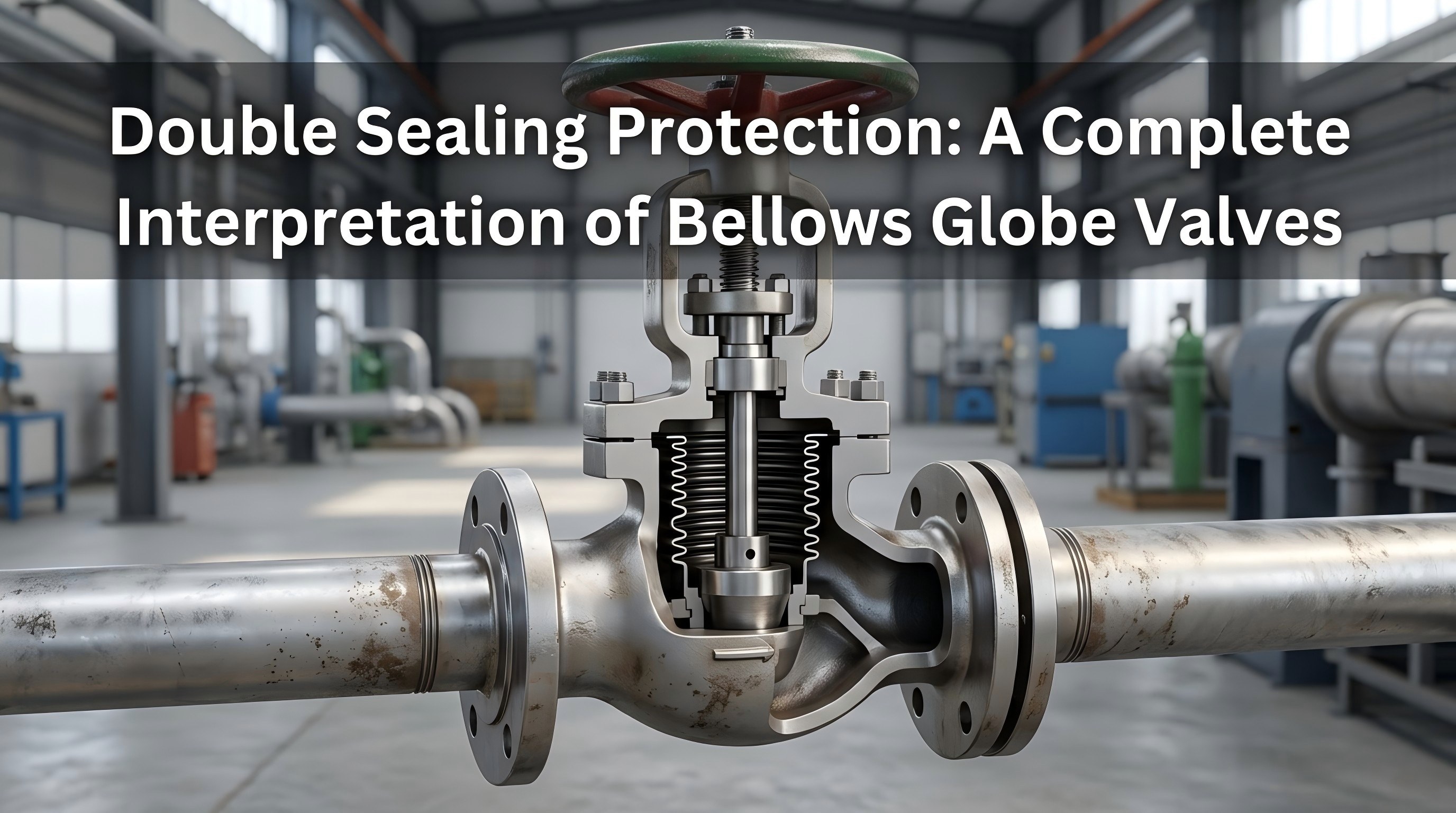
d:Bellow is the key part of bellow sealed valves,which is welded to both the valve bonnet and valve stem,with automatic roll welding.The metal bellow can keep the stem part100%no leakage.
e:Three layers stainless steel bellows can be use 5000 times.
F:The upper end of the bellows is welded to the bowl plate,and the lower end is welded to the valve stem to ensure that the medium does not leak from the valve stem.
g:The guide piece limit the valve to open and close,better to protect the valve.
h:Graphite packing was the second sealing for valves.
i:Ergonomic hand wheel.It provide longer service life and easier Operation.

Bellows sealing is a reliable and economical sealing method. By utilizing the elastic deformation capacity of the bellows, it achieves adaptive sealing under different pressures. In the industrial field, mastering and applying the bellows sealing principle can improve valve reliability and safety, reduce operation and maintenance costs, and promote the sustainable development of the industry.
 How Does a Ball Type Check Valve Prevent Pipeline Medium Backflow?
  Selection and Precautions for Natural Gas Valves
  Athena Engineering S.R.L Wraps‑up OGA 2026 Kuala Lumpur
  What is a Gate Valve? What is Its Working Principle?
  T-Type / T-Pattern / Straight Pattern Globe Valve
  Knife Gate Valve vs Wedge Gate Valve: Which Is Better for Your Industrial Piping?
  Cryogenic Ball Valve Comprehensive Product Overview
  Causes and Treatments for Poor Valve Shut‑Off
  Athena Triple Offset Butterfly Valves
  What is the Difference Between Swing Check Valve and NRV? A Complete Explanation
  Common Connection Types of Valves
  5 Piping Design Mistakes That Are Killing Your Valves
  Float Valve: Structure, Principle and Application
  High Pressure Needle Valve High-Precision Fluid Control Valve
  What is a Piston Check Valve?
  Meet Us at OGA 2026 | Booth 6802, Hall 6
  What is a Level Gauge? Working Principles, Types and Industrial Applications
  Double Sealing Protection: A Complete Interpretation of Bellows Globe Valves
  End-Suction Pump vs Inline Pumps: Which One Is Right for You?
  Method of Selecting Valve Types Based on Throttling Degree