
Double Sealing Protection: A Complete Interpretation of Bellows Globe Valves
author: ATHENA GROUP
2026-07-28
1. Definition of Bellows Globe Valves
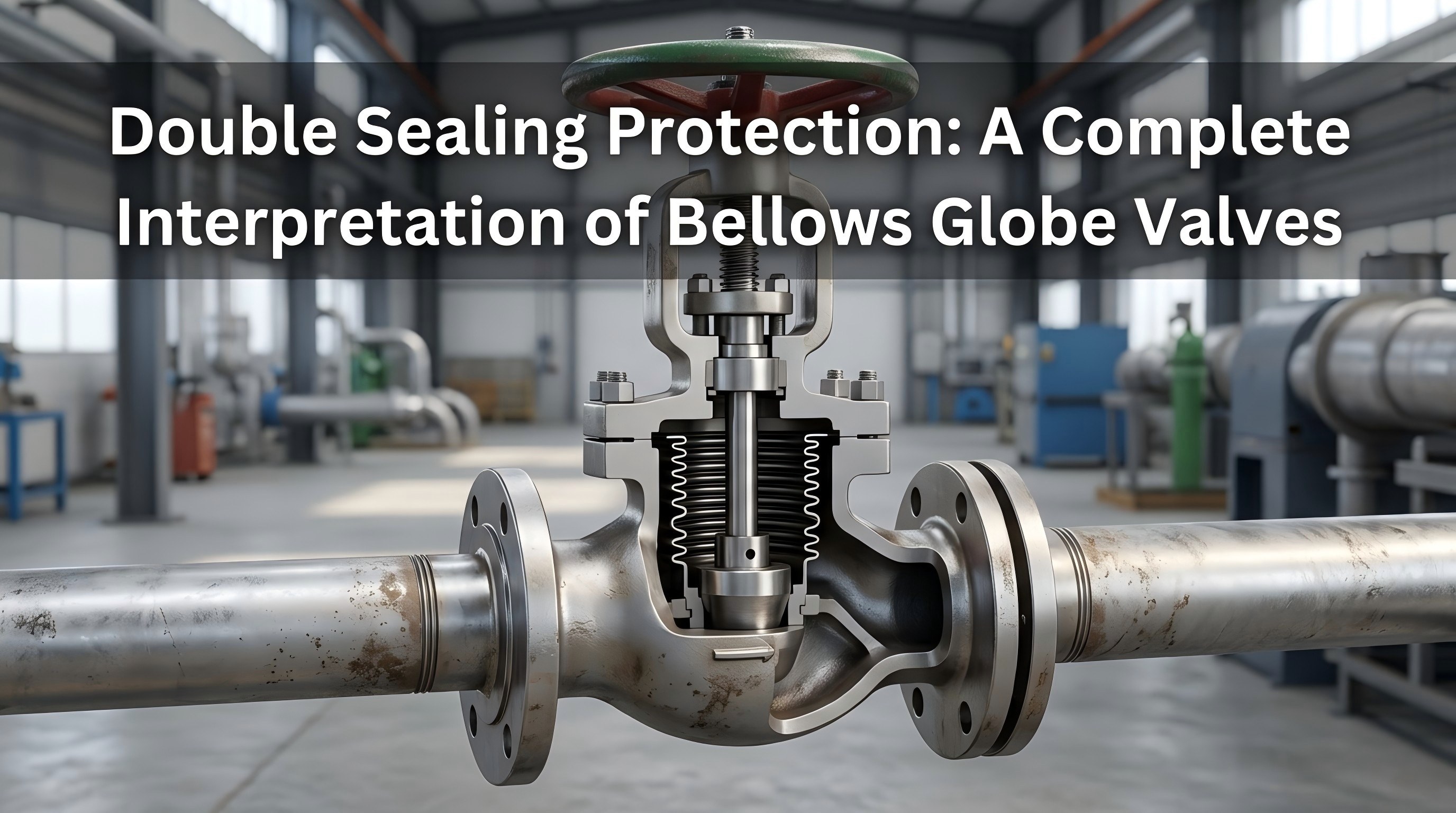
A bellows globe valve is an industrial control valve featuring an upgraded sealing structure based on conventional globe valves. Its core innovation lies in replacing the standard packing box seal with a metal bellows assembly. This structurally isolates the medium from the moving gap of the valve stem to achieve zero external leakage at the stem. It combines the excellent throttling and regulating performance of globe valves with high safety sealing capacity, and is widely deployed in industrial pipeline systems with stringent leakage control requirements.
Common body materials include cast iron, carbon steel, 304 and 316 stainless steel. The bellows are mostly fabricated by rolling and welding multi-layer thin stainless steel sheets. It supports multiple connection types such as flanged, butt-welded and threaded, and complies with mainstream international valve manufacturing standards including API.
2. Internal Structure and Working Principle
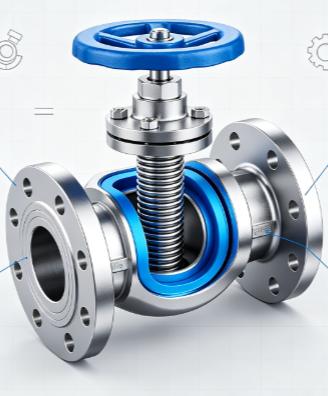
The valve consists of seven core components: valve body, valve seat, disc, valve stem, bellows assembly, bonnet and handwheel. As the core sealing element, the bellows is welded to the valve stem at one end and fixed inside the bonnet at the other, forming a hermetically isolated cavity.
Rotating the handwheel drives the vertical lifting of the valve stem, accompanied by synchronous stretching or compression deformation of the bellows. When the stem moves upward, the disc separates from the seat to allow medium flow through the valve cavity; when the stem moves downward, the disc presses tightly against the seat to cut off fluid flow. Throughout operation, the valve stem moves entirely inside the bellows without contact with outside air, eliminating leakage paths caused by sliding wear of packing.
The valve adopts double sealing protection: the bellows serves as the primary seal, while graphite backup packing is installed outside the bonnet. If the bellows sustains damage, the packing can temporarily block medium leakage and improve safety redundancy of the equipment.
3. Core Performance Advantages
- Ultra-high sealing class enabling zero stem leakage. It fundamentally eliminates medium spillage resulting from aged packing in conventional packed globe valves, meeting environmental emission standards for toxic, flammable and explosive media.
- Lower operation and maintenance costs. With no consumable packing, regular packing tightening or replacement is unnecessary, drastically cutting equipment shutdown maintenance frequency. Standard bellows withstand tens of thousands of opening-closing fatigue cycles, delivering lower overall long-term costs.
- Stable regulating performance. It inherits the linear flow characteristic of globe valves with a clear correlation between stem travel and flow rate, ideal for precise pipeline throttling and pressure stabilization control.
- Wide adaptability to temperatures and media. Stainless steel bellows suit high-temperature steam, heat transfer oil, highly corrosive chemical solvents as well as low-temperature vacuum pipelines. The stem never contacts the process medium, resisting rust and jamming.
4. Applicable Working Conditions and Limitations
Applicable Scenarios
Four main pipeline categories:
- Heating systems with high-temperature steam and heat transfer oil;
- Chemical pipelines carrying toxic and flammable media such as chlorine, benzene and ammonia;
- High-purity fluid pipelines for pharmaceutical and semiconductor industries;
- Critical installations in power stations and vacuum systems where medium leakage is strictly prohibited.
Limitations
As an elastic fatigue component, the bellows is unsuitable for continuous ultra-frequent opening and closing cycles. For large-bore and ultra-high-pressure pipelines, its procurement cost is much higher than ordinary globe valves. In addition, repair work becomes complicated once the bellows fails. Selection must comprehensively consider medium properties, pressure ratings and valve operation frequency.
5. Industrial Application Value
Within modern safety production systems, bellows globe valves act as critical components for environmental protection and safety. They prevent personal injury and environmental pollution caused by toxic medium leakage, and avoid economic losses from waste of valuable raw materials.
Thanks to its zero-leakage characteristic, it is gradually replacing traditional packed globe valves and has become a standard selection in petrochemical, power, pharmaceutical and thermal industries. Integrating flow regulation and long-lasting sealing performance, it stands as the preferred control equipment for pipelines under harsh working conditions.
 How Does a Ball Type Check Valve Prevent Pipeline Medium Backflow?
  Selection and Precautions for Natural Gas Valves
  Athena Engineering S.R.L Wraps‑up OGA 2026 Kuala Lumpur
  What is a Gate Valve? What is Its Working Principle?
  T-Type / T-Pattern / Straight Pattern Globe Valve
  Knife Gate Valve vs Wedge Gate Valve: Which Is Better for Your Industrial Piping?
  Cryogenic Ball Valve Comprehensive Product Overview
  Causes and Treatments for Poor Valve Shut‑Off
  Athena Triple Offset Butterfly Valves
  What is the Difference Between Swing Check Valve and NRV? A Complete Explanation
  Common Connection Types of Valves
  5 Piping Design Mistakes That Are Killing Your Valves
  Float Valve: Structure, Principle and Application
  High Pressure Needle Valve High-Precision Fluid Control Valve
  What is a Piston Check Valve?
  Meet Us at OGA 2026 | Booth 6802, Hall 6
  What is a Level Gauge? Working Principles, Types and Industrial Applications
  End-Suction Pump vs Inline Pumps: Which One Is Right for You?
  Method of Selecting Valve Types Based on Throttling Degree
  Safety Valves–Core Protection for Pressure Equipment