
Detailed Explanation of Valve Factory Manufacturing Process
author: ATHENA GROUP
2025-10-13
As an indispensable control component in industrial pipeline systems, the quality and performance of valves are directly related to the safe operation of the entire system. The following is a detailed introduction to the manufacturing process of valves in a valve factory.
Ⅰ. Valve Design and R&D
The primary link in valve manufacturing is design and R&D. Based on the actual needs of customers, specific working conditions, as well as industry standards and technical specifications, the technical team uses advanced design software such as CAD/CAM for 3D modeling to accurately plan the structural form, dimensional parameters, and performance indicators of the valve. At the same time, continuous technological innovation and optimized design are carried out to enhance the applicability and reliability of the product, so as to meet the usage requirements under different working conditions.

Ⅱ. Procurement and Inspection of Valve Raw Materials
In accordance with the design requirements, high-quality raw materials such as stainless steel, cast iron, carbon steel, and alloy steel are procured from reliable suppliers. After the raw materials arrive, equipment like a spectral analyzer is used to conduct material composition testing to ensure that the chemical composition, physical properties, and other aspects of the materials comply with relevant standards. A material composition test report is printed and archived for future reference.
Ⅲ. Valve Casting Production
- Melting: The inspected and qualified raw materials are put into an induction furnace for melting. The melting temperature and time are strictly controlled to ensure the uniform composition of the molten metal and achieve the required material performance.
- Casting: Common casting processes include lost foam casting and sand casting. Taking lost foam casting as an example, the molten metal is poured into the mold, and after cooling, the initial shape of the valve body is formed. This process can effectively reduce casting defects and improve the yield rate.
- Heat Treatment: Heat treatment processes such as annealing, normalizing, or quenching and tempering are applied to the castings to eliminate casting internal stress, improve the material structure, and enhance the strength, toughness, and fatigue resistance of the valve body.
- Cleaning and Inspection: Impurities such as sand particles and burrs on the surface of the castings are cleaned. Then, dimensional and appearance inspections are carried out to ensure the castings meet the design requirements. Meanwhile, non-destructive testing methods such as ultrasonic testing (UT) and radiographic testing (RT) are used to detect internal defects.
Ⅳ. Valve Machining
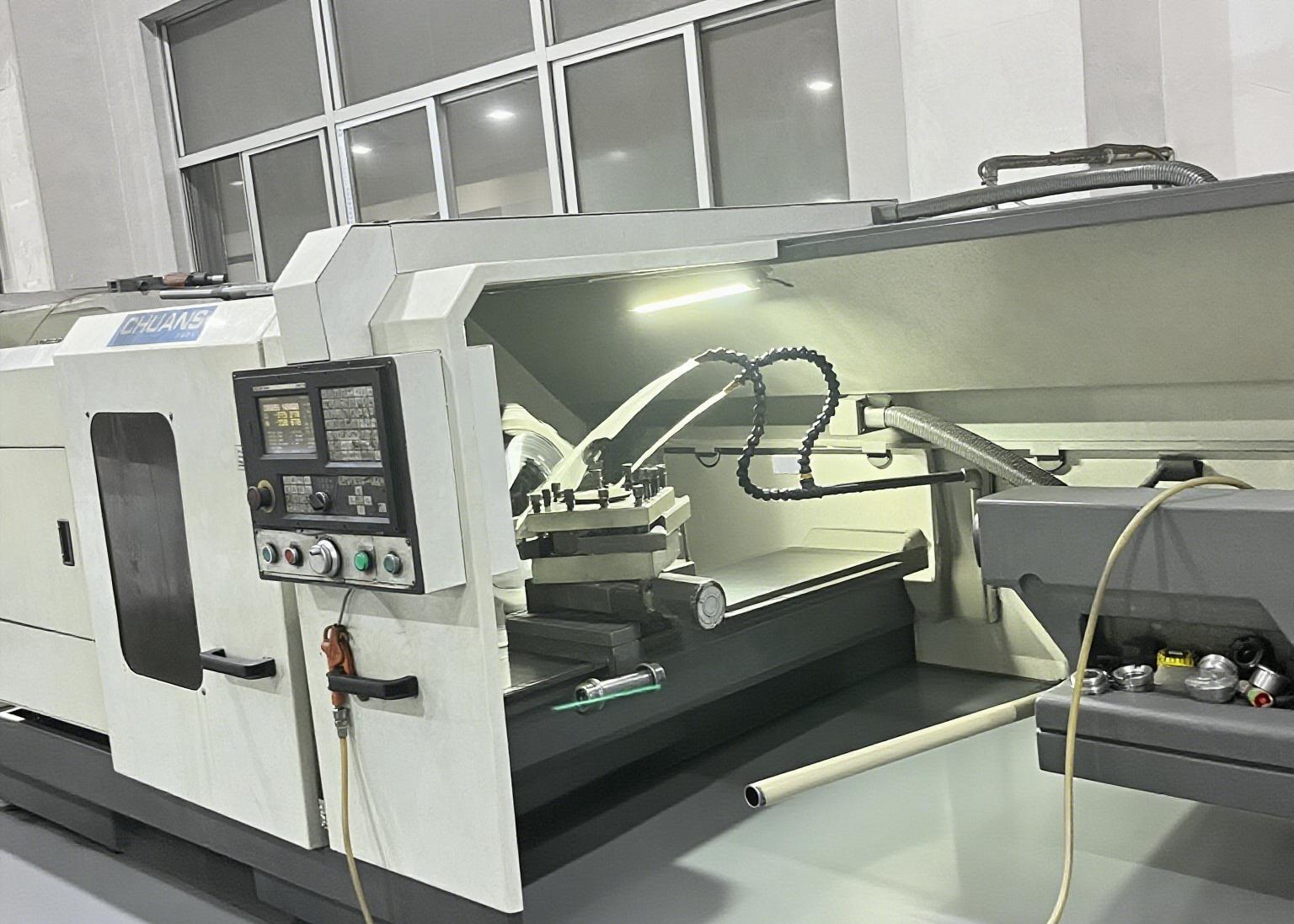
- Rough Machining: Equipment such as lathes, milling machines, and grinding machines are used for rough machining of the castings to remove excess material and initially form the shape of each component of the valve, laying the foundation for subsequent finishing.
- Finishing: Finishing is performed on the roughly machined components. With the help of high-precision equipment such as CNC machining centers, the dimensional accuracy and surface finish of each part are ensured to meet the design requirements. Especially for the processing of sealing surfaces, their flatness, finish, and hardness must be guaranteed.
- Drilling and Tapping: According to the design drawings, drilling and tapping operations are carried out at the corresponding positions to prepare for the assembly of the valve and its connection with pipelines, actuators, etc.
- Inspection: Inspections of dimensions, geometric tolerances, and surface quality are conducted on the machined components. Unqualified components need to be reworked or scrapped in a timely manner.
Ⅴ. Valve Internal Parts Manufacturing
- Internal Parts Requiring Seal Welding: For parts such as valve discs and valve seats, after rough machining, weld overlay groove processing is performed, followed by weld overlay and post-weld heat treatment to improve the wear resistance, corrosion resistance, and hardness of the sealing surface. Then, finishing and grinding of the sealing surface are carried out, and finally, sealing surface hardness inspection and liquid penetrant testing (PT) are conducted to ensure the sealing performance.
- Valve Stem: After the raw materials pass the inspection, the blank is made and undergoes rough machining, weld overlay, and post-weld heat treatment. Then, finishing, cylindrical grinding, and surface treatment (such as nitriding, quenching, chemical plating, etc.) are performed. Finally, final treatment, sealing surface grinding, and inspection are carried out.
- Internal Parts Without Seal Welding Requirements: After the blanks are made in accordance with the requirements, rough machining and finishing are performed.
Ⅵ. Valve Assembly
- Component Cleaning: All machined components are cleaned to remove oil stains, iron filings, and other impurities on the surface, ensuring the cleanliness of the assembly environment.
- Assembly: In accordance with the design drawings and technical requirements, professional tools and equipment are used to assemble the various components, ensuring the fitting accuracy between the components, such as the connection between the valve stem and the valve disc, and the assembly of the valve body and the valve cover.
- Seal Installation: Seals of the valve, such as O-rings, gaskets, and packing, are installed to ensure reliable sealing performance and prevent medium leakage.
- Commissioning: The assembled valve is commissioned to check whether its opening and closing are flexible, whether the stroke is accurate, and whether the sealing is good. For electric valves, linkage commissioning with electric actuators is also required.

Ⅶ. Valve Performance Testing
- Pressure Testing: A pressure test is conducted on the valve, and the test pressure is usually 1.5 times the design pressure to verify the valve's ability to withstand high pressure and its sealing performance, ensuring no leakage or rupture occurs in actual use.
- Seal Testing: In addition to the seal inspection during the pressure test, methods such as bubble testing and helium mass spectrometry leak detection are used to conduct more rigorous testing on the valve's sealing performance, especially for valves that require high sealing, such as gas valves and vacuum valves.
- Other Tests: Depending on the valve's application scenarios and special requirements, additional tests such as corrosion resistance testing, high-temperature testing, low-temperature testing, and cycle testing may be required to fully verify the valve's performance and reliability.
Ⅷ. Valve Surface Treatment and Packaging
- Surface Treatment: The valve is subjected to sandblasting to improve surface finish and coating adhesion. Then, according to the service environment and customer requirements, coating treatment is carried out, such as applying epoxy resin coating, fluorocarbon paint, etc., to enhance the corrosion resistance and appearance of the valve.
- Packaging: The qualified valves after inspection are packaged using protective materials such as wooden boxes, cartons, and foam plastics to ensure that the valves are not damaged during transportation and storage. Meanwhile, relevant documents such as product manuals and quality inspection reports are attached.
Through the above series of strict manufacturing processes, valves are gradually transformed from raw materials into high-quality finished products, which are finally delivered to customers, providing guarantees for the safe operation of various industrial fields and infrastructure.
Why Consider Choosing Athena SRL for Valve Production?
When selecting valves, the choice of supplier is just as important as the valve design itself. Athena SRL, an Italian valve manufacturer, is a trustworthy brand in Europe and even around the world.
The reasons why Athena SRL stands out are as follows:
The reasons why Athena SRL stands out are as follows:
- Italian Excellent Engineering: Relying on precision manufacturing processes, it ensures that the valves have reliable sealing performance and a long service life.
- Material Versatility: It offers a variety of material options (such as EPDM, PTFE, etc.), and also introduces high-end materials like Hastelloy, Monel, and ceramic composites. It provides customized solutions for pain points in different industries and can be adapted to various working conditions such as corrosive environments.
- Customization Capability: It can tailor-make valve products that meet the needs according to the specific process requirements of customers.
- Global Services: Athena SRL has built a three-dimensional service network of "global layout + localized service", enabling customers around the world to enjoy "close-at-hand" support and providing various standard valves and customized valves.
 How Does a Ball Type Check Valve Prevent Pipeline Medium Backflow?
  Selection and Precautions for Natural Gas Valves
  Athena Engineering S.R.L Wraps‑up OGA 2026 Kuala Lumpur
  What is a Gate Valve? What is Its Working Principle?
  T-Type / T-Pattern / Straight Pattern Globe Valve
  Knife Gate Valve vs Wedge Gate Valve: Which Is Better for Your Industrial Piping?
  Cryogenic Ball Valve Comprehensive Product Overview
  Causes and Treatments for Poor Valve Shut‑Off
  Athena Triple Offset Butterfly Valves
  What is the Difference Between Swing Check Valve and NRV? A Complete Explanation
  Common Connection Types of Valves
  5 Piping Design Mistakes That Are Killing Your Valves
  Float Valve: Structure, Principle and Application
  High Pressure Needle Valve High-Precision Fluid Control Valve
  What is a Piston Check Valve?
  Meet Us at OGA 2026 | Booth 6802, Hall 6
  What is a Level Gauge? Working Principles, Types and Industrial Applications
  Double Sealing Protection: A Complete Interpretation of Bellows Globe Valves
  End-Suction Pump vs Inline Pumps: Which One Is Right for You?
  Method of Selecting Valve Types Based on Throttling Degree