
Ball Valve vs Check Valve: A Comprehensive Guide to Fluid Control Solutions
author: ATHENA GROUP
2025-09-09
In the complex world of fluid handling systems, selecting the right valve can mean the difference between seamless operation and costly downtime. Ball valves and check valves stand out as two indispensable components, each with unique strengths tailored to specific tasks. Whether you' re designing a industrial pipeline, maintaining a water treatment plant, or upgrading a manufacturing process, understanding their nuances is key. Let's dive deeper into their mechanics, differences, real-world applications, and why Athena engineering S.R.L remains a trusted partner in delivering top-tier solutions.
How They Work: A Closer Look at Mechanics
Ball Valves: Precision in Motion

At the heart of a ball valve lies a hollow, perforated sphere (the "ball") that rotates within a valve body. This rotation—typically 90 degrees—controls flow: when the ball's bore aligns with the pipe, fluid flows freely; when rotated perpendicular, the solid part of the ball blocks flow entirely. What makes ball valves versatile is their design flexibility.
Port Sizes: Full-port ball valves feature a bore equal to the pipe's inner diameter, minimizing pressure drop and making them ideal for heavy-duty applications like crude oil transfer. Reduced-port valves, with a smaller bore, are more compact and cost-effective, suited for low-flow scenarios such as chemical dosing systems.
Materials Matter: Athena engineering S.R.L, a leader in valve innovation, crafts ball valves from diverse materials to match application needs. For corrosive environments (e.g., seawater or acidic solutions), Athena use 316 stainless steel, while brass variants excel in plumbing or low-pressure air systems. Athena's proprietary PTFE (Teflon) seats ensure tight sealing even with abrasive fluids, a critical feature in mining operations.
Actuation Options: While manual lever-operated ball valves are common in small-scale setups, Athena's automated models—equipped with pneumatic or electric actuators—shine in industrial settings. These allow remote control, precise timing (e.g., opening for 10 seconds in batch processing), and integration with SCADA systems, enhancing efficiency in refineries or power plants.
Check Valves: Guardians Against Backflow
Check valves operate on a simpler principle: they act as one-way doors, opening to allow forward flow and closing to block reverse flow. Unlike ball valves, they require no external input—fluid pressure does the work.
Design Variants:
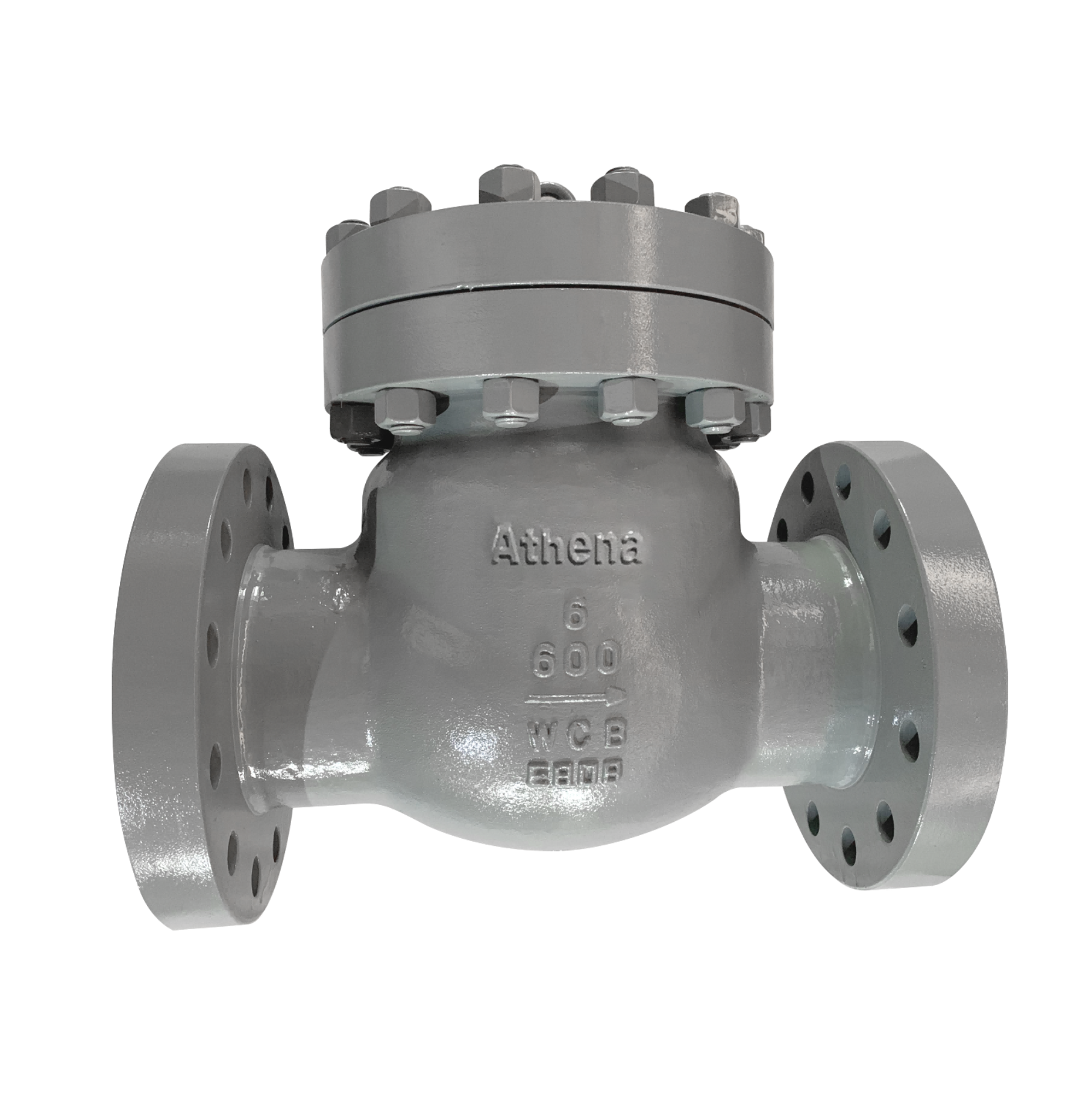
Swing Check Valves: A hinged disc swings open as fluid flows forward and closes via gravity (or fluid pressure) when flow reverses. They're cost-effective for low-pressure, high-flow systems like irrigation or wastewater pipelines but struggle with vertical installations due to gravity dependence.
Spring-Loaded Check Valves: A spring keeps the disc closed until forward pressure overcomes its force. This design is perfect for high-pressure systems (e.g., hydraulic lines) or vertical pipes, as the spring ensures rapid closing, preventing water hammer—a destructive pressure surge common in pump systems.
Dual-Plate Check Valves: Two semicircular discs pivot open, offering minimal pressure drop. Athena's dual-plate models are a favorite in gas pipelines, where low flow restriction and quick closure (to prevent gas backflow) are critical.
Sealing Tech: Athena's check valves use either soft seals (EPDM for water) or metal-to-metal seals . This versatility ensures they perform reliably in applications ranging from household water heaters to industrial boilers.
Key Differences: Choosing the Right Tool for the Job
Flow Control & Operation
Ball valves are "active" controllers: they require intentional operation (manual or automated) to start, stop, or throttle flow. This makes them indispensable in processes needing precise timing, like blending chemicals in batches.
Check valves, by contrast, are "passive" protectors: They respond automatically to flow direction, requiring no human or electrical input. In a residential water system, a check valve on a well pump ensures water doesn't siphon back into the ground when the pump shuts off—preventing contamination and pump damage.
Real-World Applications: Where Each Shines
Ball Valves: Versatility in Action
Industrial Processing: In chemical plants, ball valves regulate the flow of raw materials (e.g., acids, solvents) between reactors. Athena's lined ball valves (with PFA or PVDF) prevent corrosion, ensuring safe handling of hazardous chemicals.
Energy Sector: Natural gas pipelines rely on ball valves for on/off control. Athena's API 6D-certified ball valves meet strict industry standards, with fire-safe designs that prevent leaks during emergencies—a requirement in gas transmission.
Commercial Plumbing: Shopping malls use ball valves to control water flow to restrooms or HVAC systems. Their compact size and easy operation make them a go-to for maintenance teams.
Check Valves: Protection First
Water Treatment: Reverse osmosis systems use check valves to prevent treated water from mixing with untreated feed water. Athena's low-pressure drop check valves maximize system efficiency, a key factor in large-scale desalination plants.
Pump Systems: Every centrifugal pump needs a check valve on its discharge line to prevent backflow when the pump stops. This protects the pump from "water hammer"—a sudden pressure spike that can crack pipes or damage impellers.
Why Athena Engineering S.R.L Leads the Way
Athena engineering S.R.L has earned its reputation as a global leader by blending innovation, quality, and customer-centricity. With over 10 years of experience, the company's Milan-based headquarters oversees a network of manufacturing facilities and R&D centers, ensuring every product meets rigorous standards.
Custom Solutions: No two applications are identical. Athena's engineering team works closely with clients to design bespoke valves—whether a high-temperature ball valve for a steel mill or a sanitary check valve for a dairy plant. Their ability to tailor materials, sizes, and actuation systems sets them apart.
Sustainability Focus: In an era of green manufacturing, Athena prioritizes eco-friendly practices. Their valves are designed for energy efficiency (low pressure drop reduces pump energy use) and recyclability, aligning with global sustainability goals.
In conclusion, ball valves and check valves each play vital roles in fluid control, with distinct strengths that make them irreplaceable. Ball valves excel in active flow control, while check valves specialize in passive backflow prevention. By understanding their mechanics, differences, and applications, you can select the right valve for your needs— and with Athena engineering S.R.L as your partner, you' ll gain access to solutions that combine performance, durability, and innovation. For industries ranging from oil & gas to food & beverage, Athena' s valves are more than components—they' re the backbone of reliable, efficient systems.
 How Does a Ball Type Check Valve Prevent Pipeline Medium Backflow?
  Selection and Precautions for Natural Gas Valves
  Athena Engineering S.R.L Wraps‑up OGA 2026 Kuala Lumpur
  What is a Gate Valve? What is Its Working Principle?
  T-Type / T-Pattern / Straight Pattern Globe Valve
  Knife Gate Valve vs Wedge Gate Valve: Which Is Better for Your Industrial Piping?
  Cryogenic Ball Valve Comprehensive Product Overview
  Causes and Treatments for Poor Valve Shut‑Off
  Athena Triple Offset Butterfly Valves
  What is the Difference Between Swing Check Valve and NRV? A Complete Explanation
  Common Connection Types of Valves
  5 Piping Design Mistakes That Are Killing Your Valves
  Float Valve: Structure, Principle and Application
  High Pressure Needle Valve High-Precision Fluid Control Valve
  What is a Piston Check Valve?
  Meet Us at OGA 2026 | Booth 6802, Hall 6
  What is a Level Gauge? Working Principles, Types and Industrial Applications
  Double Sealing Protection: A Complete Interpretation of Bellows Globe Valves
  End-Suction Pump vs Inline Pumps: Which One Is Right for You?
  Method of Selecting Valve Types Based on Throttling Degree